Get Email Marketing Right: The Complete 2026 Guide
May 25, 2026
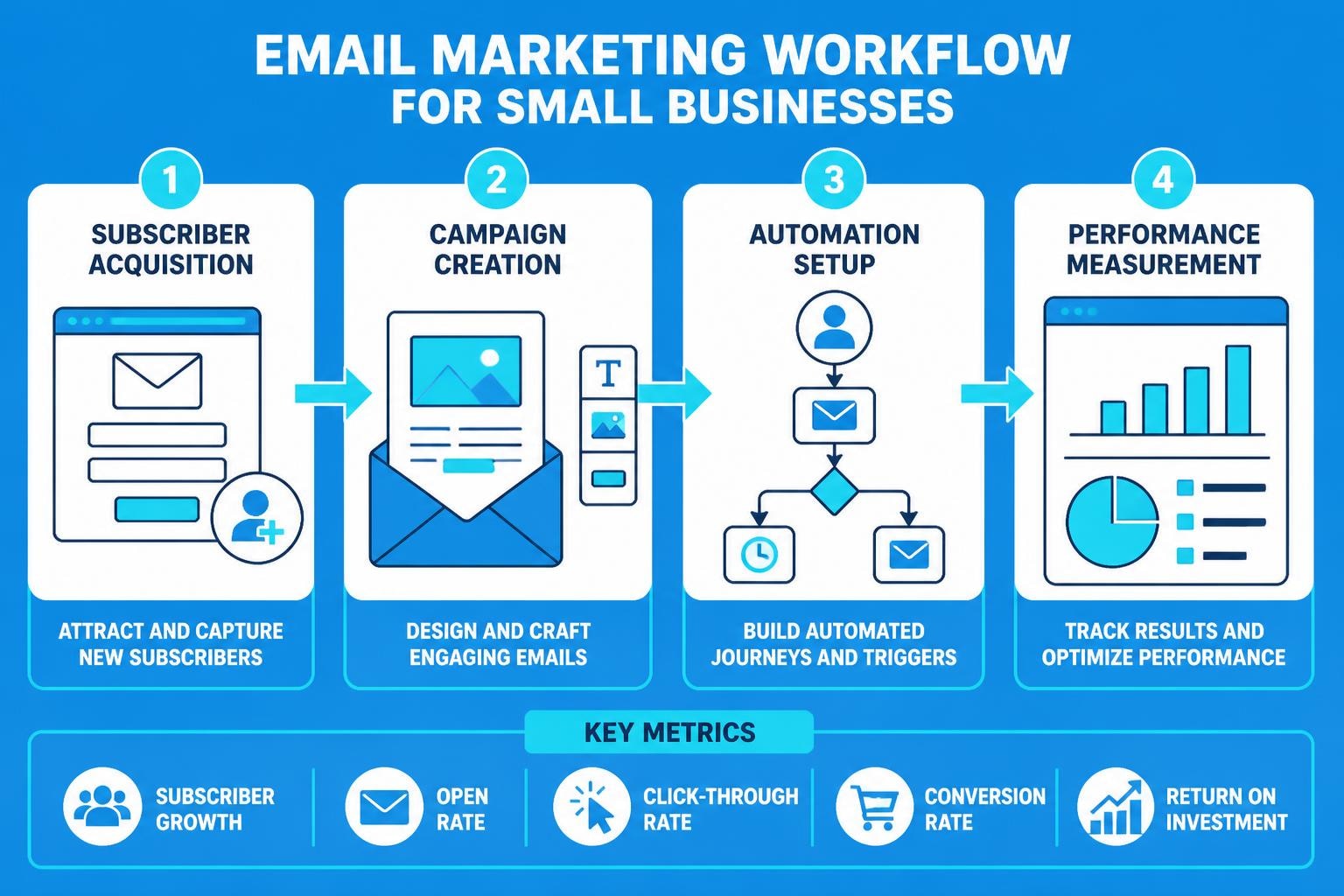
When small businesses want to get email marketing working effectively, they face a landscape that's more sophisticated than ever before. The ability to collect, manage, and leverage email addresses has become essential for sustainable growth in 2026. Whether you're launching your first campaign or refining an existing strategy, understanding how to properly get email contacts and use them ethically can transform your marketing results. This comprehensive guide explores the fundamental approaches that enable small businesses to build thriving email programmes whilst navigating modern deliverability challenges and regulatory requirements.
Building Your Email List From Scratch
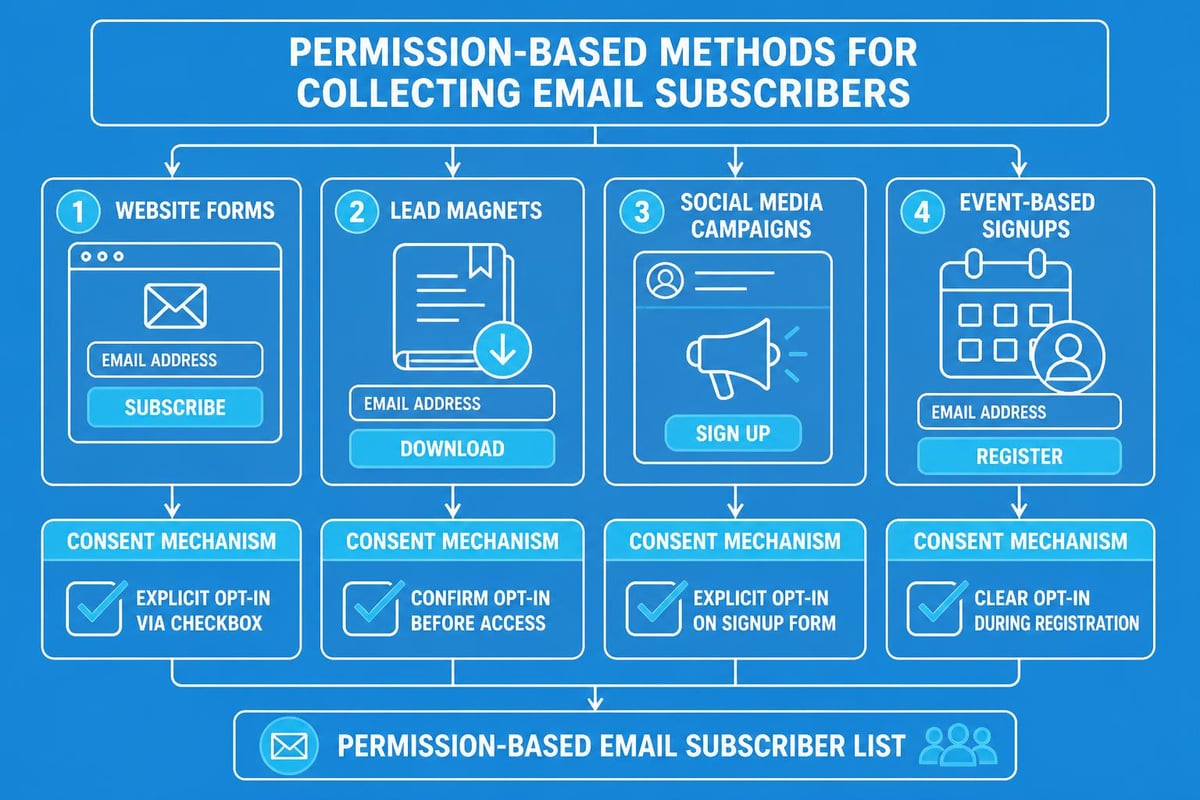
The foundation of any successful email marketing programme begins with acquiring subscribers who genuinely want to hear from you. Small businesses must prioritise quality over quantity when they get email addresses, focusing on permission-based collection methods that establish trust from the outset.
Effective list-building strategies include:
- Website opt-in forms positioned on high-traffic pages
- Lead magnets offering valuable resources in exchange for contact details
- Social media promotions that drive traffic to landing pages
- In-person collection at events, trade shows, or retail locations
- Referral programmes encouraging existing subscribers to share
The most sustainable approach involves creating multiple touchpoints where potential customers can willingly provide their information. When you get a business email address strategy in place, it's crucial to ensure every collection method includes explicit consent and clearly communicates what subscribers should expect.
Permission and Compliance Considerations
Modern email regulations demand more than simply collecting addresses. GDPR, PECR, and similar frameworks require businesses to document consent, provide clear privacy information, and offer straightforward unsubscribe mechanisms. When small businesses get email contacts, they must implement double opt-in processes where appropriate, maintain detailed records of how and when consent was obtained, and respect geographical variations in legal requirements.
| Compliance Requirement | Implementation Method | Business Impact |
|---|---|---|
| Explicit Consent | Double opt-in confirmation | Higher engagement rates |
| Privacy Information | Clear privacy policy links | Builds subscriber trust |
| Unsubscribe Options | One-click removal process | Maintains sender reputation |
| Data Retention | Regular list cleaning | Improves deliverability |
Establishing professional email practices from the beginning ensures your programme remains compliant whilst building subscriber confidence in your brand.
Optimising Email Deliverability for Maximum Reach
Even the most compelling email campaigns fail if they don't reach subscriber inboxes. Deliverability has become increasingly complex as email providers implement sophisticated filtering algorithms designed to protect users from unwanted messages.
The technical foundation of deliverability rests on proper authentication protocols. When businesses get email systems configured correctly, they must implement SPF, DKIM, and DMARC records that verify their identity to receiving servers. These authentication methods have become essential email deliverability best practices that signal legitimacy to inbox providers.
Authentication and Infrastructure
Setting up your sending infrastructure correctly prevents many common deliverability issues. SPF (Sender Policy Framework) records specify which servers can send email on behalf of your domain. DKIM (DomainKeys Identified Mail) adds a digital signature to your messages, verifying they haven't been altered in transit. DMARC (Domain-based Message Authentication, Reporting, and Conformance) builds on these technologies, instructing receiving servers how to handle messages that fail authentication.
Key infrastructure elements:
- Dedicated sending domain separate from your primary website domain
- Properly configured DNS records for authentication protocols
- Consistent 'From' addresses that subscribers recognise
- Monitored IP reputation scores
- Regular feedback loop monitoring
Small businesses often underestimate how technical configuration affects their ability to get email delivered consistently. Working with platforms that handle these complexities automatically, like those offering business email solutions, can significantly reduce the technical burden whilst improving results.
Content Strategies That Drive Engagement
Successfully getting email into inboxes represents only half the challenge. The content within those messages determines whether subscribers remain engaged or gradually disengage from your communications.
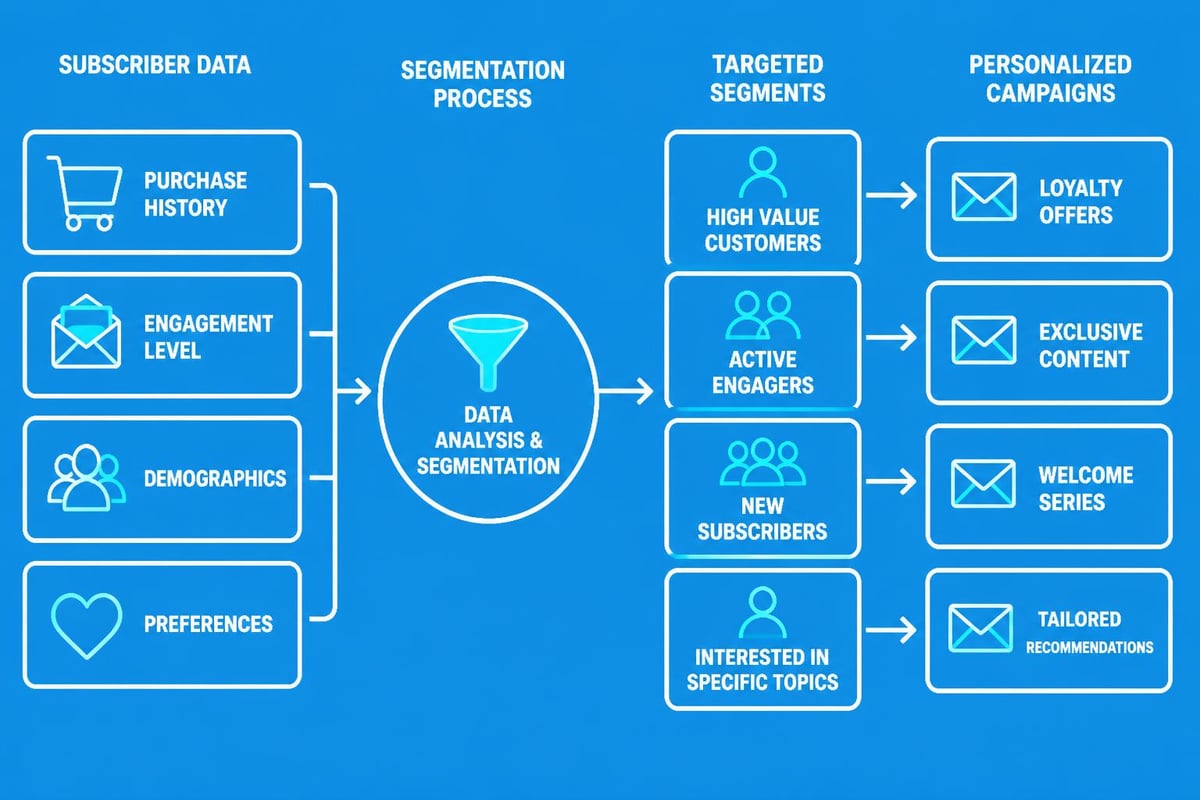
Segmentation allows businesses to get email messages to the right people at the right time. Rather than broadcasting identical content to your entire list, divide subscribers based on behaviour, preferences, demographics, or purchase history. This targeted approach improves relevance, which directly correlates with higher open rates and better overall engagement metrics.
Personalisation Beyond First Names
Modern personalisation extends far beyond inserting a subscriber's name into the subject line. Dynamic content blocks can display different products, recommendations, or messaging based on individual subscriber characteristics. When you get email personalisation right, messages feel individually crafted rather than mass-produced.
Consider these advanced personalisation approaches:
- Behavioural triggers: Sending abandoned cart reminders or product replenishment notices based on past actions
- Preference centres: Allowing subscribers to choose content topics, frequency, and format
- Predictive recommendations: Using purchase history to suggest complementary products
- Lifecycle positioning: Tailoring messages to where customers are in their journey with your business
Email automation capabilities enable these sophisticated personalisation strategies at scale, ensuring every subscriber receives relevant content without requiring manual intervention for each message.
Automation Workflows That Nurture Relationships
Automation transforms how small businesses get email working as a consistent revenue driver. Rather than manually creating and sending each campaign, automated workflows respond to subscriber actions, dates, or other triggers, delivering timely messages without ongoing manual effort.
Welcome series represent the most fundamental automation sequence. When someone subscribes to get email updates from your business, an automated welcome sequence introduces your brand, sets expectations, and begins building the relationship. Research consistently shows that welcome emails generate significantly higher engagement than standard promotional messages.
Essential Automation Sequences
Different automation workflows serve distinct purposes throughout the customer lifecycle:
| Workflow Type | Trigger | Primary Purpose | Typical Length |
|---|---|---|---|
| Welcome Series | New subscription | Introduction and expectation setting | 3-5 emails |
| Abandoned Cart | Cart abandonment | Recover potentially lost sales | 2-3 emails |
| Re-engagement | Inactivity period | Reactivate dormant subscribers | 2-4 emails |
| Post-Purchase | Transaction completion | Build loyalty and encourage repeat business | 3-6 emails |
| Educational Drip | Topic interest | Nurture leads with valuable content | 5-10 emails |
When businesses properly get email automation configured, these sequences work continuously in the background, nurturing relationships and driving conversions without requiring constant attention. The key lies in thoughtful planning of message sequences, appropriate timing between emails, and clear calls to action that guide subscribers toward desired outcomes.
Measuring Success and Continuous Improvement
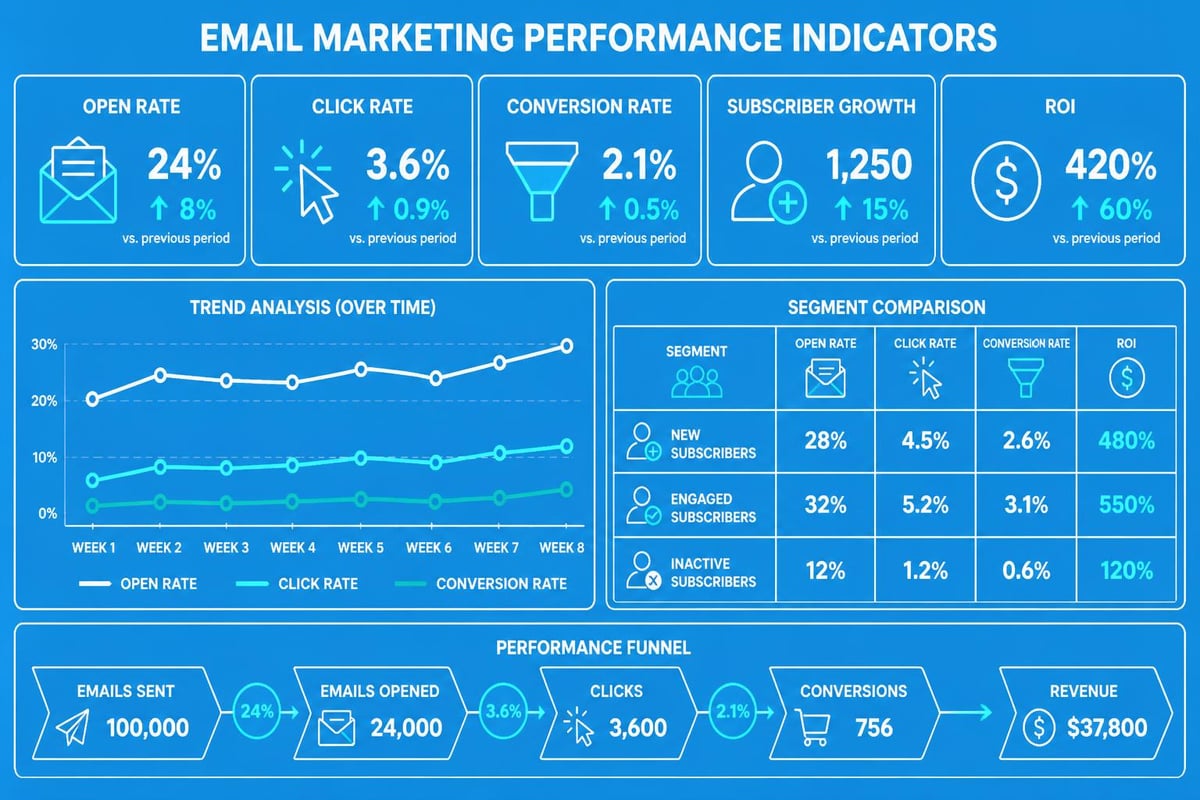
Understanding which metrics matter helps businesses get email performance insights that drive better decisions. Vanity metrics like total subscribers or messages sent provide limited value compared to engagement and conversion indicators.
Primary metrics to monitor:
- Open rates indicating subject line effectiveness and sender reputation
- Click-through rates showing content relevance and call-to-action strength
- Conversion rates measuring actual business outcomes
- Unsubscribe rates signalling content or frequency issues
- Bounce rates identifying list quality problems
Modern platforms provide detailed analytics that show not just what happened, but why certain patterns emerge. When you get email reporting systems working properly, you can identify which segments respond best to particular content types, optimal sending times for your audience, and which automation sequences generate the strongest results.
A/B Testing for Continuous Optimisation
Systematic testing removes guesswork from email marketing decisions. Rather than assuming what works, A/B testing allows you to get email performance data from real subscriber behaviour. Test one variable at a time-subject lines, send times, content layouts, or calls to action-to identify what resonates with your specific audience.
The most successful small businesses implement ongoing testing programmes rather than occasional experiments. Strategies for enhancing email campaigns consistently emphasise the importance of regular testing as a foundation for improvement. Even small optimisations compound over time, significantly improving overall programme performance.
List Hygiene and Maintenance Best Practices
Maintaining list quality ensures you continue to get email delivered effectively over the long term. Lists naturally degrade as people change jobs, abandon email addresses, or lose interest in your content. Active list management preserves sender reputation whilst improving engagement metrics.
Regular cleaning processes should remove:
- Hard bounces (invalid addresses) immediately after detection
- Soft bounces after multiple consecutive failures
- Subscribers who haven't engaged in 12-18 months
- Obvious spam trap addresses or role-based emails
- Duplicate entries that skew metrics
Some businesses resist removing inactive subscribers, viewing it as shrinking their potential reach. However, attempting to get email delivered to unengaged recipients damages sender reputation, potentially affecting deliverability to active subscribers. A smaller, engaged list consistently outperforms a larger, disengaged one.
Re-engagement Campaigns Before Removal
Before permanently removing inactive subscribers, implement re-engagement campaigns offering one final opportunity to confirm interest. These campaigns might offer special incentives, ask subscribers to update their preferences, or simply confirm they wish to continue receiving messages. Those who don't respond can be safely removed, knowing you provided multiple opportunities for re-engagement.
Mobile Optimisation Requirements
With the majority of email opens now occurring on mobile devices, businesses must get email rendering correctly across all screen sizes. Mobile optimisation extends beyond responsive design templates to encompass every element of the subscriber experience.
Mobile optimisation checklist:
- Single-column layouts that adapt to narrow screens
- Large, tap-friendly buttons and links (minimum 44x44 pixels)
- Concise subject lines that display fully on mobile devices
- Preheader text that extends the subject line message
- Compressed images that load quickly on cellular connections
- Clear hierarchy guiding readers through content
Testing how campaigns appear on various devices and email clients prevents mobile rendering issues from undermining your messages. Many businesses discover that what looks perfect on desktop computers creates frustrating experiences on smartphones, where most subscribers actually engage with content.
Frequency and Timing Considerations
Determining how often to get email sent to subscribers requires balancing visibility with respect for inbox space. Send too infrequently and subscribers forget who you are; send too often and you risk annoying people into unsubscribing.
Optimal frequency varies by industry, audience, and content value. B2B companies often succeed with weekly or bi-weekly newsletters, whilst retailers might send multiple promotional emails weekly during peak seasons. The key lies in consistency and providing sufficient value to justify each message.
| Business Type | Typical Frequency | Considerations |
|---|---|---|
| E-commerce Retailer | 2-5 per week | Balance promotions with content |
| B2B Services | 1-2 per week | Focus on educational value |
| Content Publishers | Daily to weekly | Match publishing schedule |
| Event-Based | Variable | Concentrated around events |
Preference centres allow subscribers to control frequency themselves, choosing how often they want to get email updates. This approach respects individual preferences whilst maintaining the relationship with subscribers who want less frequent contact.
Integration With Broader Marketing Efforts
Email marketing delivers maximum value when integrated with other channels rather than operating in isolation. When businesses get email working alongside social media, content marketing, and other initiatives, they create cohesive customer experiences that reinforce messaging across touchpoints.
Cross-channel integration opportunities include promoting social content in emails, using email to drive webinar registrations, retargeting email subscribers with coordinated social ads, and incorporating email signup opportunities throughout the customer journey. Understanding email marketing ROI potential helps justify the resources required for sophisticated integration strategies.
Data Synchronisation Across Platforms
Modern marketing technology enables businesses to get email data flowing between systems, creating unified customer profiles that inform personalisation across channels. When your email platform integrates with your CRM, e-commerce system, and analytics tools, you gain comprehensive visibility into customer behaviour that improves targeting and messaging across all channels.
Platform Selection for Small Businesses
Choosing the right platform determines how easily you can get email campaigns launched and managed. Small businesses need solutions that balance capability with usability, offering sophisticated features without requiring technical expertise to implement.
Essential platform capabilities include intuitive campaign builders, robust automation workflows, comprehensive analytics, reliable deliverability infrastructure, and responsive customer support. When evaluating options, consider both current needs and future growth, ensuring the platform can scale alongside your business.
Understanding the complete landscape of email marketing best practices helps identify which platform features align with proven strategies rather than getting distracted by novel features of questionable value. The most effective platforms make it simple to get email fundamentals right whilst providing room for sophistication as your programme matures.
Avoiding Common Implementation Pitfalls
Even experienced marketers sometimes make mistakes that undermine email effectiveness. Being aware of common pitfalls helps businesses get email programmes started on the right foundation.
Frequent mistakes to avoid:
- Purchasing email lists rather than building organically
- Neglecting mobile optimisation during campaign creation
- Sending without proper testing across devices and clients
- Ignoring unsubscribe requests or making the process difficult
- Failing to maintain consistent sending schedules
- Using misleading subject lines that damage trust
- Overlooking email deliverability fundamentals
Common rookie mistakes often stem from prioritising speed over quality or focusing exclusively on acquisition whilst neglecting retention. Small businesses particularly benefit from establishing solid foundations before pursuing advanced tactics, ensuring fundamental elements work properly before adding complexity.
Building Sender Reputation Over Time
Sender reputation functions like a credit score for email marketing, determining whether providers trust your messages enough to deliver them to inboxes. When businesses get email sending infrastructure established, they must focus on gradually building positive reputation through consistent good practices.
New senders should start with small volumes to engaged subscribers, gradually increasing as reputation builds. Sudden volume spikes or sends to purchased lists can trigger filters that damage reputation and reduce deliverability. Maintaining positive sender reputation requires ongoing attention to engagement metrics, complaint rates, and bounce management.
Reputation develops at both the IP address and domain level. Dedicated IPs provide complete control over reputation but require sufficient volume to maintain warmth. Shared IPs benefit from collective reputation but mean your deliverability can be affected by other senders' behaviour. Most small businesses succeed with reputable shared IP pools until their sending volume justifies dedicated infrastructure.
Advanced Segmentation Techniques
Beyond basic demographic segmentation, sophisticated approaches help businesses get email messages precisely targeted to subscriber interests and behaviours. Behavioural segmentation based on website activity, purchase history, and email engagement creates highly relevant audience groups.
RFM (Recency, Frequency, Monetary) segmentation identifies your most valuable customers and those at risk of churning. Subscribers who purchased recently, buy frequently, and spend significantly deserve different messaging than those who made a single small purchase years ago. When you get email segmentation working at this level, you can allocate resources appropriately across different customer value tiers.
Predictive segmentation uses machine learning to identify patterns in subscriber behaviour, predicting future actions like likelihood to purchase, churn risk, or product preferences. These advanced techniques become accessible as your programme matures and data volumes support meaningful pattern recognition.
Successfully implementing email marketing requires attention to technical fundamentals, strategic thinking about content and segmentation, and ongoing optimisation based on performance data. Small businesses that get email fundamentals right whilst continuously refining their approach build sustainable marketing channels that drive consistent results. Whether you're just starting out or looking to elevate an existing programme, Astonish Email provides the tools and guidance small businesses need to succeed with email marketing without the complexity of enterprise platforms.