Run Email: How to Execute High-Impact Campaigns in 2026
May 23, 2026
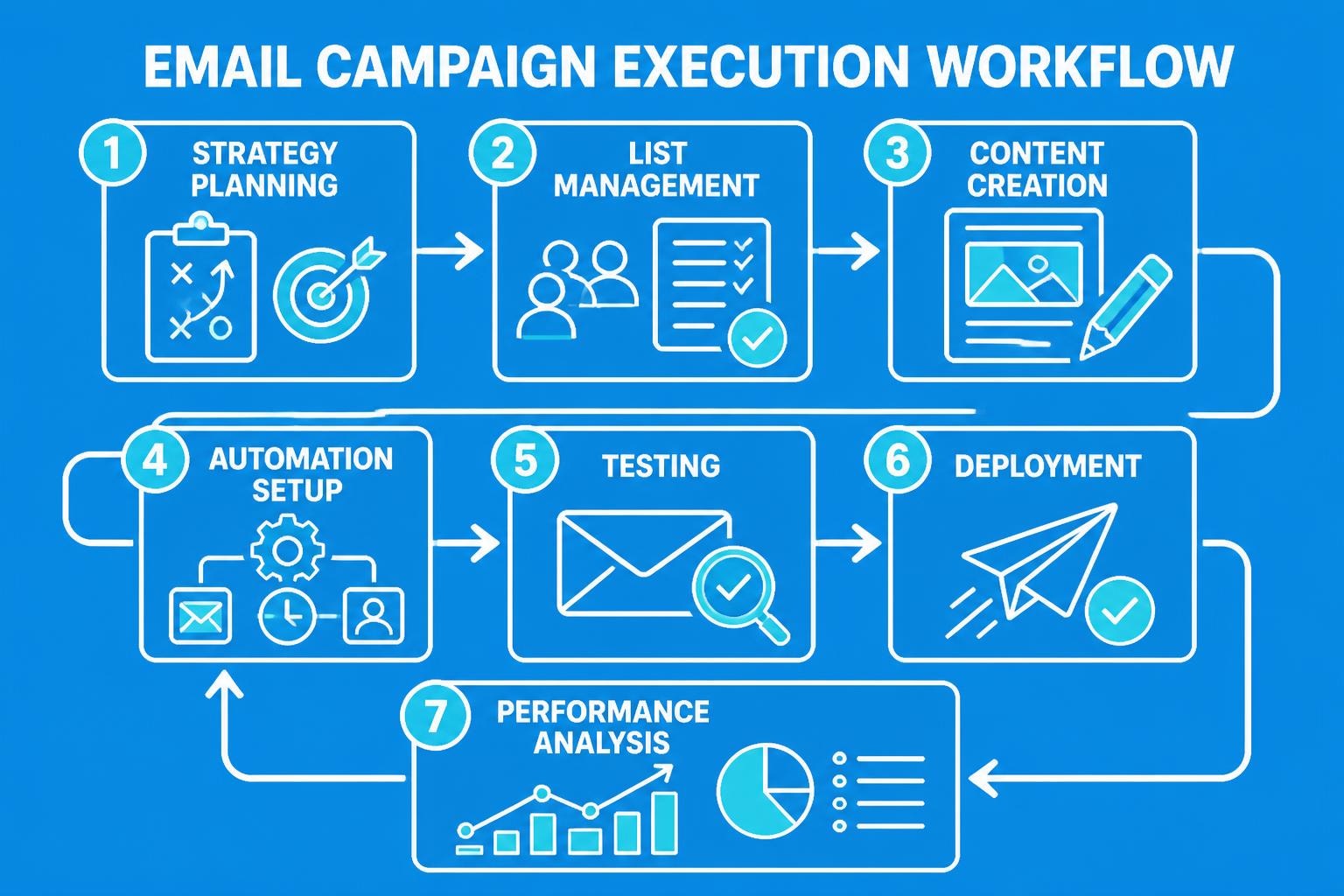
When you run email campaigns for your small business, you're tapping into one of the most powerful marketing channels available today. With an average return of £36 for every pound spent, email marketing remains unmatched in its ability to deliver measurable results. However, executing effective campaigns requires more than simply hitting send. Understanding how to properly run email initiatives involves strategic planning, technical execution, and continuous optimisation. This comprehensive guide explores the essential elements small businesses need to successfully run email campaigns that engage audiences and drive conversions.
Understanding the Fundamentals of Email Campaign Execution
To successfully run email marketing campaigns, you must first grasp the core components that separate effective initiatives from those that languish in spam folders. Small businesses often underestimate the complexity involved in executing professional campaigns, assuming that any message sent to a list will generate results.
The foundation begins with infrastructure. Before you run email campaigns at scale, you need reliable sending infrastructure that maintains your sender reputation. This includes proper domain authentication through SPF, DKIM, and DMARC records. These technical elements verify your identity to receiving servers and dramatically improve deliverability rates.
Building Your Campaign Architecture
Strategic campaign architecture determines how effectively you can run email initiatives over time. Consider your campaigns as interconnected programmes rather than isolated messages.
Key architectural elements include:
- Welcome series for new subscribers
- Regular newsletter schedules
- Promotional campaign calendars
- Re-engagement sequences for inactive contacts
- Transactional message workflows
When you establish a robust email system, each campaign type serves a specific purpose within your broader marketing strategy. Welcome emails, for instance, typically achieve four times higher engagement rates than standard promotional messages, making them essential to your overall programme.
Your architecture should also accommodate seasonal variations and business cycles. Planning quarterly campaign themes allows you to run email initiatives that align with customer needs throughout the year.
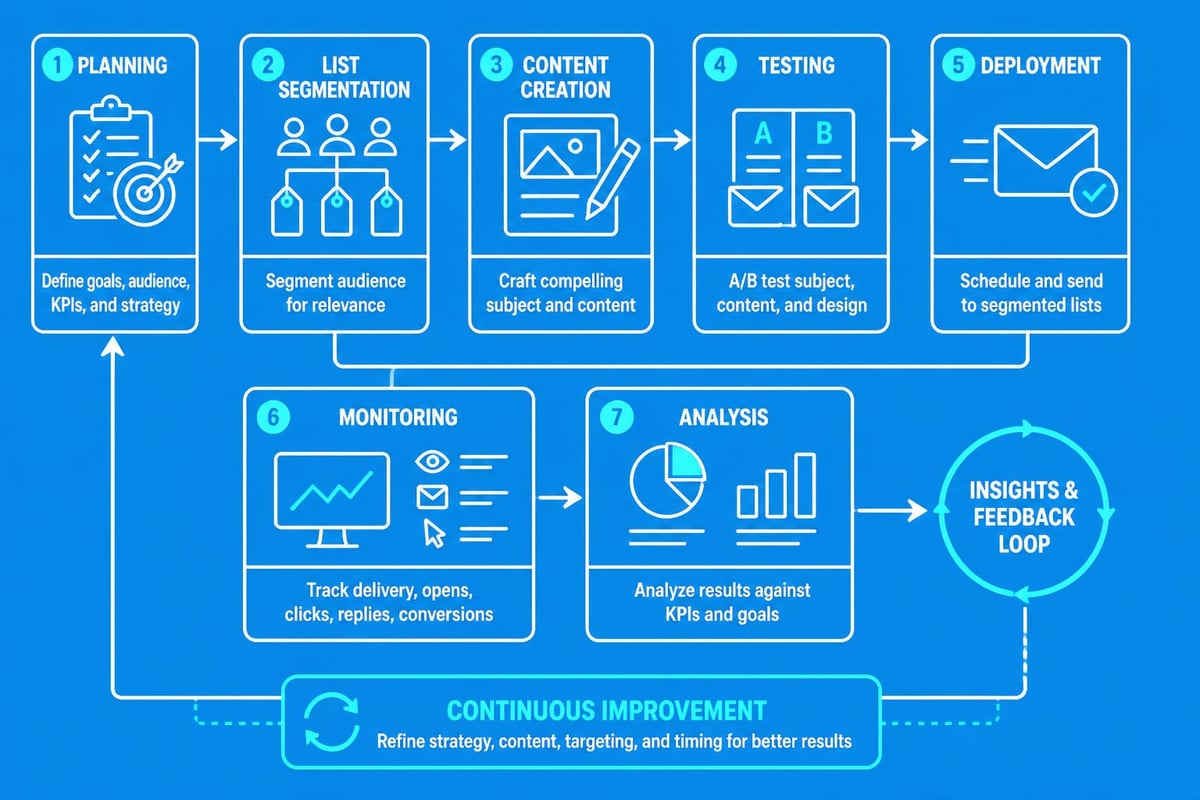
Technical Execution: Running Campaigns Properly
The technical aspects of how you run email campaigns directly impact deliverability and performance. Many small businesses struggle with technical execution, resulting in messages that never reach intended recipients.
Authentication and Deliverability
Modern email platforms scrutinize every message for authenticity. When you run email campaigns without proper authentication, you risk significant deliverability issues. According to email deliverability best practices, sender authentication has become non-negotiable.
| Authentication Type | Purpose | Impact on Deliverability |
|---|---|---|
| SPF (Sender Policy Framework) | Verifies sending servers | Prevents spoofing, improves inbox placement |
| DKIM (DomainKeys Identified Mail) | Authenticates message content | Validates message integrity |
| DMARC (Domain-based Authentication) | Provides reporting and policy | Protects brand reputation |
Implementing these protocols might seem technical, but most modern email platforms handle configuration automatically. When you send business emails, verification happens behind the scenes, protecting both your reputation and deliverability rates.
List Management and Segmentation
How you run email campaigns to different audience segments dramatically affects engagement. Sending identical messages to your entire database represents a missed opportunity for personalisation and relevance.
Effective segmentation allows you to:
- Divide contacts by engagement level (active, moderately active, inactive)
- Group by customer lifecycle stage (prospect, customer, loyal advocate)
- Segment by demographic data (location, industry, company size)
- Categorize by behavioral triggers (website visits, purchase history, content downloads)
- Organize by preferences (content interests, communication frequency)
When you run email campaigns to properly segmented audiences, you'll see significant improvements in open rates, click-through rates, and conversions. Research consistently shows that segmented campaigns outperform batch-and-blast approaches by margins exceeding 100%.
Content Strategy for Effective Campaigns
The content you include when you run email initiatives determines whether recipients engage or delete. Small businesses often focus excessively on promotional content whilst neglecting value-driven messaging.
Crafting Compelling Subject Lines
Your subject line represents the critical gatekeeper. No matter how well you run email campaigns technically, poor subject lines doom your efforts before recipients even open messages.
Effective subject line principles:
- Keep length under 50 characters for mobile optimization
- Create urgency without resorting to spam triggers
- Personalize with recipient names or relevant details
- Test questions versus statements
- Use numbers and specificity when appropriate
Subject line testing should become routine when you run email campaigns. A/B testing different approaches reveals what resonates with your specific audience. Some lists respond better to direct benefit statements, whilst others engage more with curiosity-driven headlines.
Email Body Content Best Practices
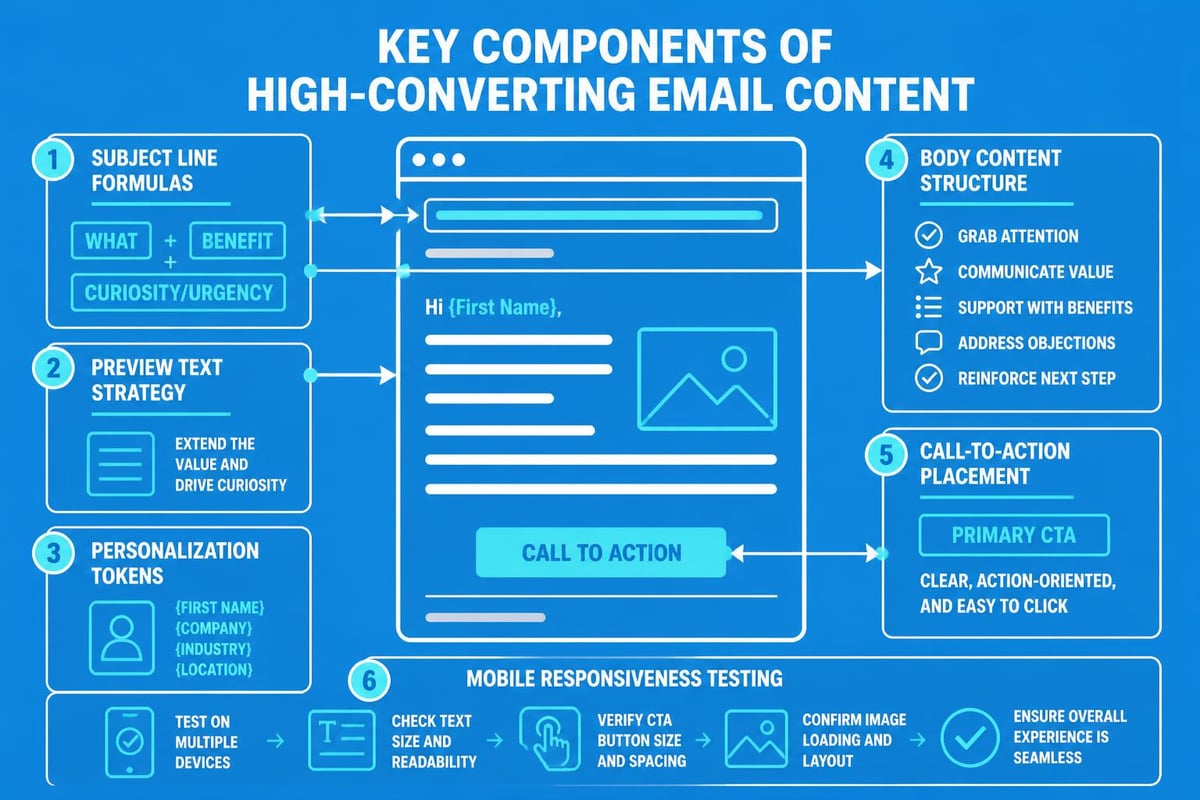
The strategies to supercharge email campaigns emphasize content quality as paramount. When you run email initiatives, every element must serve a purpose and guide readers toward your desired action.
Structure your content with:
- Scannable formatting using short paragraphs, bullet points, and subheadings
- Clear value proposition establishing why recipients should care
- Single primary call-to-action avoiding decision paralysis
- Mobile-optimized design ensuring readability on all devices
- Visual hierarchy guiding eyes through the message naturally
Small businesses often include too many competing messages when they run email campaigns. Focus each campaign on one primary objective, whether that's driving website traffic, promoting a product, or nurturing relationships.
Automation: Running Campaigns That Scale
The ability to run email campaigns automatically represents one of the most significant advantages modern platforms offer small businesses. Email marketing automation enables you to deliver timely, relevant messages without manual intervention.
Setting Up Automated Workflows
Automated workflows allow you to run email sequences triggered by specific actions or conditions. Unlike one-time email sends, automated campaigns operate continuously, engaging contacts at optimal moments.
Common automation workflows include:
- Welcome series triggered by subscription
- Abandoned cart recovery activated by incomplete purchases
- Post-purchase follow-up initiated after transactions
- Re-engagement campaigns targeting inactive subscribers
- Birthday or anniversary messages based on customer data
When you run email automation effectively, you maintain consistent communication without overwhelming your team. A well-designed welcome series might include five messages delivered over two weeks, nurturing new subscribers whilst you focus on other business priorities.
Trigger-Based Campaign Logic
Sophisticated automation allows you to run email campaigns based on complex behavioral triggers. This approach delivers messages when recipients are most receptive, dramatically improving engagement rates.
| Trigger Type | Example Condition | Automated Response |
|---|---|---|
| Behavioral | Downloads whitepaper | Send related case study in 3 days |
| Engagement | Opens 3+ emails in week | Send exclusive VIP offer |
| Lifecycle | Customer reaches 1-year anniversary | Send thank you with special discount |
| Inactivity | No opens in 90 days | Launch re-engagement series |
Modern platforms make it straightforward to run email automation with visual workflow builders. You design the logic once, and campaigns execute automatically based on your defined conditions.
Testing and Optimization
Every time you run email campaigns, you generate valuable data about what works for your audience. Small businesses that systematically test and optimize outperform those relying on assumptions.
A/B Testing Methodology
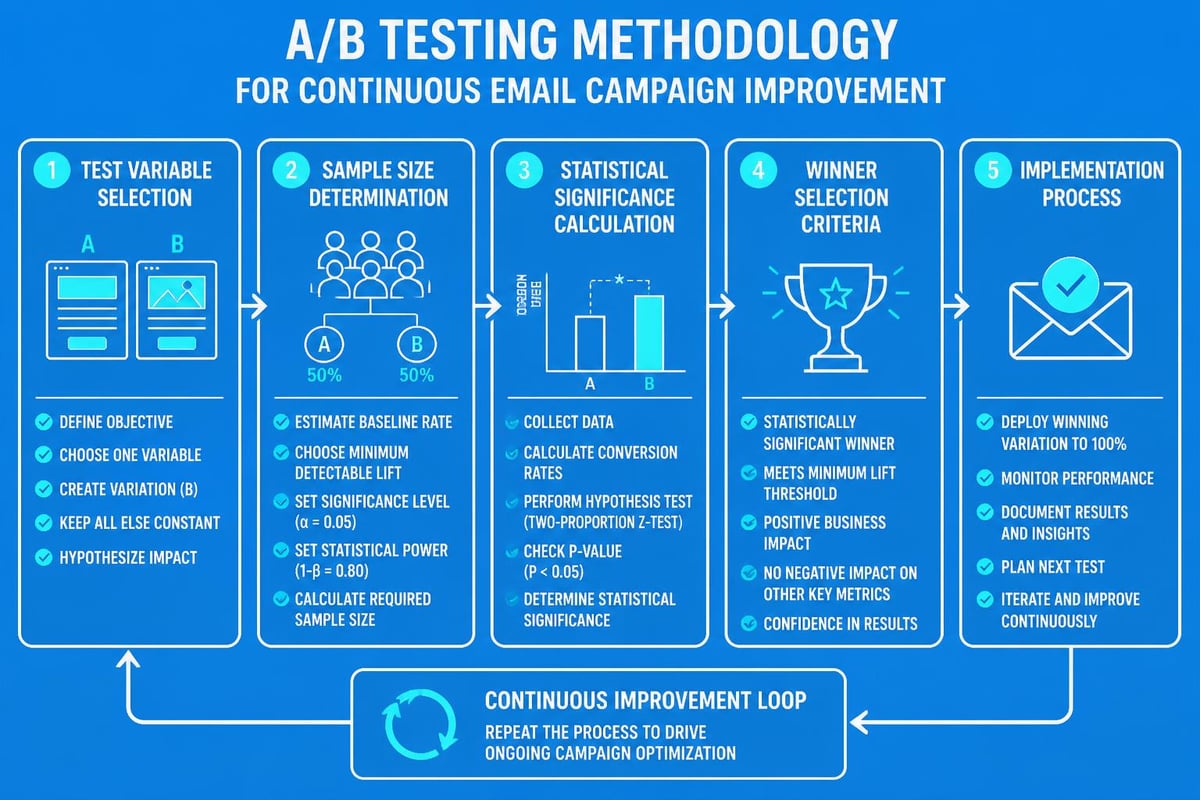
A/B testing provides scientific insights into campaign effectiveness. When you run email tests properly, you isolate variables and measure their impact on key metrics.
Elements to test systematically:
- Subject lines and preview text
- Sender names and email addresses
- Content length and structure
- Call-to-action wording and placement
- Send times and days of week
- Visual elements and design treatments
The key is testing one variable at a time. When you run email tests with multiple simultaneous changes, you cannot determine which modification drove results. Start with subject lines, as they directly impact open rates, then progress to content elements affecting click-through rates.
Metrics That Matter
Understanding which metrics to track when you run email campaigns prevents you from drowning in irrelevant data. Focus on indicators that connect to business outcomes.
Priority metrics include:
- Open rate (industry benchmark: 15-25%)
- Click-through rate (industry benchmark: 2-5%)
- Conversion rate (percentage completing desired action)
- Bounce rate (should remain below 2%)
- Unsubscribe rate (acceptable: under 0.5% per campaign)
- Revenue per email (total campaign revenue divided by emails sent)
When you track email marketing ROI, you transform email from a cost center into a measurable revenue driver. Many small businesses run email campaigns without properly attributing sales, missing crucial insights into campaign effectiveness.
Compliance and Best Practices
When you run email campaigns in 2026, compliance with regulations isn't optional. The UK GDPR and Privacy and Electronic Communications Regulations (PECR) establish strict requirements for commercial email.
Legal Requirements for Email Marketing
Before you run email campaigns to UK recipients, ensure you have proper legal foundations:
- Obtain explicit consent through clear opt-in mechanisms
- Provide transparent privacy information about data usage
- Include functioning unsubscribe links in every message
- Honor opt-out requests promptly (within 24-48 hours)
- Maintain accurate records of consent and preferences
The email marketing best practices guide emphasizes that compliance builds trust whilst protecting your business from penalties. When you run email initiatives with strong consent foundations, you also tend to see better engagement since your list comprises genuinely interested recipients.
Permission-Based Marketing Advantages
Running email campaigns to permission-based lists delivers superior results compared to purchased or scraped contacts. Recipients who actively choose to receive your communications engage at significantly higher rates.
Permission-based marketing benefits:
- Higher open rates and engagement
- Improved sender reputation
- Better deliverability to primary inbox
- Lower spam complaints
- Stronger customer relationships
- Sustainable long-term growth
When you build business email lists organically, you create valuable marketing assets that appreciate over time rather than degrading.
Frequency and Timing Optimization
How often you run email campaigns impacts subscriber satisfaction and engagement. Finding the optimal frequency requires balancing visibility with respect for recipient attention.
Determining Send Frequency
Small businesses frequently struggle with frequency decisions when they run email campaigns. Send too rarely, and subscribers forget about you. Send too often, and you risk annoying your audience.
Frequency considerations:
| Business Type | Recommended Starting Frequency | Adjustment Strategy |
|---|---|---|
| B2B Services | Weekly to fortnightly | Increase if engagement remains strong |
| Retail/E-commerce | 2-3 times weekly | Reduce for segments showing fatigue |
| Content Publishers | Daily to weekly | Segment by preference options |
| Consultants/Coaches | Fortnightly to monthly | Quality over quantity approach |
Monitor engagement metrics closely as you run email campaigns at different frequencies. If open rates decline whilst unsubscribe rates increase, you're likely sending too often. Conversely, if engagement remains strong, you might have room to increase frequency.
Optimal Send Times
The question of when to run email campaigns generates endless debate. Whilst general guidelines exist, your specific audience may deviate from averages.
Research suggests:
- Tuesday through Thursday generally outperform Monday and Friday
- Mid-morning (9-11am) and early afternoon (1-3pm) often work well
- Sunday evenings can be effective for B2C audiences
- Avoid early mornings and late evenings unless data supports it
The only way to truly optimize send times for your audience is through testing. Run email campaigns at different times and track performance data. Your subscribers' behavior patterns may surprise you.
Mobile Optimization Essentials
With over 60% of emails now opened on mobile devices, how you run email campaigns for mobile users determines overall success. Mobile optimization isn't optional; it's fundamental.
Mobile-First Design Principles
When you run email campaigns, design for mobile first, then ensure desktop compatibility. This approach ensures the majority of your audience receives optimal experiences.
Mobile optimization checklist:
- Use responsive email templates that adapt to screen sizes
- Keep subject lines under 40 characters for mobile preview
- Design with single-column layouts for easy scrolling
- Use minimum 14px font sizes for readability
- Create touch-friendly buttons (minimum 44x44 pixels)
- Compress images for faster loading
- Test on multiple devices and email clients
The best practices for designing professional campaigns emphasize mobile-first thinking as essential. When you run email initiatives with mobile optimization as an afterthought, you frustrate the majority of recipients.
Testing Across Devices
Before you run email campaigns to your full list, test rendering across popular email clients and devices. Email HTML renders differently across Gmail, Outlook, Apple Mail, and other platforms.
Testing email clients helps identify formatting issues before they impact your audience. Many email platforms offer preview tools showing how messages appear across dozens of configurations.
Personalization and Dynamic Content
Advanced personalization capabilities allow you to run email campaigns that feel individually crafted whilst sending to thousands of recipients simultaneously.
Beyond First Name Personalization
Basic personalization inserts recipient names into subject lines or greetings. Advanced personalization adapts entire message content based on recipient data and behavior.
Dynamic content opportunities:
- Product recommendations based on browsing or purchase history
- Location-specific offers customized for recipient geography
- Industry-relevant content tailored to business sector
- Lifecycle-appropriate messaging aligned with customer journey stage
- Behavioral triggers responding to specific actions
When you run email campaigns with sophisticated personalization, recipients perceive messages as more relevant and valuable. This perception directly translates to higher engagement and conversion rates.
Data-Driven Content Selection
The content blocks you include when you run email campaigns can automatically adapt based on recipient data. A single campaign template might display different hero images, product features, or calls-to-action depending on who receives it.
This approach requires:
- Clean, organized contact data with relevant attributes
- Content variations prepared for different segments
- Logic rules determining which content displays to whom
- Testing protocols ensuring all variations work properly
Small businesses implementing dynamic content when they run email campaigns often see engagement increases of 20-50% compared to static alternatives.
Integration With Broader Marketing Strategy
Email shouldn't exist in isolation when you run email initiatives. Integration with other marketing channels creates synergistic effects that amplify results.
Cross-Channel Coordination
Coordinate when you run email campaigns with your broader marketing calendar:
- Social media campaigns reinforcing email messages
- Content marketing providing valuable resources to share via email
- Paid advertising retargeting email subscribers
- Website updates aligning with email announcements
- Events and webinars promoted through email sequences
When channels work together, you create multiple touchpoints that guide prospects through customer journeys more effectively. An email subscriber might see your social posts, read your blog content, and receive your emails, with each touchpoint reinforcing your message.
Marketing Automation Platforms
Modern platforms enable you to run email campaigns as part of comprehensive marketing automation. Contacts move through multi-channel workflows based on their actions across all touchpoints.
For example, a prospect might:
- Download a guide from your website
- Receive a welcome email series
- Visit specific product pages
- Receive targeted emails about those products
- See retargeting ads on social media
- Return to make a purchase
Throughout this journey, you run email campaigns that work in concert with other channels, creating a cohesive experience.
Performance Analysis and Reporting
Data from each campaign you run email initiatives for provides insights that improve future performance. Systematic analysis transforms raw metrics into actionable intelligence.
Campaign Performance Reviews
After you run email campaigns, conduct structured performance reviews examining:
Quantitative metrics:
- Open rate versus historical average and industry benchmarks
- Click-through rate on primary call-to-action
- Conversion rate for campaign objective
- Revenue generated (for promotional campaigns)
- List growth rate
Qualitative insights:
- Replies and direct responses from recipients
- Social sharing of email content
- Customer feedback about relevance
- Unsubscribe reasons (when provided)
Regular reviews help you identify patterns. You might discover that certain content types consistently outperform others when you run email campaigns, or that specific segments engage more reliably.
Continuous Improvement Framework
Use insights from previous campaigns to improve how you run email initiatives going forward:
- Document what worked in successful campaigns
- Analyze underperformers to understand what failed
- Formulate hypotheses about potential improvements
- Test new approaches systematically
- Measure results and compare to benchmarks
- Refine and repeat the cycle
This iterative approach ensures you're constantly evolving your email marketing capabilities rather than repeating the same approaches indefinitely.
Successfully running email campaigns in 2026 requires balancing technical execution, strategic planning, and continuous optimization. Small businesses that master these elements unlock email marketing's exceptional ROI potential whilst building stronger customer relationships. Whether you're launching your first campaign or refining established programmes, Astonish Email provides the tools and support small businesses need to execute professional email marketing that drives measurable results. Start running more effective email campaigns today with platforms designed specifically for small business success.