Business Email UK: Complete Guide for Small Businesses
April 26, 2026
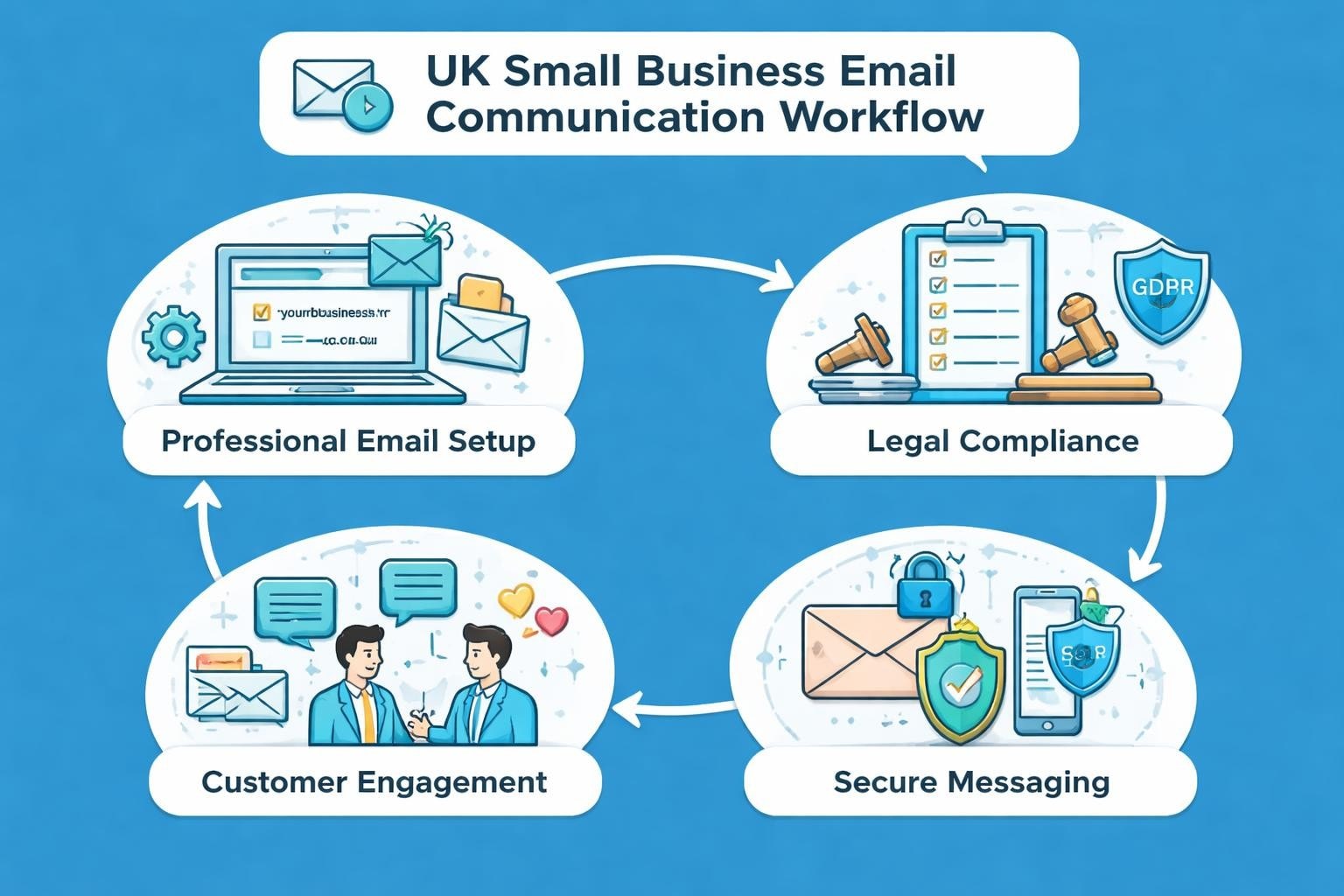
Professional email communication forms the backbone of modern British business operations. Whether you're launching a startup in Manchester, running an established firm in London, or managing a growing enterprise across the UK, understanding the nuances of business email uk practices is essential for success. From legal compliance to professional etiquette, the landscape of business email uk standards requires careful navigation to build credibility, maintain customer relationships, and protect your organisation from regulatory pitfalls.
Understanding Business Email UK Requirements
The foundation of professional business email uk communication starts with knowing what the law requires. Unlike personal email accounts, business correspondence in the United Kingdom must adhere to specific statutory obligations that protect both businesses and consumers.
Legal Obligations for UK Business Emails
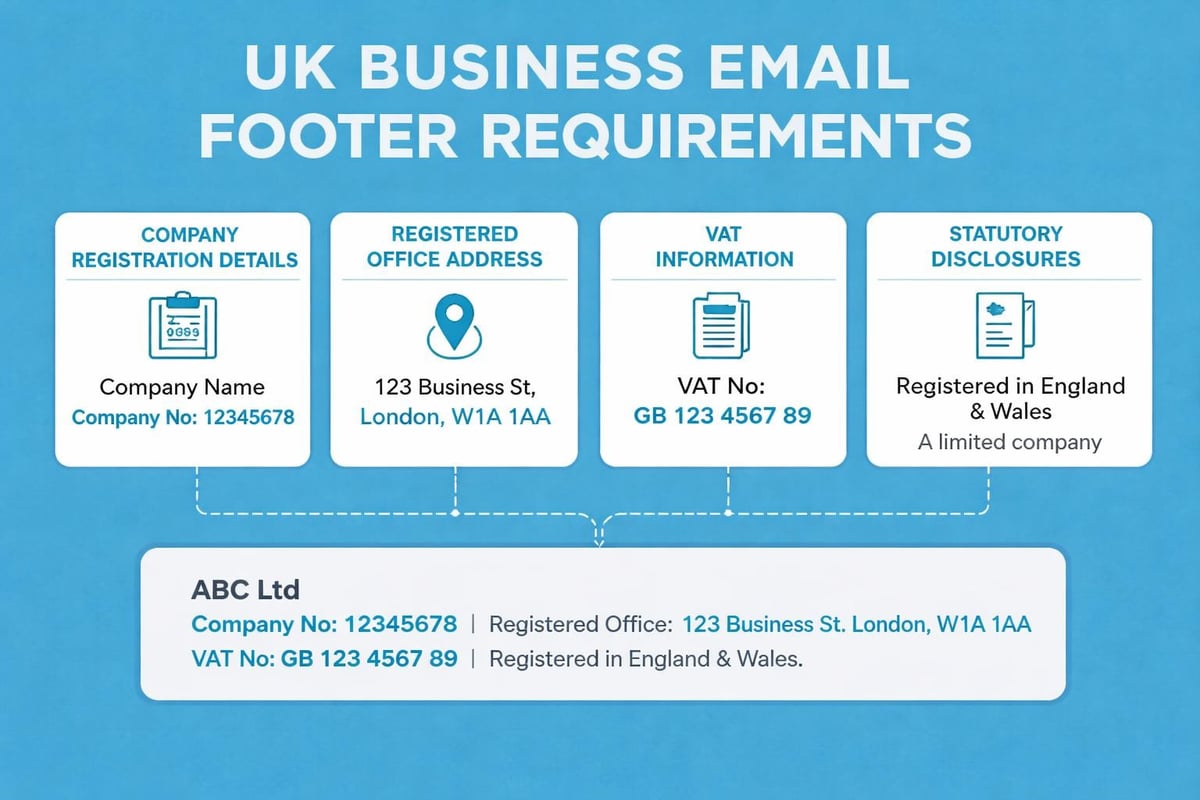
Every business email uk communication must comply with the Companies Act 2006, which mandates specific information in your email footer. Limited companies must display their registered company name, registration number, registered office address, and place of registration. These requirements aren't optional-they're legally binding.
The legal requirements for email footers in the UK extend beyond basic company details. If you choose to include directors' names, you must list all directors. Similarly, if you mention share capital, you must state the paid-up share capital amount. Failing to include these details can result in fines and damage to your professional reputation.
Essential email footer elements include:
- Full registered company name
- Company registration number
- Registered office address
- Place of registration (England and Wales, Scotland, or Northern Ireland)
- VAT number (if applicable)
GDPR and PECR Compliance
Business email uk communications must also comply with UK GDPR and the Privacy and Electronic Communications Regulations (PECR). These frameworks govern how you collect, store, and use email addresses for marketing purposes. Understanding whether cold emailing businesses is legal in the UK requires distinguishing between B2B and B2C contexts.
For B2B communications, the regulations are more permissive. You can generally send marketing emails to corporate email addresses without prior consent, provided the content relates to the recipient's business activities. However, you must always include a clear unsubscribe mechanism and honour opt-out requests promptly.
B2C marketing requires explicit consent before sending promotional emails. This means pre-ticked boxes don't count-recipients must actively opt in. When setting up a business email system, ensure your subscription forms comply with these requirements from day one.
Choosing the Right Business Email UK Solution
Selecting an appropriate email platform significantly impacts your professional image and operational efficiency. The choice between free consumer services and dedicated business email uk solutions shapes how clients and partners perceive your organisation.
Professional Domain-Based Email
Using a custom domain email address ([email protected]) instantly elevates your credibility compared to generic services. When considering options for a free business email address in the UK, weigh the long-term implications of your choice.
| Email Type | Professionalism | Features | Cost | Best For |
|---|---|---|---|---|
| Generic (Gmail, Yahoo) | Low | Basic | Free | Personal use only |
| Domain-based free tier | Medium | Limited storage | Free-Low | Startups, testing |
| Premium business email | High | Full features | £3-15/user/month | Growing businesses |
| Enterprise solutions | Very High | Advanced security | £15+/user/month | Large organisations |
A professional business email account demonstrates commitment to your brand. It builds trust, ensures consistency across your team, and provides scalability as you grow. Small businesses often underestimate how quickly email needs expand beyond simple messaging.
Integration and Workflow Capabilities
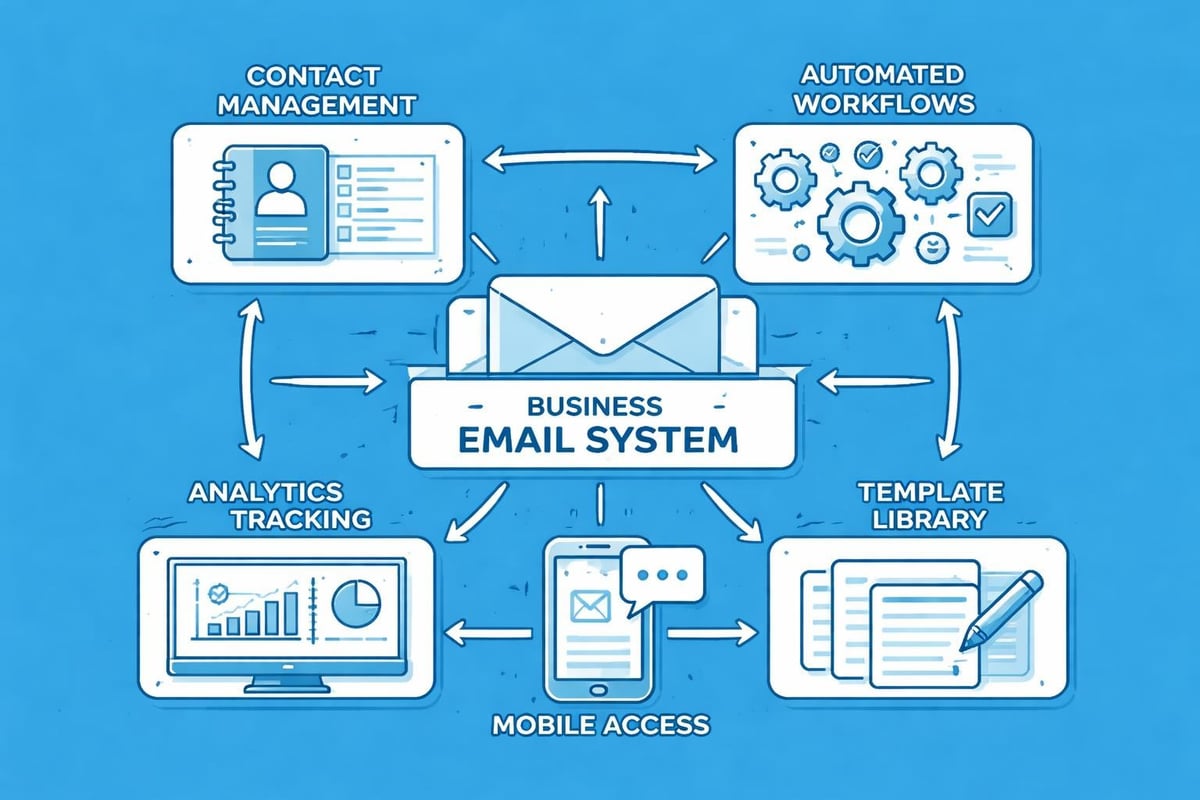
Modern business email uk platforms offer far more than message delivery. Integration with customer relationship management systems, project management tools, and marketing automation platforms transforms email from a simple communication channel into a central business hub.
When evaluating platforms, consider:
- Contact management capabilities that sync with your CRM
- Template libraries for consistent branding
- Automation features for welcome sequences and follow-ups
- Analytics dashboards to track engagement metrics
- Mobile accessibility for on-the-go management
Small businesses benefit particularly from platforms designed specifically for their needs. Email marketing for small businesses requires balancing functionality with simplicity, ensuring teams can execute sophisticated campaigns without extensive technical knowledge.
Business Email UK Security Best Practices
Email remains the primary vector for cyberattacks targeting UK businesses. From phishing attempts to ransomware delivery, securing your business email uk infrastructure protects both your organisation and your customers' sensitive data.
Authentication Protocols
Implementing proper email authentication prevents spoofing and improves deliverability. Three critical protocols form the foundation of business email uk security:
SPF (Sender Policy Framework) specifies which servers can send email on your domain's behalf. Without SPF records, your legitimate emails may land in spam folders whilst fraudsters can more easily impersonate your domain.
DKIM (DomainKeys Identified Mail) adds a digital signature to outgoing messages, verifying they haven't been altered in transit. This cryptographic authentication reassures recipients that your emails are genuine.
DMARC (Domain-based Message Authentication, Reporting, and Conformance) builds on SPF and DKIM, telling receiving servers how to handle emails that fail authentication checks. It also provides reports about attempted spoofing.
Encryption and Data Protection
Following email security best practices ensures sensitive business communications remain confidential. Transport Layer Security (TLS) encrypts emails in transit, whilst end-to-end encryption protects particularly sensitive messages.
Consider these security layers:
- Two-factor authentication for all user accounts
- Regular password updates with strong complexity requirements
- Automatic logout after periods of inactivity
- Mobile device management for company smartphones
- Regular security audits and penetration testing
Data protection extends beyond preventing unauthorized access. Understanding your data retention policy and antispam policy ensures compliance with UK GDPR whilst maintaining operational efficiency.
Professional Email Etiquette for UK Business
The quality of your business email uk communications directly influences how professionals perceive your organisation. Mastering email etiquette separates credible businesses from amateur operations.
Structuring Professional Messages
Every business email uk message should follow a clear structure that respects recipients' time whilst conveying your message effectively. Understanding professional email etiquette in the UK helps you navigate cultural expectations.
Start with an appropriate greeting. "Dear Mr Smith" maintains formality for first contact, whilst "Hi James" suits established relationships. Avoid overly casual openings like "Hey" in initial business correspondence.
Your subject line determines whether recipients open your message. Make it specific and action-oriented: "Proposal for Q2 Marketing Campaign" beats "Following up" every time.
Tone and Language Considerations
British business communication typically favours understatement over hyperbole. Phrases like "I wondered if you might consider" feel more natural than "You absolutely must take advantage of this incredible opportunity."
Key tone guidelines:
- Use polite language without being obsequious
- Avoid exclamation marks except for genuine celebration
- Employ active voice for clarity
- Keep sentences concise and scannable
- Proofread thoroughly before sending
When discussing simple business email approaches, remember that simplicity doesn't mean brevity alone. Clear structure, logical flow, and appropriate detail matter more than word count.
Response Time Expectations
Business email uk culture generally expects responses within 24-48 hours during working days. Setting up automated out-of-office replies during holidays maintains professional standards and manages expectations.
For urgent matters, indicate time sensitivity in the subject line and consider following up with alternative communication channels if necessary. However, resist marking every message as high priority-doing so diminishes the effectiveness when genuinely urgent situations arise.
Creating Effective Business Email UK Campaigns
Strategic email marketing drives customer engagement and revenue growth for UK businesses of all sizes. Moving beyond basic newsletters requires understanding what makes recipients open, read, and act on your messages.
Segmentation and Personalisation
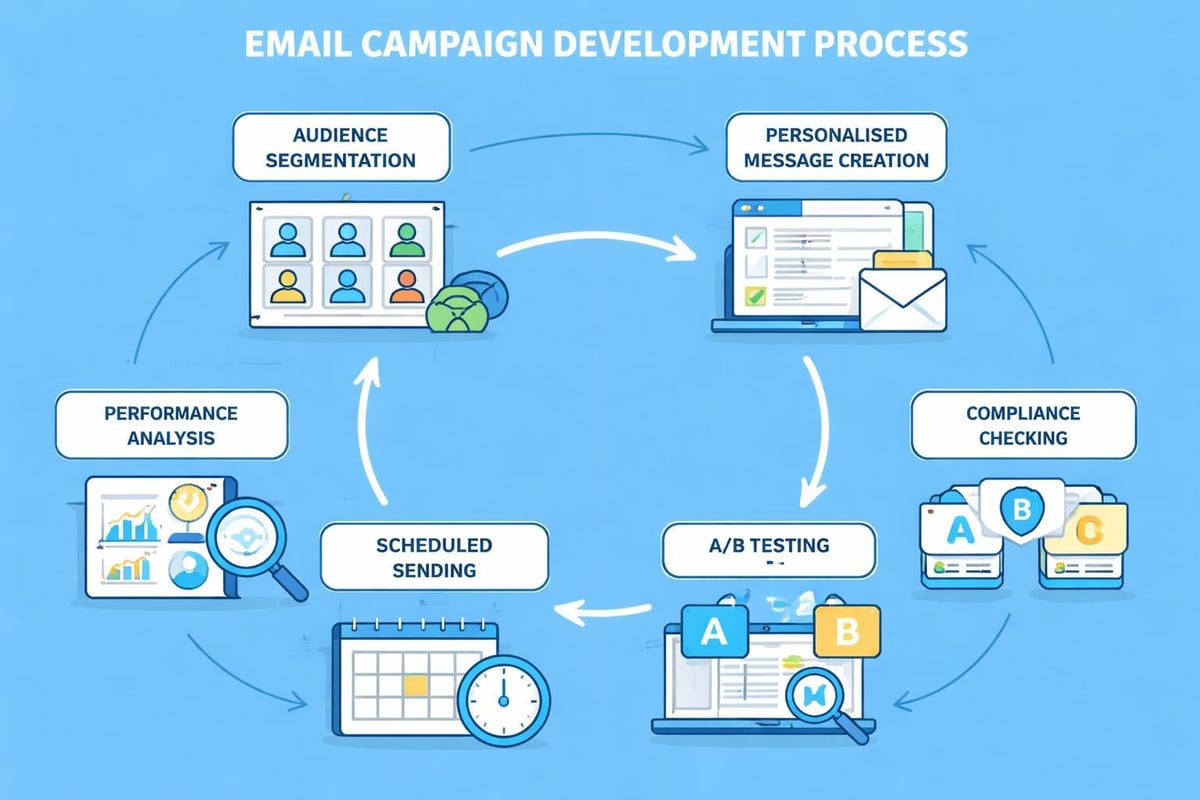
Generic blast emails achieve poor results compared to targeted, relevant messages. Segmenting your audience by factors like purchase history, engagement level, industry, or geographic location enables personalised communication that resonates.
Personalisation extends beyond inserting first names. Reference specific interactions, acknowledge preferences, and tailor content to recipient interests. Small businesses can achieve sophisticated personalisation without enterprise budgets by choosing platforms built for their needs.
Compliance in Marketing Emails
When sending marketing emails to UK businesses, you must follow essential compliance rules that govern commercial communications. Every marketing email must clearly identify the sender, include accurate contact information, and provide a straightforward unsubscribe mechanism.
| Compliance Requirement | Implementation | Why It Matters |
|---|---|---|
| Clear sender identification | Display company name prominently | Builds trust, legal requirement |
| Physical address | Include in footer | Companies Act compliance |
| Unsubscribe link | Visible, functional, honoured within 28 days | PECR requirement |
| Honest subject lines | No misleading claims | Maintains reputation, legal compliance |
| Data protection | Secure storage, limited access | GDPR requirement |
Understanding GDPR and cold email regulations in the UK helps you navigate the difference between legitimate business development and spam. Document your legitimate interest basis for B2B outreach and maintain records of consent for B2C marketing.
Testing and Optimisation
Successful business email uk campaigns rely on continuous improvement through testing. A/B testing subject lines, send times, call-to-action placement, and content formats reveals what resonates with your specific audience.
Track these key metrics:
- Open rates indicate subject line and sender reputation effectiveness
- Click-through rates measure content relevance and engagement
- Conversion rates show how well emails drive desired actions
- Unsubscribe rates signal content-audience fit issues
- Bounce rates reveal list quality problems
When reviewing business email account performance, look beyond vanity metrics. A 40% open rate means little if nobody converts. Focus on metrics that align with your business objectives.
Building Trust Through Email Communications
Email's role in establishing and maintaining business relationships cannot be overstated. Every message either strengthens or weakens recipient trust in your organisation.
Consistency Across Touchpoints
Your business email uk communications should reflect your brand identity consistently. From visual design to tone of voice, recipients should immediately recognise your messages. This consistency extends to signature formatting, colour schemes, and logo usage.
Creating email templates ensures consistency whilst saving time. Develop templates for common scenarios like client onboarding, project updates, invoices, and follow-ups. Templates provide structure whilst allowing personalisation where it matters.
Handling Contractual Emails
Many businesses don't realise that email agreements can be legally binding under English law. Exchange of emails containing offer, acceptance, consideration, and intention to create legal relations can form enforceable contracts.
This reality makes careful wording essential. When negotiating terms, be explicit about what constitutes formal acceptance. Consider including disclaimers stating that emails don't form binding agreements until formal contracts are signed.
For contractual matters, ensure you:
- Maintain complete email records
- Use clear, unambiguous language
- Confirm verbal agreements in writing
- Archive important email threads securely
- Consult legal advisors for significant commitments
Building Long-Term Relationships
Effective business email uk strategies focus on relationship building, not just transactions. Regular, valuable communication keeps your business top-of-mind without being pushy.
Share industry insights, celebrate customer milestones, and provide helpful resources. Educational content positions your business as a trusted advisor rather than just a vendor. When customers need services you provide, they'll think of you first.
When creating a new business email account, think beyond immediate needs. Plan for relationship nurturing sequences that maintain engagement between purchases or project milestones.
Mobile Optimisation for Business Email UK
Over 60% of business emails are now opened on mobile devices. If your messages don't display properly on smartphones, you're losing engagement and revenue.
Responsive Design Principles
Mobile-optimised business email uk campaigns use responsive design that adapts to different screen sizes. Single-column layouts work better than multi-column designs. Large, tappable buttons prevent frustrated recipients from abandoning your calls to action.
Mobile optimisation checklist:
- Subject lines under 50 characters display fully
- Preheader text provides additional context
- Font sizes of at least 14px ensure readability
- Images load quickly and scale appropriately
- Links and buttons have adequate tap targets (minimum 44x44 pixels)
Test emails across multiple devices and email clients before sending. What looks perfect in your desktop client might break completely on mobile.
Loading Speed Considerations
Heavy images and complex HTML slow email loading on mobile connections. Compress images without sacrificing quality, and keep total email size under 102KB to prevent Gmail clipping.
Recipients won't wait for slow-loading emails. They'll delete them and potentially unsubscribe. Prioritise speed alongside aesthetics.
Managing Email Volume and Productivity
As your business grows, email volume can become overwhelming. Implementing systems and processes prevents inbox overload from sabotaging productivity.
Folder Organisation and Filters
Strategic folder structures and automated filters keep business email uk inboxes manageable. Create folders for different projects, clients, or priority levels. Set up rules that automatically sort incoming messages based on sender, subject keywords, or other criteria.
Priority inbox features help surface important messages whilst deferring less urgent communications. However, avoid over-complicating your system-the goal is simplification, not creating another layer of complexity.
Response Templates and Automation
Automating routine responses saves significant time whilst maintaining personalisation. Create templates for frequently asked questions, appointment confirmations, and standard acknowledgements. Personalise these templates with merge fields for recipient names and specific details.
When learning how to send email messages efficiently, consider which tasks genuinely require bespoke responses versus those that can use templates as starting points.
Team Collaboration Tools
Shared inboxes and team collaboration features ensure customer queries don't fall through the cracks when team members are unavailable. Multiple people can access support@, sales@, or info@ addresses whilst maintaining accountability through internal notes and assignment systems.
Consider these collaboration features:
- Internal tags and notes visible only to team members
- Assignment rules that distribute incoming emails to appropriate staff
- Collision detection preventing duplicate responses
- Unified customer histories showing all previous interactions
- Performance tracking for response times and resolution rates
Future-Proofing Your Business Email UK Strategy
Email marketing continues evolving with new technologies and changing user expectations. Staying ahead of trends ensures your business email uk approach remains effective.
Artificial Intelligence Integration
AI-powered features now help businesses optimise send times, personalise subject lines, and predict which content will resonate with specific recipients. Machine learning algorithms analyse engagement patterns to continually improve campaign performance.
Whilst AI offers powerful capabilities, maintain the human touch that builds genuine relationships. Use AI for data analysis and optimisation whilst reserving authentic personal communication for relationship building.
Privacy-First Marketing
Increasing privacy concerns and regulations push business email uk practices toward transparency and user control. The trend toward first-party data collection and away from third-party tracking will continue.
Build direct relationships with your audience. Focus on value exchange-providing genuinely useful content in return for email addresses and attention. This approach creates sustainable marketing practices that withstand regulatory changes.
Interactive Email Elements
Advanced email capabilities now support interactive elements like surveys, carousels, and accordion menus within messages. These features increase engagement by enabling recipients to interact without leaving their inbox.
However, ensure fallback versions display correctly for email clients that don't support advanced features. Never sacrifice functionality for flashiness.
Navigating business email uk requirements, from legal compliance to professional etiquette, ensures your communications build credibility and drive results. By implementing proper security measures, maintaining consistent branding, and focusing on genuine relationship building, your email strategy becomes a powerful business asset. Whether you're establishing your first professional email presence or refining existing campaigns, the right platform makes all the difference. Astonish Email provides the tools and features small businesses need to execute professional email marketing without complexity or excessive costs.