How to Create Email Campaigns That Convert in 2026
May 18, 2026
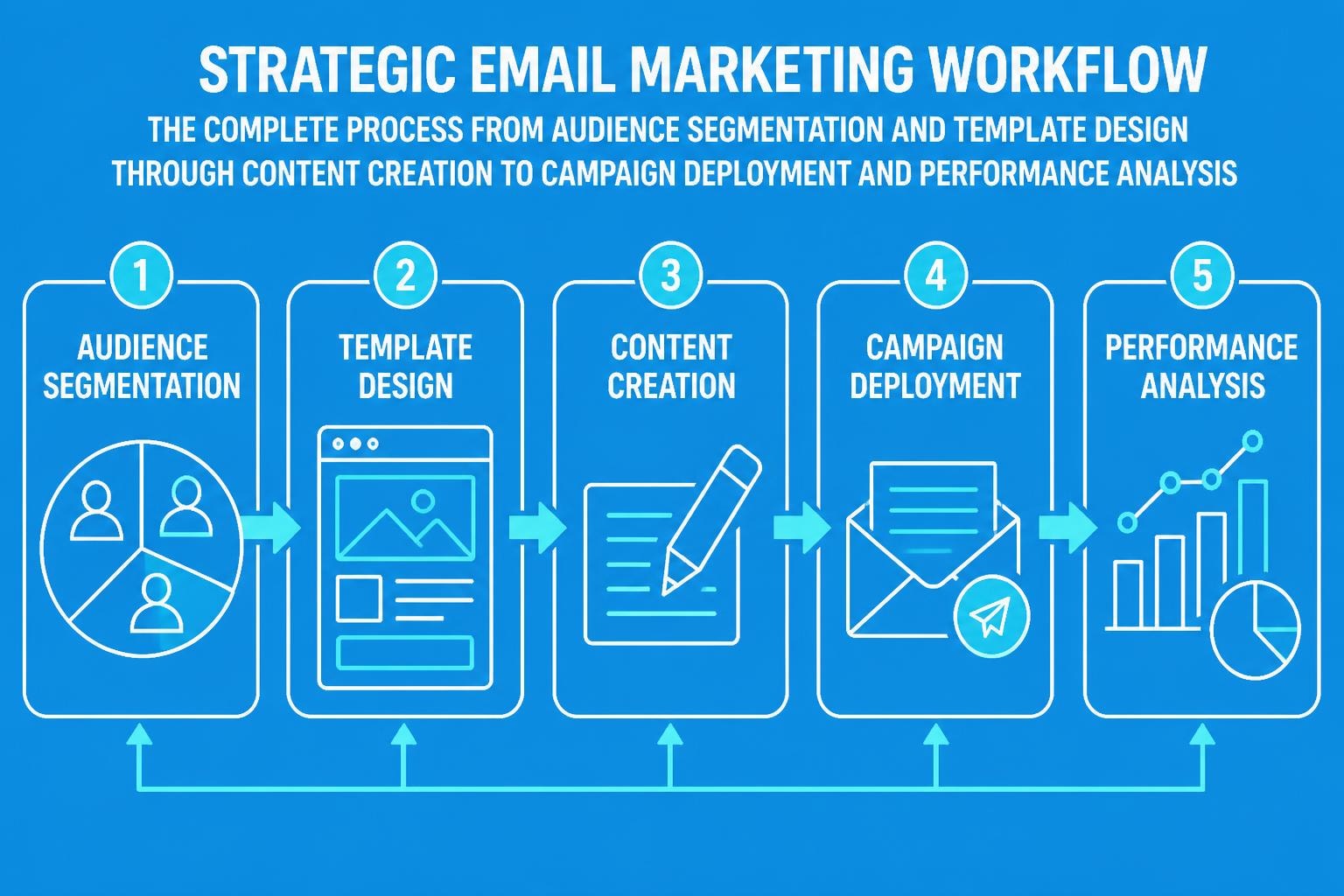
Email marketing remains one of the most powerful tools for small businesses to connect with their audience and drive meaningful results. The ability to create email campaigns that resonate with subscribers has become increasingly sophisticated, yet the fundamentals remain accessible to businesses of all sizes. Whether you're launching your first campaign or refining an established strategy, understanding how to craft compelling messages that convert is essential for business growth in today's competitive digital landscape.
Understanding the Foundation of Effective Email Campaigns
When you create email campaigns, you're not simply sending messages into the void. You're building relationships, nurturing leads, and guiding prospects through their customer journey. The foundation of success lies in strategic planning rather than spontaneous messaging.
Small businesses often underestimate the importance of groundwork before launching campaigns. Your email marketing strategy should align with broader business objectives, whether that's increasing revenue, building brand awareness, or fostering customer loyalty.
Defining Your Target Audience
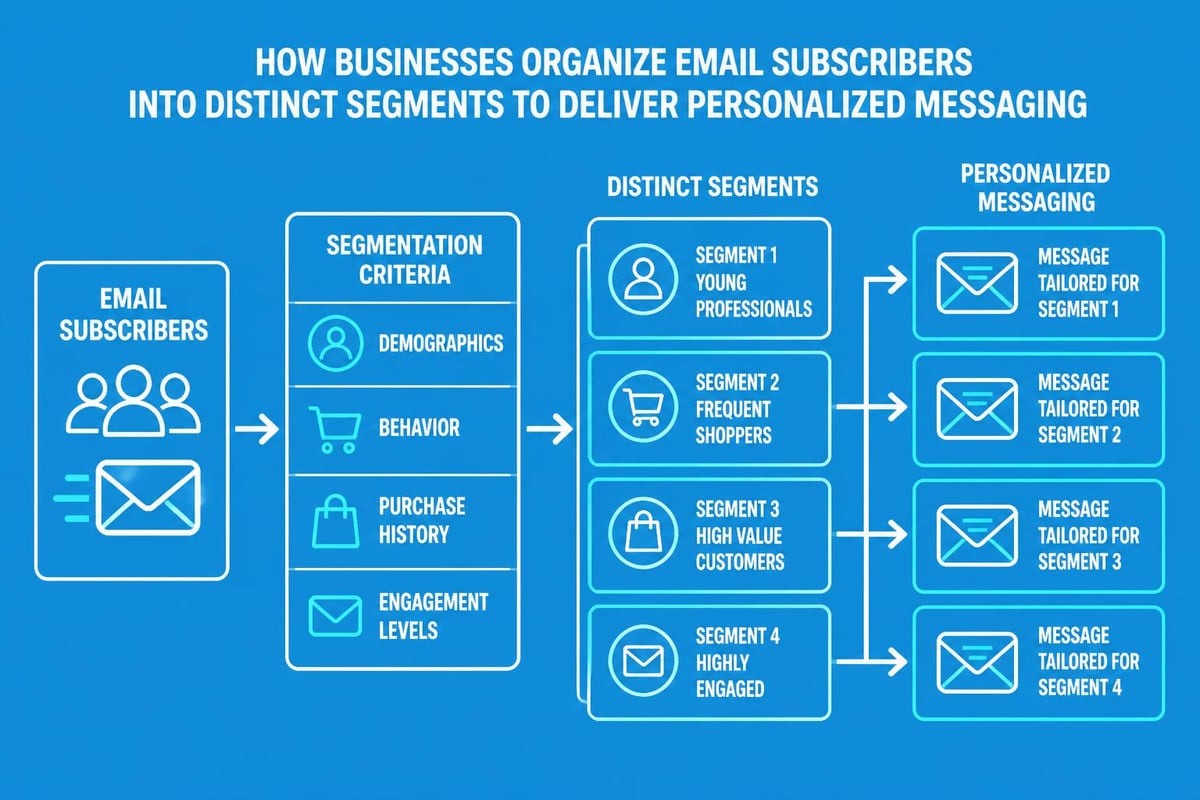
Before you create email content, you must understand precisely who will receive it. Audience segmentation transforms generic broadcasts into personalized communications that speak directly to individual needs.
- Demographic segmentation: Age, location, industry, job title
- Behavioral segmentation: Purchase history, website activity, email engagement
- Psychographic segmentation: Interests, values, lifestyle preferences
- Lifecycle stage: New subscribers, active customers, lapsed users
The U.S. Chamber of Commerce emphasizes that defining your audience is the crucial first step in creating effective email marketing campaigns that deliver measurable results.
Research shows that segmented campaigns can increase revenue by up to 760% compared to non-segmented approaches. When you create email messages tailored to specific audience segments, you demonstrate understanding of their unique challenges and aspirations.
Crafting Compelling Email Content
The content you create forms the heart of your email marketing success. Every element, from subject lines to calls-to-action, must work harmoniously to engage readers and inspire action.
Writing Subject Lines That Demand Attention
Your subject line determines whether recipients will create an opportunity to read your message or consign it to the deleted folder. Effective subject lines balance curiosity with clarity, promising value without resorting to clickbait tactics.
Consider these proven approaches:
- Personalization: Include the recipient's name or company
- Urgency: Create genuine time-sensitive offers
- Curiosity: Pose intriguing questions or tease valuable insights
- Benefit-focused: Clearly state what readers will gain
- Brevity: Keep to 40 characters for optimal mobile display
Testing different subject line styles helps you understand what resonates with your specific audience. When you create email campaigns systematically, you'll discover patterns in what drives opens and engagement.
Designing for Maximum Impact
Visual presentation significantly influences how recipients perceive and interact with your messages. The design principles you implement when you create email templates directly affect deliverability, readability, and conversion rates.
Salesforce's research on email design best practices highlights the critical importance of mobile responsiveness, with over 60% of emails now opened on mobile devices.
| Design Element | Best Practice | Why It Matters |
|---|---|---|
| Layout | Single column, max 600px width | Ensures mobile compatibility |
| Font Size | Minimum 14px body, 22px headings | Improves readability |
| CTA Buttons | 44px minimum touch target | Enables easy mobile interaction |
| Images | Alt text for all visuals | Maintains accessibility and deliverability |
| White Space | Generous padding between elements | Reduces cognitive load |
The European Accessibility Act has introduced new requirements that affect how businesses design accessible emails, making inclusivity both a legal requirement and ethical imperative.
Building Your Email Marketing Infrastructure
Technical foundations determine whether your creative efforts reach their intended audience. When you create email campaigns, the underlying infrastructure matters as much as the content itself.
Selecting the Right Platform
Your choice of email marketing software shapes your capabilities and efficiency. Understanding professional email addresses and how they integrate with marketing platforms is fundamental for small business credibility.
Modern platforms offer varying features:
- Template builders: Drag-and-drop editors for visual campaign creation
- Automation workflows: Triggered sequences based on subscriber behavior
- Analytics dashboards: Real-time performance tracking and reporting
- List management: Segmentation tools and subscription preferences
- Deliverability features: Spam testing and sender reputation monitoring
When evaluating options, consider how the platform will grow with your business. The ability to create email automation becomes increasingly valuable as your subscriber base expands.
Establishing Technical Requirements
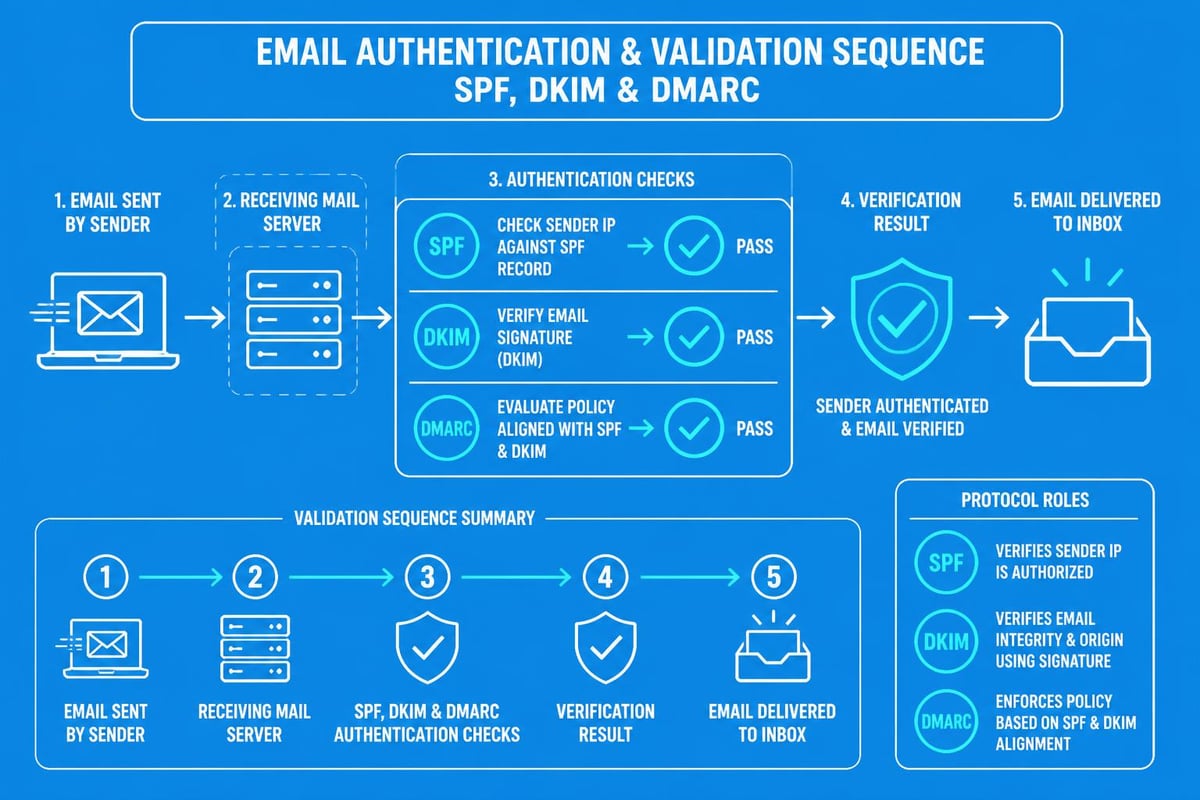
Authentication protocols and sending infrastructure prevent your carefully crafted messages from landing in spam folders. Understanding email sending fundamentals helps you maintain high deliverability rates.
SPF, DKIM, and DMARC records authenticate your domain and verify that you're authorized to send on behalf of your organization. These technical specifications might seem daunting, but they're essential for professional email marketing.
Developing Strategic Campaign Types
Different objectives require different approaches when you create email communications. Understanding campaign varieties enables you to select the right format for each business goal.
Welcome Series
New subscriber onboarding creates critical first impressions. A well-structured welcome series introduces your brand, sets expectations, and begins relationship building.
- Immediate welcome: Delivered within minutes of subscription
- Value demonstration: Showcases your expertise and offerings
- Engagement invitation: Encourages social connection or content exploration
- Conversion opportunity: Presents relevant product or service options
When you create email welcome sequences, you establish communication patterns that subscribers will expect and appreciate throughout their relationship with your brand.
Promotional Campaigns
Sales-focused messages require careful balance between persuasion and respect for subscriber preferences. TechRadar's guide on effective email outreach emphasizes personalization and clear value propositions.
Promotional best practices include:
- Limited-time offers that create genuine urgency
- Exclusive subscriber benefits that reward loyalty
- Clear savings calculations that quantify value
- Risk-reduction guarantees that overcome objections
- Social proof elements that build credibility
Educational Content
Value-driven emails position your business as a trusted resource rather than merely a vendor. When you create email newsletters that educate and inform, you build authority within your industry.
Educational campaigns might include:
- Industry insights and trend analysis
- How-to guides and tutorials
- Case studies demonstrating results
- Expert interviews and thought leadership
- Resource compilations and tool recommendations
Optimizing Through Testing and Analysis
Data-driven refinement transforms adequate campaigns into exceptional ones. The metrics you track when you create email marketing initiatives reveal opportunities for continuous improvement.
Key Performance Indicators
Understanding which metrics matter most helps you focus optimization efforts where they'll have greatest impact.
| Metric | What It Measures | Industry Benchmark |
|---|---|---|
| Open Rate | Subject line and sender name effectiveness | 15-25% |
| Click-Through Rate | Content relevance and CTA strength | 2-5% |
| Conversion Rate | Overall campaign success at driving action | 1-3% |
| Unsubscribe Rate | Content-audience fit and sending frequency | <0.5% |
| Bounce Rate | List quality and technical deliverability | <2% |
When you create email campaigns, establishing baseline metrics enables you to measure improvement over time. Small incremental gains compound into significant results.
A/B Testing Methodology
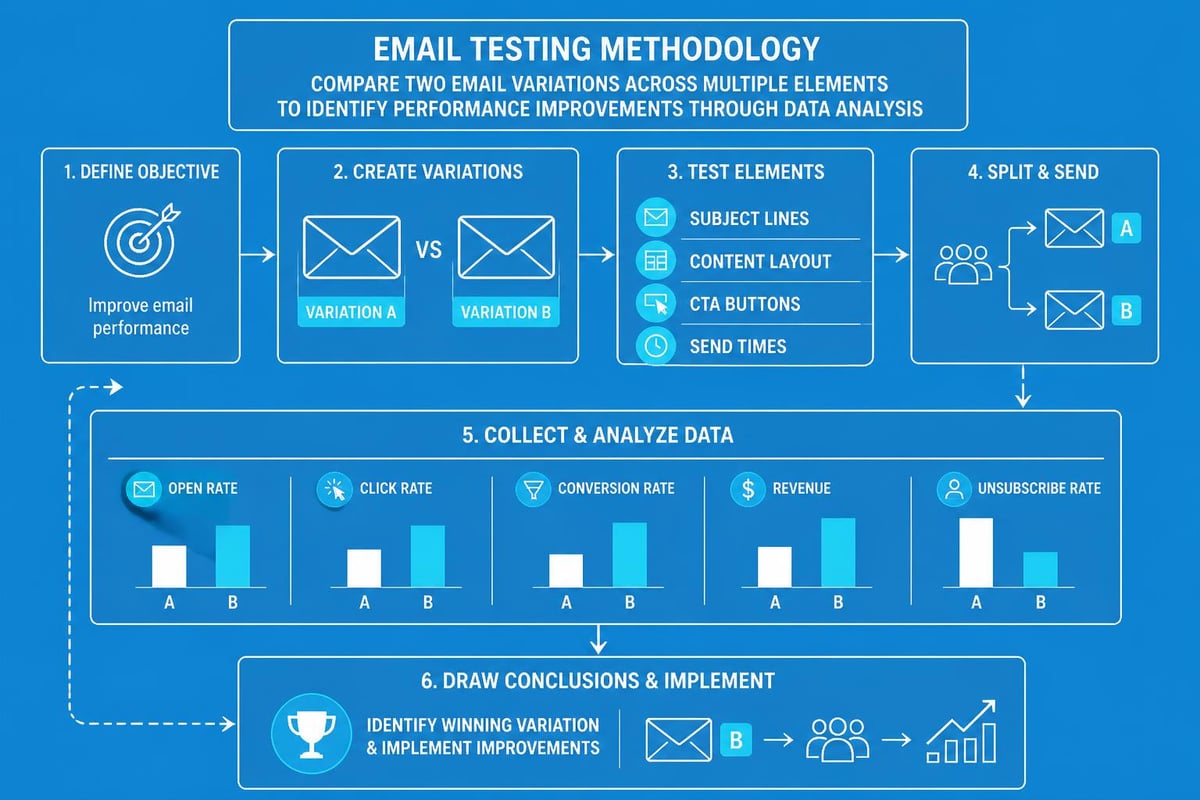
Systematic testing removes guesswork from campaign optimization. Each test should isolate a single variable to produce actionable insights.
Test these elements individually:
- Subject lines (tone, length, personalization)
- Sender names (personal vs. company)
- Send times (day of week, time of day)
- Content formats (text vs. HTML, long vs. short)
- CTA placement (above fold vs. multiple positions)
- Visual elements (images vs. text-only)
The insights gained from creating and testing emails inform future campaigns and improve overall program performance.
Ensuring Compliance and Best Practices
Legal requirements and ethical considerations must guide how you create email campaigns. Non-compliance risks damage to reputation, deliverability, and potentially significant financial penalties.
Regulatory Requirements
Multiple frameworks govern commercial email depending on your location and subscriber base:
- GDPR (European Union): Requires explicit consent and data protection
- CAN-SPAM (United States): Mandates clear unsubscribe mechanisms
- CASL (Canada): Enforces consent requirements and identification standards
- PECR (United Kingdom): Governs electronic marketing communications
Understanding business email requirements helps you establish compliant practices from the outset rather than retrofitting systems later.
Permission-Based Marketing
Building your list organically through genuine opt-ins creates engaged audiences who want to hear from you. When you create email subscriber bases through purchases lists or questionable tactics, you undermine deliverability and brand reputation.
Ethical list-building strategies include:
- Website signup forms with clear value propositions
- Content upgrades that exchange resources for contact information
- Social media conversion campaigns
- In-person event registrations
- Customer account creation during purchase processes
Never add contacts without explicit permission. The quality of your list matters far more than quantity.
Advanced Automation Strategies
As your email marketing matures, automation enables sophisticated customer journeys that would be impossible to manage manually. When you create email workflows triggered by specific behaviors, you deliver timely, relevant messages at scale.
Behavioral Triggers
Automated sequences respond to subscriber actions, creating personalized experiences based on individual behavior patterns.
Common trigger scenarios include:
- Abandoned cart recovery: Re-engage shoppers who didn't complete purchases
- Post-purchase nurture: Build loyalty and encourage repeat business
- Re-engagement campaigns: Win back inactive subscribers
- Birthday or anniversary messages: Celebrate personal milestones
- Content-based triggers: Send related resources based on downloads or page views
Benchmark Email's guidance on email design best practices emphasizes that automated messages should maintain the same design quality as broadcast campaigns.
Lead Nurturing Sequences
Moving prospects through awareness, consideration, and decision stages requires strategic content progression. When you create email nurture tracks, you guide potential customers toward conversion at their own pace.
A typical B2B nurture sequence might follow this structure:
- Awareness stage: Educational content addressing pain points
- Consideration stage: Solution comparisons and methodology explanation
- Decision stage: Case studies, demos, and conversion offers
- Retention stage: Onboarding support and success resources
Kinsta's comprehensive guide to email design in 2026 highlights how visual consistency across automated sequences reinforces brand recognition and builds trust.
Personalisation Beyond First Names
True personalization extends far beyond inserting merge tags. When you create email experiences that reflect individual preferences, behavior, and context, you demonstrate genuine understanding of subscriber needs.
Dynamic Content Blocks
Modern email platforms enable content variation within single campaigns based on subscriber attributes. Different recipients see different content blocks despite receiving the same campaign.
Dynamic content applications:
- Product recommendations based on browsing history
- Location-specific event invitations
- Industry-relevant case studies
- Role-appropriate resource suggestions
- Purchase history-informed offers
This approach maintains efficiency whilst delivering personalized experiences that drive engagement and conversion.
Predictive Sending Optimization
Artificial intelligence now determines optimal send times for individual subscribers based on their historical engagement patterns. When you create email campaigns with send-time optimization, each recipient receives messages when they're most likely to engage.
This technology analyzes factors including:
- Previous open times and days
- Device usage patterns
- Timezone considerations
- Engagement decay rates
- Competitive inbox timing
Understanding when to send emails for maximum impact transforms from guesswork into data-driven precision.
Measuring Return on Investment
Demonstrating email marketing value requires connecting campaign activity to business outcomes. When you create email programs with clear ROI tracking, you justify investment and identify opportunities for increased budget allocation.
Attribution Modeling
Understanding which touchpoints deserve credit for conversions enables accurate channel valuation. Email rarely works in isolation, typically functioning as part of multi-touch customer journeys.
| Attribution Model | How It Works | Best For |
|---|---|---|
| Last Touch | Credits the final interaction before conversion | Direct response campaigns |
| First Touch | Credits initial contact point | Lead generation focus |
| Linear | Distributes credit equally across all touches | Balanced view of journey |
| Time Decay | Weights recent interactions more heavily | Long sales cycles |
| Position-Based | Credits first and last touches most | Acquisition and conversion emphasis |
Calculating True Email ROI
The formula for email marketing return on investment considers both direct and indirect value creation:
ROI = (Revenue Generated - Campaign Cost) / Campaign Cost × 100
Revenue sources include immediate purchases, but also consider lifetime value increases, referral generation, and cost savings from reduced customer service inquiries.
When you create email campaigns with comprehensive tracking, you capture the full spectrum of value delivery beyond immediate conversions.
Mastering the art and science of email campaign creation requires balancing creative excellence with technical precision, strategic thinking with tactical execution. The strategies outlined here provide a comprehensive framework for building email marketing programs that deliver consistent results for your small business. Whether you're just beginning your email marketing journey or refining established practices, Astonish Email provides the tools and support small businesses need to create professional campaigns that engage audiences and drive growth.