Email Send Out: Best Practices for Small Businesses
May 31, 2026
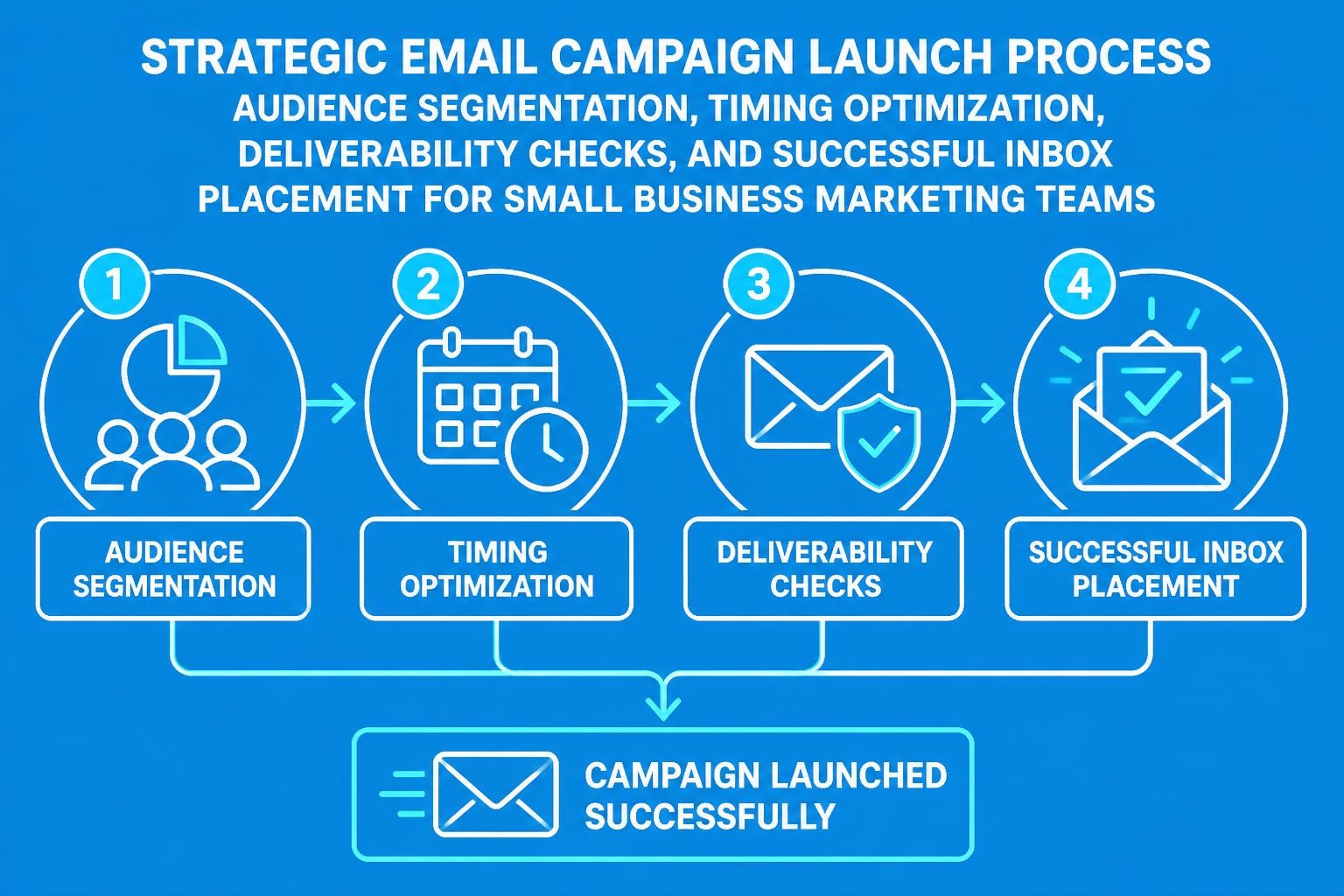
Email marketing remains one of the most effective digital marketing channels for small businesses, delivering an average return of £42 for every £1 spent. However, the success of your campaigns hinges on more than just writing compelling copy. The way you execute an email send out determines whether your carefully crafted messages reach your audience's inbox or disappear into spam folders. Understanding the technical, strategic, and content considerations involved in sending emails ensures your marketing efforts translate into tangible results. For small business owners managing limited resources, mastering the email send out process can significantly improve engagement rates, customer relationships, and ultimately, revenue growth.
Understanding Email Send Out Fundamentals
An email send out encompasses the entire process of delivering marketing messages to your subscriber list, from preparation through to delivery confirmation. This process involves multiple technical layers that work together to ensure your emails reach their intended recipients.
The foundation of any successful email send out starts with proper infrastructure. Your email service provider handles the technical complexity of sending bulk emails whilst maintaining positive sender reputation. Small businesses often underestimate the importance of choosing a reliable platform that manages authentication protocols, IP reputation, and delivery monitoring automatically.
Technical Requirements for Successful Delivery
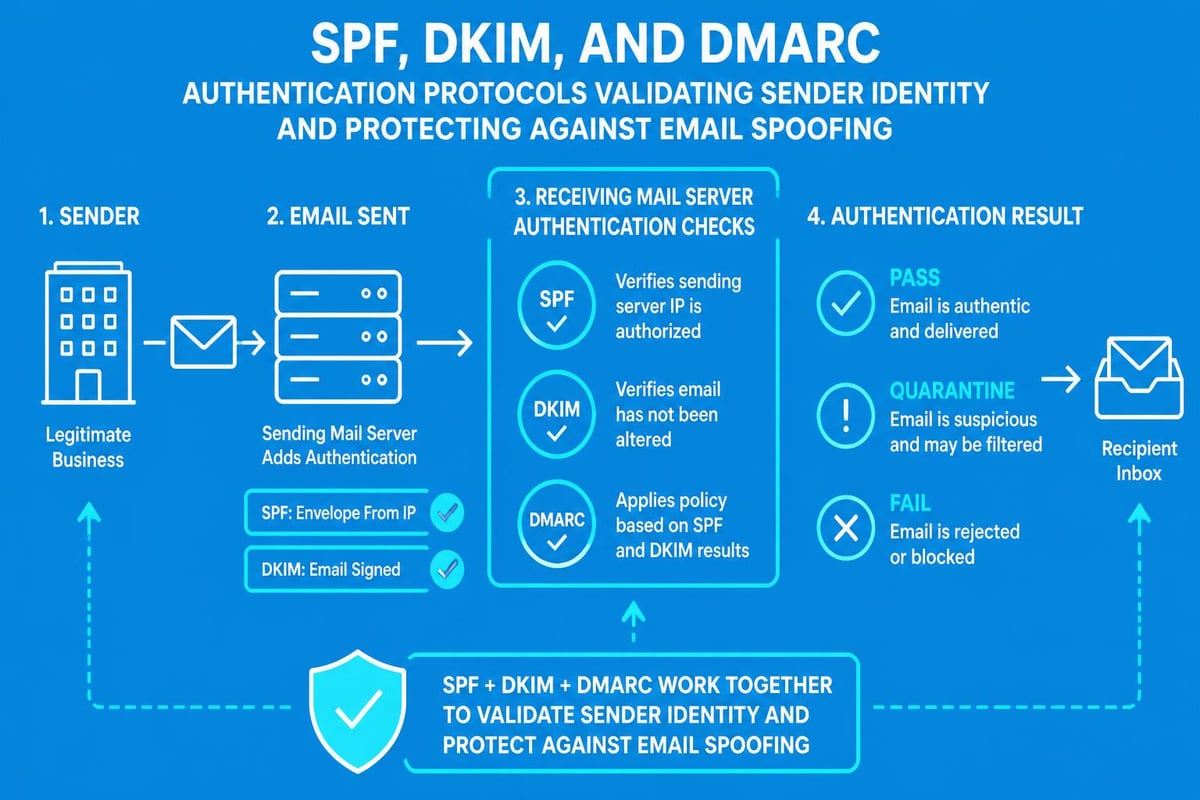
Before initiating an email send out, you must establish proper email authentication. This includes configuring SPF (Sender Policy Framework), DKIM (DomainKeys Identified Mail), and DMARC (Domain-based Message Authentication, Reporting, and Conformance) records. These protocols verify that you're authorized to send emails from your domain, significantly improving deliverability rates.
Authentication serves as your digital identity verification. When properly configured, these protocols tell receiving servers that your emails are legitimate, reducing the likelihood of spam filtering. The comprehensive guide to email deliverability provides detailed insights into implementing these authentication methods correctly.
| Authentication Protocol | Primary Function | Impact on Deliverability |
|---|---|---|
| SPF | Authorizes sending servers | Prevents spoofing |
| DKIM | Verifies message integrity | Confirms sender identity |
| DMARC | Enforces authentication policies | Protects brand reputation |
Optimizing Email Send Out Timing
The timing of your email send out significantly influences open rates and engagement metrics. Research consistently shows that certain days and times yield better results, though optimal timing varies by industry and audience.
For B2B small businesses, Tuesday through Thursday typically performs best, with send times between 10:00 and 11:00 or 14:00 and 15:00 showing higher engagement. B2C businesses often see better results with weekend sends, particularly Saturday mornings when consumers have more leisure time.
However, these are merely starting points. Your specific audience may behave differently based on demographics, industry, and customer behaviour patterns. Testing different send times and analyzing your unique engagement data provides the most reliable insights.
Frequency and Consistency Matters
How often you execute an email send out directly impacts subscriber retention and engagement. Send too frequently, and you risk subscriber fatigue and increased unsubscribe rates. Send too infrequently, and subscribers forget they've opted in, leading to low engagement or spam complaints.
- Weekly newsletters: Suitable for content-rich businesses with regular updates
- Bi-weekly campaigns: Balanced approach for most small businesses
- Monthly digests: Appropriate for B2B or relationship-focused marketing
- Triggered emails: Event-based sends based on customer actions
Consistency builds anticipation. When subscribers know to expect your emails at regular intervals, they're more likely to engage with your content. Establishing a predictable schedule also helps maintain clean list hygiene, as disengaged subscribers will naturally unsubscribe rather than marking emails as spam.
Content Best Practices for Email Send Out
The content you include in your email send out determines whether recipients engage with your message or immediately delete it. Subject lines represent your first-and often only-opportunity to capture attention.
Effective subject lines balance curiosity with clarity, typically ranging between 40-50 characters. They should clearly communicate value whilst encouraging opens without resorting to manipulative tactics. Avoiding spam triggers like excessive punctuation, ALL CAPS, or misleading claims protects your sender reputation and ensures inbox placement.
Crafting Engaging Email Body Content
Once a subscriber opens your email, the body content must immediately deliver on the subject line's promise. Small businesses should structure email content using these principles:
Personalization beyond first names: Use behavioral data, purchase history, and preference centres to segment audiences and deliver truly relevant content. Personalized emails deliver 6x higher transaction rates than generic broadcasts.
Mobile optimization: Over 60% of emails are opened on mobile devices. Your email send out strategy must account for smaller screens, touch interfaces, and limited attention spans. Use responsive design, single-column layouts, and prominent call-to-action buttons.
Clear hierarchy and scannability: Busy recipients scan rather than read. Use headings, bullet points, short paragraphs, and strategic white space to make content digestible. Place your primary call-to-action above the fold.
The importance of maintaining appropriate email deliverability best practices cannot be overstated, as content decisions directly influence whether your messages reach the inbox.
Managing Subscriber Lists Effectively
List quality trumps list size when executing an email send out. A smaller list of engaged subscribers consistently outperforms a larger list filled with inactive or uninterested recipients.
Regular list hygiene involves removing bounced addresses, unsubscribers, and chronically inactive subscribers. This practice improves deliverability rates, reduces costs, and provides more accurate performance metrics. Most email marketing platforms handle hard bounces automatically, but soft bounces and inactive subscribers require manual attention.
Segmentation Strategies for Targeted Sends
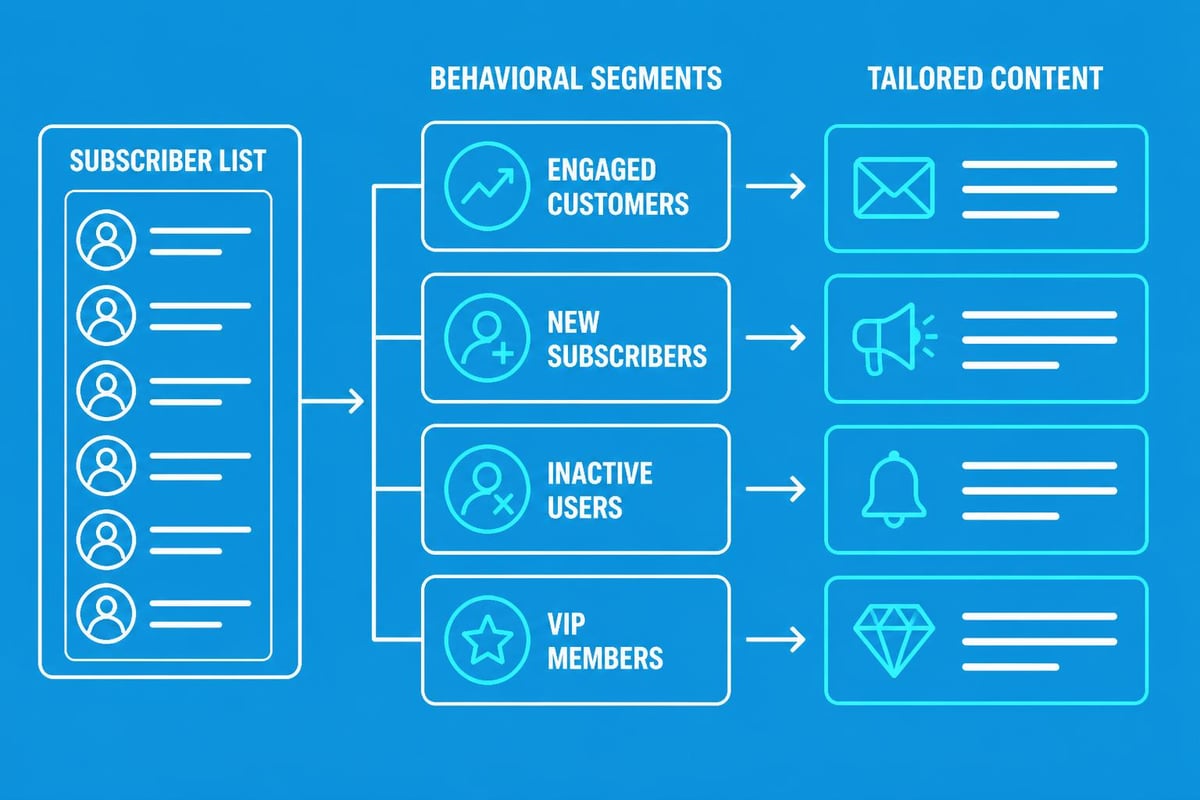
Segmenting your list before an email send out allows you to deliver more relevant content to specific audience groups. Small businesses can implement segmentation based on:
- Demographic information: Age, location, job title
- Behavioral data: Purchase history, website activity, email engagement
- Customer lifecycle stage: New subscribers, active customers, at-risk accounts
- Preferences and interests: Content topics, product categories, communication frequency
Advanced segmentation enables dynamic content insertion, where different subscribers receive customized versions of the same email based on their segment. This approach maximizes relevance whilst minimizing the number of separate campaigns you need to manage.
Technical Setup and Deliverability Monitoring
Before executing an email send out, verify your technical setup supports optimal deliverability. This includes warming up new IP addresses, maintaining clean sender reputation, and monitoring key metrics.
IP warming involves gradually increasing send volumes when using a new IP address or email service provider. Sudden volume spikes appear suspicious to receiving servers, potentially triggering spam filters. Start with your most engaged subscribers and incrementally increase volumes over 2-4 weeks.
Monitoring Deliverability Metrics
Track these essential metrics after each email send out:
| Metric | Healthy Benchmark | Action Threshold |
|---|---|---|
| Delivery Rate | 95%+ | Below 90% |
| Open Rate | 15-25% | Significant drop |
| Click-through Rate | 2-5% | Declining trend |
| Bounce Rate | Below 2% | Above 5% |
| Complaint Rate | Below 0.1% | Above 0.3% |
| Unsubscribe Rate | Below 0.5% | Above 1% |
Understanding what constitutes a good email deliverability rate helps you benchmark your performance and identify issues requiring attention.
Maintaining a positive sender reputation requires proactive monitoring. Most email service providers offer reputation scoring and deliverability analytics. Regular review of these metrics helps you identify problems before they significantly impact your campaigns.
Email Send Out Workflow and Automation
Establishing a systematic workflow for your email send out process ensures consistency and reduces errors. A documented process helps maintain quality standards even as team members change or workload fluctuates.
Your workflow should include these stages:
Planning and strategy: Define campaign objectives, target audience, and key performance indicators. Document your approach to ensure alignment across team members.
Content creation: Draft copy, design templates, and prepare assets. Build in review cycles to catch errors before sending. For small businesses looking to create professional email campaigns, establishing clear brand guidelines ensures consistency.
Technical setup: Configure audience segments, personalization tokens, and automation triggers. Test authentication records and preview emails across multiple devices and email clients.
Quality assurance: Send test emails to internal team members, check all links function correctly, and verify personalization displays properly. Review subject lines for spam triggers using deliverability testing tools.
Execution and monitoring: Schedule or immediately execute your email send out, then monitor real-time delivery metrics. Be prepared to pause campaigns if deliverability issues arise.
Automation Opportunities for Small Businesses
Marketing automation transforms your email send out from manual tasks into strategic systems. Small businesses can implement automation for:
- Welcome series for new subscribers
- Abandoned cart recovery sequences
- Post-purchase follow-up and reviews
- Re-engagement campaigns for inactive subscribers
- Birthday or anniversary messages
- Customer education drip campaigns
Automation ensures timely, relevant communication without requiring constant manual effort. Once established, automated sequences nurture relationships and drive revenue whilst you focus on other business priorities.
Compliance and Legal Considerations
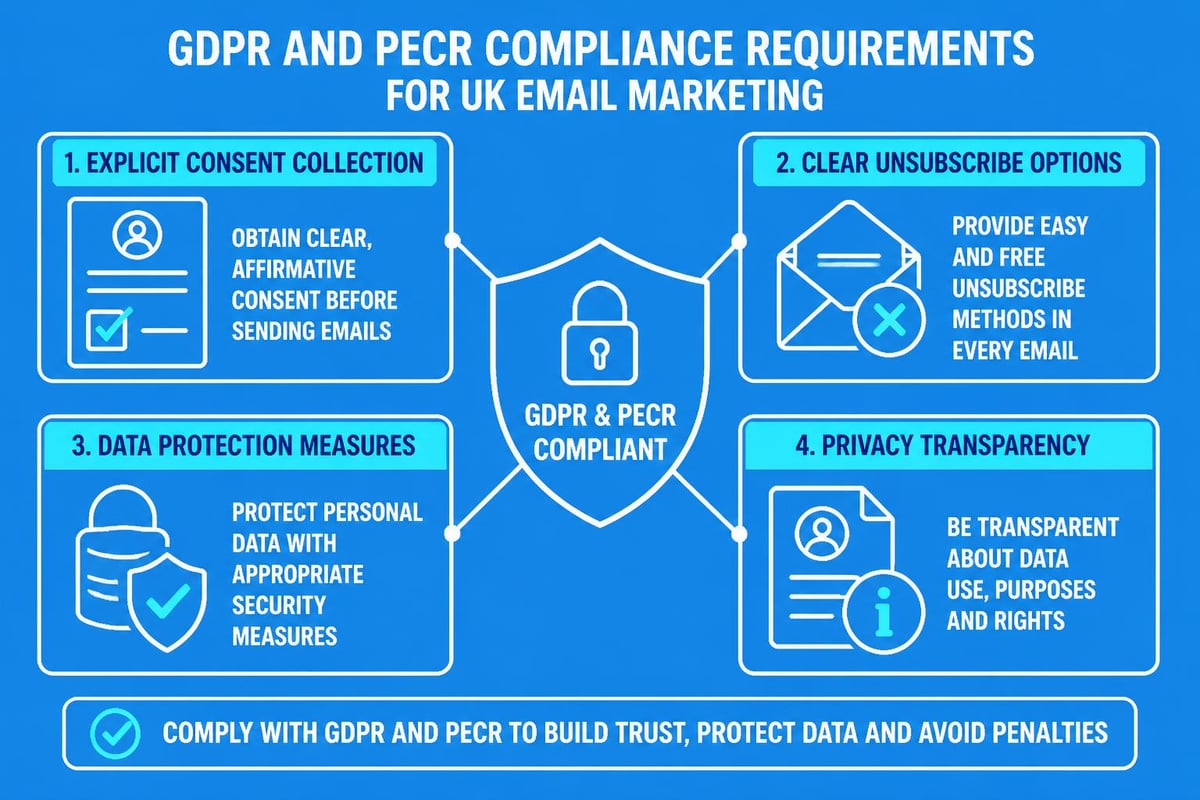
Every email send out must comply with relevant data protection and anti-spam legislation. In the UK, this primarily involves GDPR (General Data Protection Regulation) and PECR (Privacy and Electronic Communications Regulations).
Key compliance requirements include obtaining explicit consent before adding subscribers to your list, providing clear unsubscribe mechanisms in every email, and honoring opt-out requests promptly. Purchased or scraped email lists violate these regulations and damage sender reputation.
Maintaining detailed records of consent demonstrates compliance during audits. Your email marketing platform should capture subscription date, source, and consent evidence for each subscriber. Understanding your platform's antispam policy ensures you remain compliant with industry standards.
Data Protection and Privacy
Beyond legal compliance, respecting subscriber privacy builds trust and improves engagement. Implement these privacy-focused practices:
Transparent data usage: Clearly communicate how you use subscriber data in your privacy policy and preference centre.
Secure data storage: Ensure your email service provider uses encryption and follows appropriate data retention policies that protect subscriber information.
Minimal data collection: Only collect information necessary for delivering relevant content. Excessive data requests increase friction and reduce sign-up rates.
Regular consent renewal: Periodically confirm subscribers still wish to receive communications, particularly for inactive segments.
Testing and Optimization Strategies
Continuous improvement through testing transforms average email send out performance into exceptional results. A/B testing allows you to make data-driven decisions rather than relying on assumptions.
Start with high-impact elements that significantly influence performance. Subject lines represent the most common testing variable, as they directly impact open rates. Test different approaches including:
- Question vs. statement formats
- Personalization vs. generic messaging
- Urgency vs. informational approaches
- Length variations (short vs. descriptive)
- Emoji usage vs. text-only
Beyond subject lines, test send times, from names, email length, call-to-action placement, and content formats. However, only test one variable at a time to ensure clear attribution of results.
Multivariate Testing for Advanced Optimization
Once you've optimized individual elements through A/B testing, multivariate testing examines how multiple variables interact. This advanced approach tests combinations of elements simultaneously, revealing which combinations produce optimal results.
For small businesses with limited list sizes, multivariate testing requires larger sample sizes than A/B testing. Focus on this approach once you've exhausted single-variable tests and have sufficient subscriber volume to achieve statistical significance.
The latest email deliverability best practices for 2026 emphasize the importance of testing and optimization in maintaining high inbox placement rates.
Measuring Email Send Out Success
Defining success metrics before executing an email send out enables objective performance evaluation. Different campaign types require different success criteria.
Promotional campaigns typically focus on conversion metrics: click-through rates, revenue generated, and return on investment. These campaigns drive immediate action and should demonstrate clear business impact.
Nurture campaigns emphasize engagement metrics: open rates, time spent reading, and progression through the customer journey. These campaigns build relationships over time rather than driving immediate conversions.
Retention campaigns measure customer lifetime value, repeat purchase rates, and churn reduction. Success means keeping customers engaged and preventing defection to competitors.
Beyond Standard Metrics
While open rates, click rates, and conversions provide useful insights, deeper analysis reveals more actionable information:
- Email client and device data: Identifies technical optimization opportunities
- Geographic engagement patterns: Reveals regional preferences and timing opportunities
- Subscriber lifetime value by source: Determines which acquisition channels deliver highest-quality subscribers
- Engagement decay patterns: Shows optimal send frequency before diminishing returns
These advanced metrics help small businesses make strategic decisions about resource allocation and campaign prioritization. For businesses establishing their email system for small business operations, understanding these metrics from the beginning establishes strong analytical foundations.
Common Email Send Out Mistakes to Avoid
Even experienced marketers occasionally make errors that undermine email send out effectiveness. Recognizing these common pitfalls helps you avoid them.
Neglecting mobile optimization: With mobile devices representing the majority of email opens, failing to optimize for smaller screens severely limits engagement. Always preview emails on multiple devices before sending.
Ignoring inactive subscribers: Continuing to send emails to chronically unengaged subscribers damages sender reputation and skews performance metrics. Implement re-engagement campaigns, then remove persistently inactive subscribers.
Insufficient testing: Broken links, rendering issues, and personalization errors create poor subscriber experiences. Comprehensive testing catches these problems before they reach your audience.
Inconsistent sending patterns: Irregular email send out schedules confuse subscribers and reduce engagement. Establish predictable rhythms that subscribers can anticipate.
Over-reliance on purchased lists: Bought lists produce poor engagement, high complaint rates, and damaged sender reputation. Focus on organic list growth through valuable content and clear value propositions.
Small businesses must balance ambition with capacity when planning their email marketing strategy. Understanding best practices for small business email helps establish realistic expectations and sustainable processes.
Mastering the email send out process requires attention to technical details, strategic planning, and continuous optimization. By implementing proper authentication, maintaining list hygiene, respecting subscriber preferences, and consistently testing new approaches, small businesses can achieve impressive results from their email marketing efforts. Astonish Email provides small businesses with the tools and guidance needed to execute professional email campaigns that drive engagement and growth, making sophisticated email marketing accessible regardless of technical expertise or budget constraints.