Small Business Email Address: Essential 2026 Guide
May 24, 2026
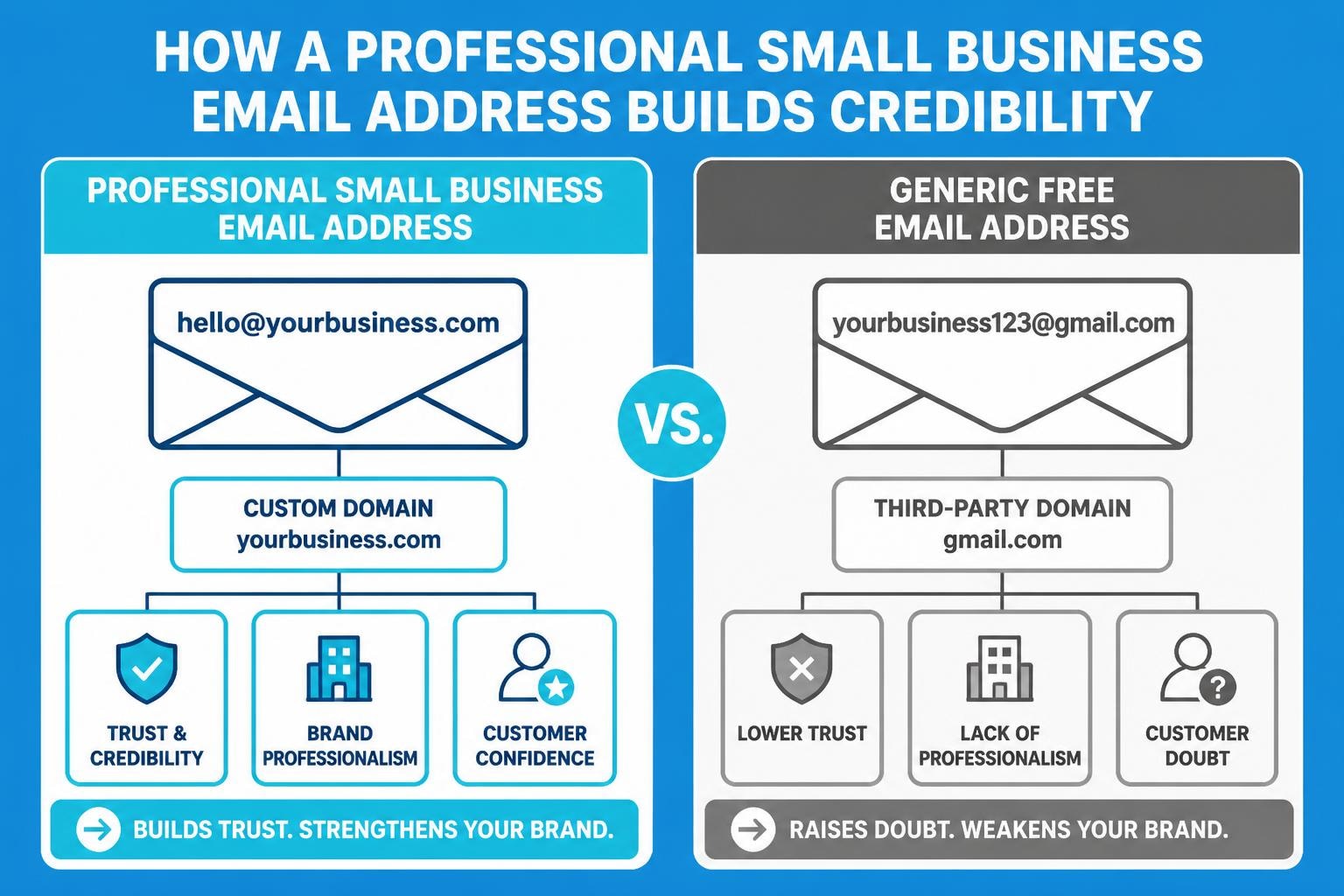
Establishing a professional presence in today's digital marketplace requires more than just a great product or service. Your communication channels, particularly your email address, serve as the foundation of your business identity. A well-structured small business email address not only conveys professionalism but also builds trust with customers, partners, and stakeholders from the very first interaction. As we navigate through 2026, the importance of having a properly configured business email has never been more critical for small enterprises looking to compete effectively.
Why Your Small Business Email Address Matters
Your email address is often the first point of contact between your business and potential customers. When someone receives an email from "[email protected]" versus "[email protected]," the perception differs dramatically. The custom domain immediately signals legitimacy, investment in your business, and attention to detail.
Building Trust and Credibility
Research consistently shows that customers are more likely to engage with businesses that use professional email addresses. A small business email address featuring your company domain demonstrates that you're serious about your venture and willing to invest in the proper infrastructure. This simple decision can influence whether a prospect opens your email, responds to your inquiry, or chooses your service over a competitor's.
Professional email addresses significantly boost credibility, making customers more confident in doing business with you. In an era where phishing scams and fraudulent communications are rampant, a branded email address helps recipients verify your authenticity quickly.
- Immediate brand recognition every time you send a message
- Enhanced memorability compared to generic email providers
- Improved deliverability as custom domains typically avoid spam filters better
- Professional appearance across all customer touchpoints
Choosing the Right Format for Your Small Business Email Address
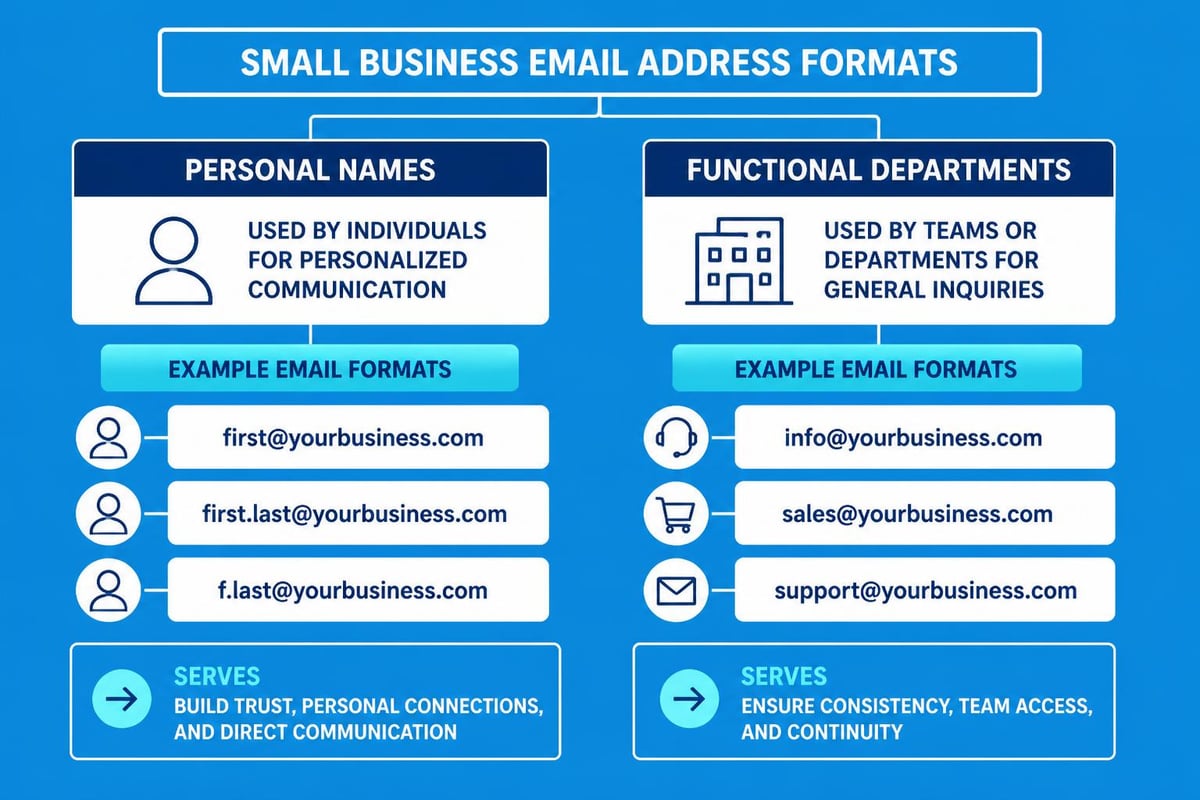
The structure of your small business email address should balance professionalism with functionality. Different formats serve various purposes, and understanding these conventions helps you make informed decisions for your organization.
Common Email Address Formats
| Format Type | Example | Best Used For |
|---|---|---|
| First name | [email protected] | Small teams, personal touch |
| First.Last | [email protected] | Larger organizations, clarity |
| Functional | [email protected] | Department-wide communications |
| Role-based | [email protected] | Customer service, general inquiries |
When setting up your business email infrastructure, consider creating multiple addresses that serve different functions. This approach not only organizes your communications but also helps customers reach the right department immediately.
Avoiding Common Mistakes
Many small business owners make critical errors when creating their email addresses. Using numbers, underscores, or complex combinations might seem necessary when your preferred address is taken, but these additions diminish professionalism. Instead, consider alternative formats like [email protected] or using middle initials.
Never use free email providers like Gmail, Yahoo, or Hotmail for business correspondence. Whilst these services are excellent for personal use, branded email addresses are essential for entrepreneurs seeking to establish credibility and maintain brand consistency across all communications.
Selecting Your Email Domain Name
Your domain name forms the backbone of your small business email address. This decision carries long-term implications for your brand identity and marketing efforts, so approach it strategically.
Domain Name Best Practices
The ideal domain name is short, memorable, and directly related to your business. It should be easy to spell over the phone and type quickly on any device. Consider these factors when making your choice:
- Relevance to your business name or industry
- Simplicity and ease of spelling
- Availability across social media platforms
- Appropriate domain extension (.co.uk, .com, etc.)
- Long-term scalability as your business grows
Following email domain name best practices ensures your small business email address remains professional and secure. Security considerations include choosing domains that won't be easily confused with established brands or used for phishing attempts.
If your preferred domain is unavailable, resist the temptation to add hyphens or numbers. These modifications make your email address harder to communicate verbally and appear less professional in written correspondence.
Choosing an Email Hosting Provider
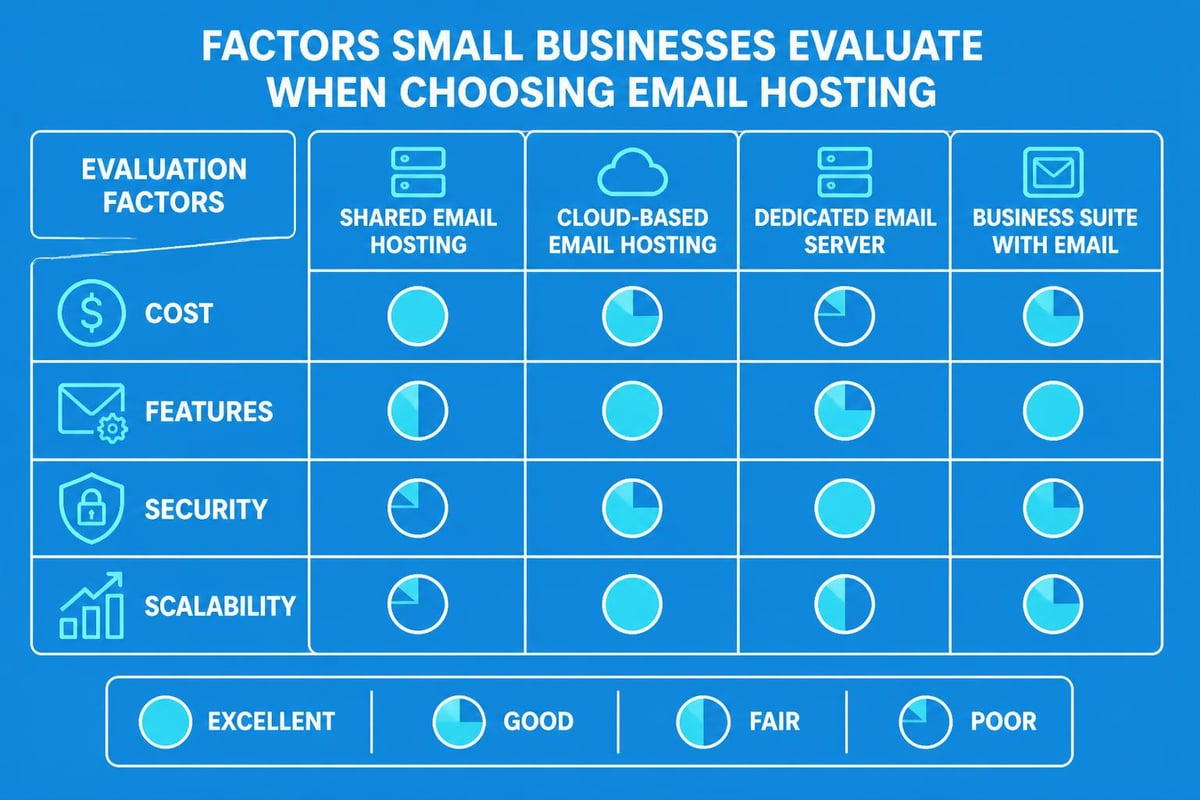
Once you've secured your domain, selecting the right email hosting provider becomes your next critical decision. The provider you choose affects deliverability, storage capacity, security features, and overall user experience.
Key Features to Consider
- Storage capacity appropriate for your communication volume
- Security protocols including spam filtering and encryption
- Mobile accessibility through apps and responsive webmail
- Integration capabilities with other business tools
- Customer support availability and responsiveness
- Scalability to accommodate business growth
When evaluating options, research the best email hosting providers to find services that align with your budget and requirements. Prices vary significantly based on features, user limits, and additional services like calendar integration or video conferencing.
Comparing Popular Options
Different providers cater to different business needs. Some prioritize ease of use, whilst others emphasize advanced features or enterprise-grade security. Microsoft 365 and Google Workspace dominate the market, but specialized providers often offer better value for small businesses with specific requirements.
Your choice should reflect your technical comfort level, budget constraints, and anticipated growth. A solopreneur might thrive with basic email hosting, whilst a growing team benefits from collaborative features and shared calendars.
Setting Up Multiple Email Addresses
As your small business grows, you'll need various email addresses serving distinct purposes. Strategic planning prevents confusion and ensures efficient communication management.
Strategic Email Address Allocation
Creating department-specific or function-based addresses helps organize incoming correspondence and presents a more professional image. Consider establishing these core addresses from the outset:
| Address Purpose | Example | Function |
|---|---|---|
| General inquiries | [email protected] | First point of contact |
| Sales | [email protected] | Commercial opportunities |
| Support | [email protected] | Customer assistance |
| Billing | [email protected] | Financial matters |
Understanding best practices for single versus multiple sender addresses helps maintain sender reputation whilst organizing communications effectively. Each address should have clear ownership and monitoring protocols to prevent missed messages.
When sending email campaigns, using consistent sender addresses builds recognition and improves deliverability. Your marketing emails should originate from addresses customers recognize and trust.
Managing Your Small Business Email Address Professionally
Owning a professional small business email address is merely the starting point. How you use and manage it determines whether it becomes an asset or liability.
Email Signature Best Practices
Every message you send should include a well-formatted signature containing essential information. Include your full name, job title, company name, phone number, and website URL. Keep it concise but informative, avoiding excessive graphics or promotional content that might trigger spam filters.
Your signature reinforces brand identity and provides recipients with multiple contact options. Consistency across your team's signatures creates a unified, professional appearance that strengthens brand perception.
Response Time and Communication Standards
Establishing clear expectations for email response times demonstrates respect for customer inquiries and business communications. Whilst immediate responses aren't always possible, acknowledging receipt within 24 hours maintains professional standards.
- Set up autoresponders for common inquiries
- Create email templates for frequent responses
- Establish team protocols for handling different request types
- Monitor all active addresses regularly
- Archive or forward emails systematically
When you need to send professional communications, ensuring your small business email address projects the right image requires attention to tone, formatting, and timing.
Email Security and Reputation Management
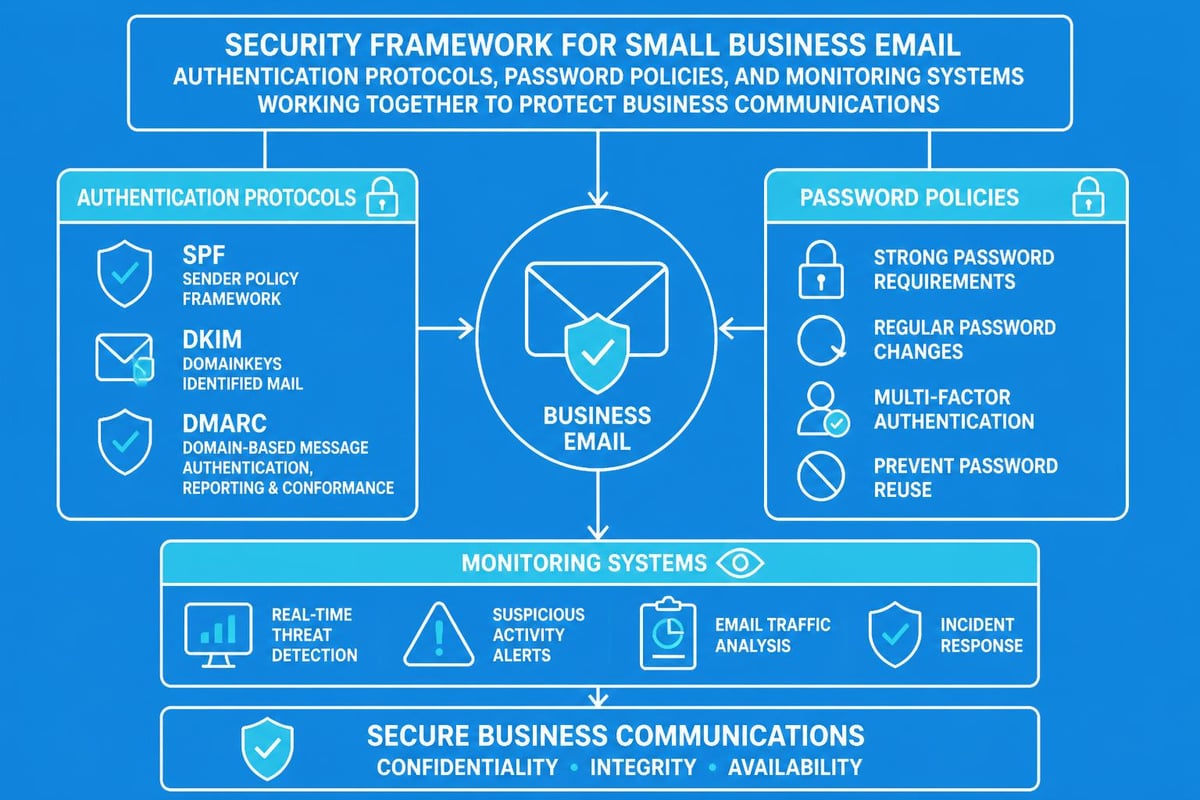
Your small business email address represents your brand's reputation in the digital sphere. Protecting it from compromise and maintaining positive sender reputation requires ongoing vigilance.
Essential Security Measures
- Enable two-factor authentication on all email accounts
- Use strong, unique passwords for each user
- Implement SPF, DKIM, and DMARC records for your domain
- Train staff on phishing recognition and prevention
- Regular password updates following security best practices
- Monitor for unauthorized access through login alerts
Security breaches can devastate small businesses, both financially and reputationally. Investing in proper security measures from the outset prevents costly remediation later.
Maintaining Sender Reputation
Your sender reputation directly impacts email deliverability. Internet Service Providers and email platforms track sending patterns, complaint rates, and engagement metrics to determine whether your messages reach inboxes or spam folders.
Following professional email usage guidelines helps maintain positive reputation scores. Avoid sending unsolicited emails, maintain clean mailing lists, and provide clear unsubscribe options in marketing communications.
Integrating Email with Marketing Activities
Your small business email address serves dual purposes: operational communications and marketing outreach. Understanding how to leverage both aspects maximizes return on investment.
Email Marketing Considerations
When conducting email marketing campaigns through platforms like Astonish Email, your sender address influences open rates and engagement. Recipients are more likely to open messages from recognized, professional addresses than generic or unfamiliar ones.
Creating professional email campaigns requires attention to sender names, subject lines, and content quality. Your small business email address should align with your brand identity and remain consistent across campaigns.
Consider whether to use a personal name or company name in the "from" field. Research shows that personalized sender names often achieve higher open rates, whilst company names build brand recognition over time. Testing both approaches helps determine what resonates with your specific audience.
Tracking and Analytics
Modern email platforms provide detailed analytics about message delivery, open rates, and engagement. Monitoring these metrics helps refine your approach and identify potential deliverability issues before they escalate.
Pay particular attention to bounce rates, spam complaints, and unsubscribe patterns. Sharp increases in these metrics signal problems requiring immediate attention, whether technical configuration issues or content relevance concerns.
Cost Considerations and Budgeting
Establishing and maintaining professional email infrastructure involves various costs, from domain registration to hosting fees and potentially software subscriptions.
Budget Planning for Email Services
| Cost Component | Typical Range (Annual) | Considerations |
|---|---|---|
| Domain registration | £10-£30 | Renewal fees, privacy protection |
| Email hosting | £30-£120 per user | Storage, features, support level |
| Security add-ons | £20-£100 | Advanced threat protection |
| Email marketing platform | £0-£600+ | Contact limits, sending volume |
Whilst free email services exist, they lack the professionalism and features small businesses require. View your small business email address as an essential infrastructure investment rather than an optional expense.
When evaluating email marketing solutions, consider total cost of ownership including setup time, learning curve, and ongoing management requirements. Cheaper solutions sometimes cost more in lost productivity or missed opportunities.
Scaling Your Email Infrastructure
As your business grows, your email needs evolve. Planning for scalability prevents disruptive migrations and ensures smooth expansion.
Growth Planning Strategies
Starting with a provider that accommodates growth prevents painful transitions later. Consider these scalability factors:
- User account limits and costs
- Storage capacity and upgrade options
- Advanced features availability
- API access for integrations
- Administrative controls and delegation
Some businesses begin with basic email hosting and later upgrade as needs expand. Others prefer starting with comprehensive platforms offering room to grow. Your choice depends on growth trajectory, technical capabilities, and budget flexibility.
When to Upgrade or Migrate
Signs you've outgrown your current email solution include frequently hitting storage limits, lacking necessary integrations, experiencing deliverability issues, or finding administrative tasks overly time-consuming. Selecting the right email provider for your current and anticipated needs prevents premature migrations.
Migration requires careful planning to avoid lost messages or business disruption. Overlapping old and new systems during transition periods ensures continuity whilst reducing stress on your team.
Common Challenges and Solutions
Small business owners encounter various obstacles when managing professional email addresses. Recognizing these challenges helps you prepare effective solutions.
Addressing Frequent Issues
Challenge: Customers still using personal email addresses for business Solution: Gradually transition by including both addresses in signatures temporarily, then phasing out personal accounts
Challenge: Team members forgetting to check departmental inboxes Solution: Implement email forwarding or shared inbox systems ensuring visibility
Challenge: Inconsistent email signatures across team Solution: Create standardized templates and provide clear guidelines
Challenge: Rising costs as team expands Solution: Regularly review usage and optimize user licenses
Understanding how to effectively manage business email addresses these challenges systematically rather than reactively.
Mobile Access and Remote Work Considerations
In 2026, mobile access to your small business email address isn't optional. Team members expect seamless access across devices, locations, and time zones.
Mobile-First Email Management
Modern email hosting providers offer dedicated mobile applications providing full functionality on smartphones and tablets. Ensure your chosen solution supports:
- Push notifications for important messages
- Full email composition and formatting capabilities
- Attachment handling and cloud storage integration
- Calendar and contact synchronization
- Security features including remote wipe capabilities
Testing mobile access before committing to a provider prevents frustration later. Your small business email address should be equally accessible whether you're at your desk or meeting clients remotely.
Remote work arrangements further emphasize the importance of reliable, accessible email infrastructure. Cloud-based solutions eliminate traditional office-centric limitations whilst maintaining security and functionality.
Establishing the right small business email address creates lasting benefits for your professional image, customer relationships, and operational efficiency. From selecting an appropriate domain and provider to implementing security measures and scaling infrastructure, each decision contributes to your overall business success. Astonish Email provides small businesses with the tools and expertise needed to manage professional email communications effectively, combining user-friendly interfaces with powerful marketing capabilities that grow alongside your business.