New Business Email: A Complete Guide for 2026
May 11, 2026
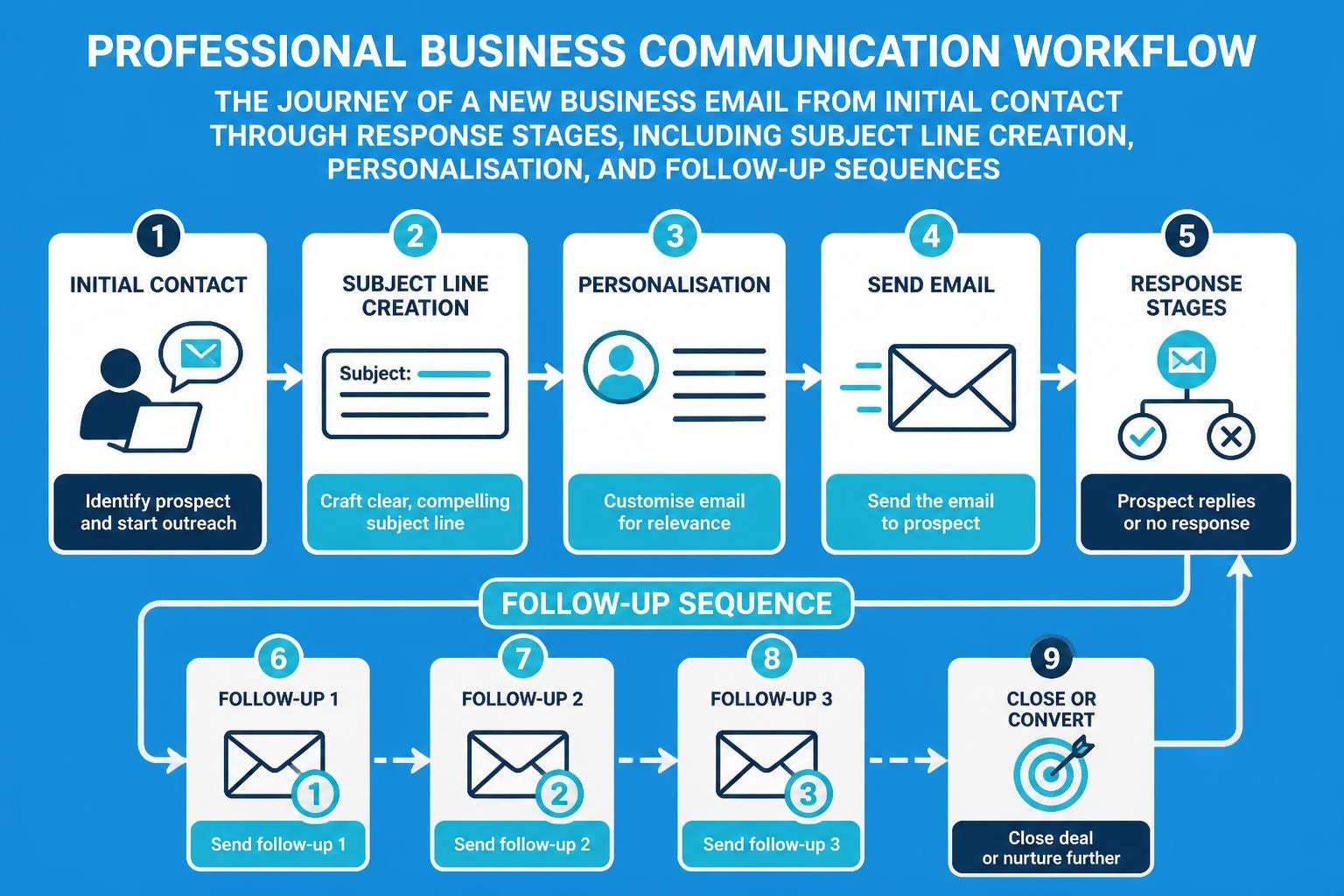
Crafting an effective new business email remains one of the most critical skills for small business owners in 2026. Whether you're reaching out to potential clients, introducing your services, or establishing partnerships, the first email sets the tone for your entire business relationship. With professionals receiving over 120 emails daily, understanding how to write a compelling new business email that stands out whilst maintaining professionalism has never been more important. This comprehensive guide explores the essential elements, strategies, and best practices that transform cold outreach into valuable business connections.
Understanding the Purpose of a New Business Email
A new business email serves as your digital handshake. It's the initial point of contact that introduces your company, explains your value proposition, and opens the door for meaningful conversation. Unlike casual correspondence, this type of email requires careful consideration of every element, from the subject line to the signature block.
The primary objective is to establish credibility quickly whilst demonstrating genuine interest in solving a specific problem for your recipient. Successful new business emails balance professionalism with personality, showing that there's a real person behind the message who understands the recipient's challenges. When crafting your approach, consider that you're not just selling a product or service – you're initiating a relationship that could yield benefits for both parties.
Small businesses particularly benefit from mastering this skill, as creating a professional email becomes the foundation for scalable outreach campaigns. The right message at the right time can open doors that traditional marketing struggles to unlock.
Key Objectives of Business Outreach
Every new business email should accomplish specific goals within the first few seconds of being opened. Your primary objectives include:
- Capturing attention through a compelling subject line that promises value
- Establishing credibility by demonstrating knowledge of the recipient's business or industry
- Clearly articulating value in terms that matter to the reader, not just features
- Prompting action with a clear, low-friction next step
Research shows that personalised emails deliver six times higher transaction rates than generic messages. This makes understanding your recipient's business context essential before hitting send.
Crafting the Perfect Subject Line
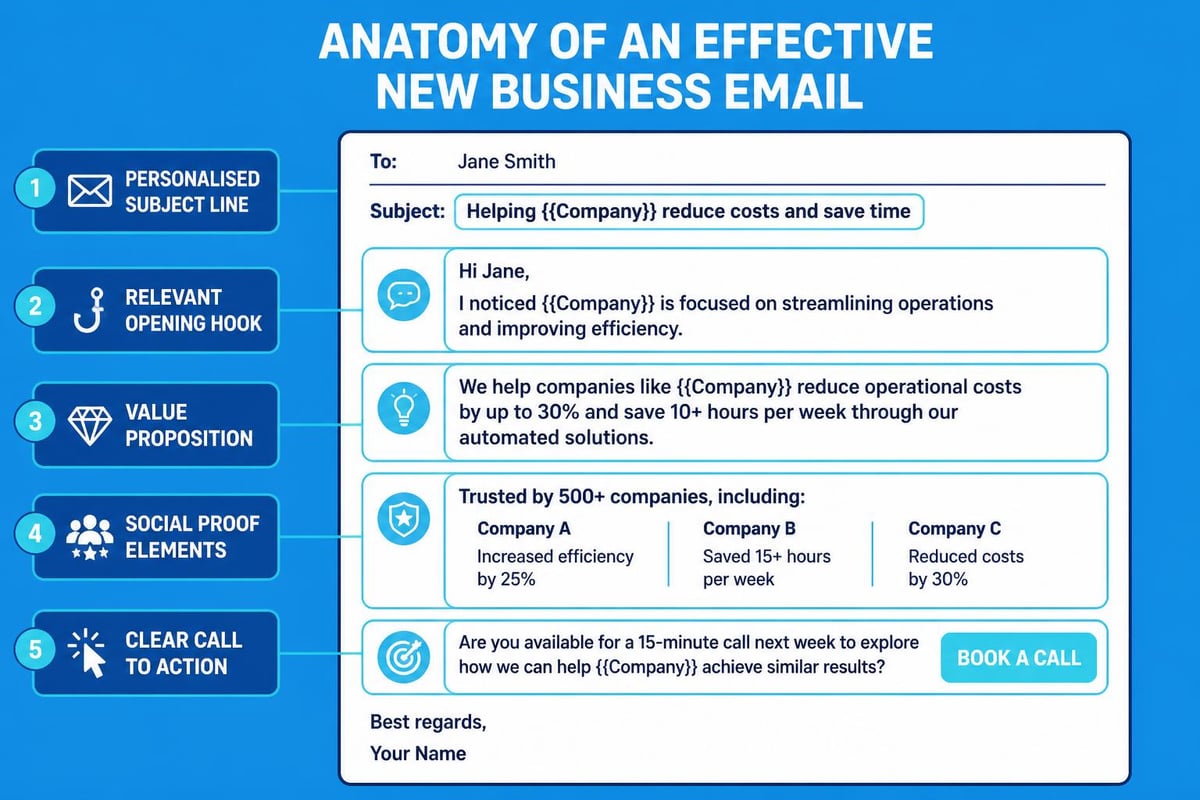
Your subject line determines whether your new business email gets opened or relegated to the digital dustbin. In 2026, with advanced spam filters and increasingly sophisticated recipients, generic subject lines like "Quick question" or "Following up" no longer cut through the noise.
Effective subject lines balance curiosity with clarity. They hint at the value inside without resorting to clickbait tactics that damage trust. Consider using the recipient's company name, referencing a recent achievement, or mentioning a mutual connection when possible. Personalisation increases open rates by an average of 26%, making this investment worthwhile.
Keep your subject line between 40-50 characters for optimal mobile display. Most professionals check email on their phones first, and longer subject lines get truncated, losing their impact. Testing different approaches helps you understand what resonates with your specific audience.
The Business Writing Blog discusses best practices that emphasise how strong subject lines set the stage for everything that follows. Your subject line should promise something specific and deliverable within the email body.
Subject Line Formulas That Work
| Formula Type | Example | Use Case |
|---|---|---|
| Question-based | "Ready to reduce customer churn by 30%?" | Problem-solving offers |
| Value-focused | "3 ways [Company] can streamline invoicing" | Educational content |
| Personalised reference | "Loved your recent post on [Topic]" | Relationship building |
| Mutual connection | "[Name] suggested I reach out" | Warm introductions |
Writing the Opening Paragraph
The first three sentences of your new business email determine whether the recipient continues reading or archives the message. This opening needs to establish relevance immediately, showing that you've done your homework and understand their specific situation.
Avoid generic openers like "I hope this email finds you well" that add no value and waste precious attention. Instead, reference something specific about their business: a recent product launch, a funding round, an article they published, or a challenge common in their industry. This demonstrates genuine interest rather than bulk outreach.
Strong opening paragraphs typically follow this structure: specific observation about their business, quick identification of who you are and why you're qualified to help, and a bridge to the value you're offering. Keep it concise – three sentences maximum before moving to your core message.
For those looking to establish professional communication standards, understanding professional email conventions provides the foundation for effective outreach.
Delivering Your Value Proposition
Once you've established relevance, your new business email must clearly articulate what makes your offering valuable. This isn't about listing features – it's about connecting those features to outcomes that matter to your recipient's business goals.
Frame your value proposition in terms of solving specific problems or capturing opportunities. Rather than saying "We offer email marketing software," explain "We help small businesses increase repeat purchases by 40% through automated customer nurturing campaigns." The difference lies in focusing on the transformation rather than the tool.
Structuring Your Core Message
Present your value proposition using a clear, logical flow:
- Identify the problem they're likely facing based on your research
- Explain the cost of not solving it (lost revenue, wasted time, missed opportunities)
- Introduce your solution as a specific answer to this specific challenge
- Provide proof through metrics, case studies, or social proof
- Make the ask with a clear, low-commitment next step
This structure respects the recipient's time whilst building a compelling case for further conversation. Many digital marketing agencies like Pioneer Marketing use similar frameworks when reaching out to potential clients, focusing on measurable outcomes rather than abstract benefits.
Personalisation Beyond First Names
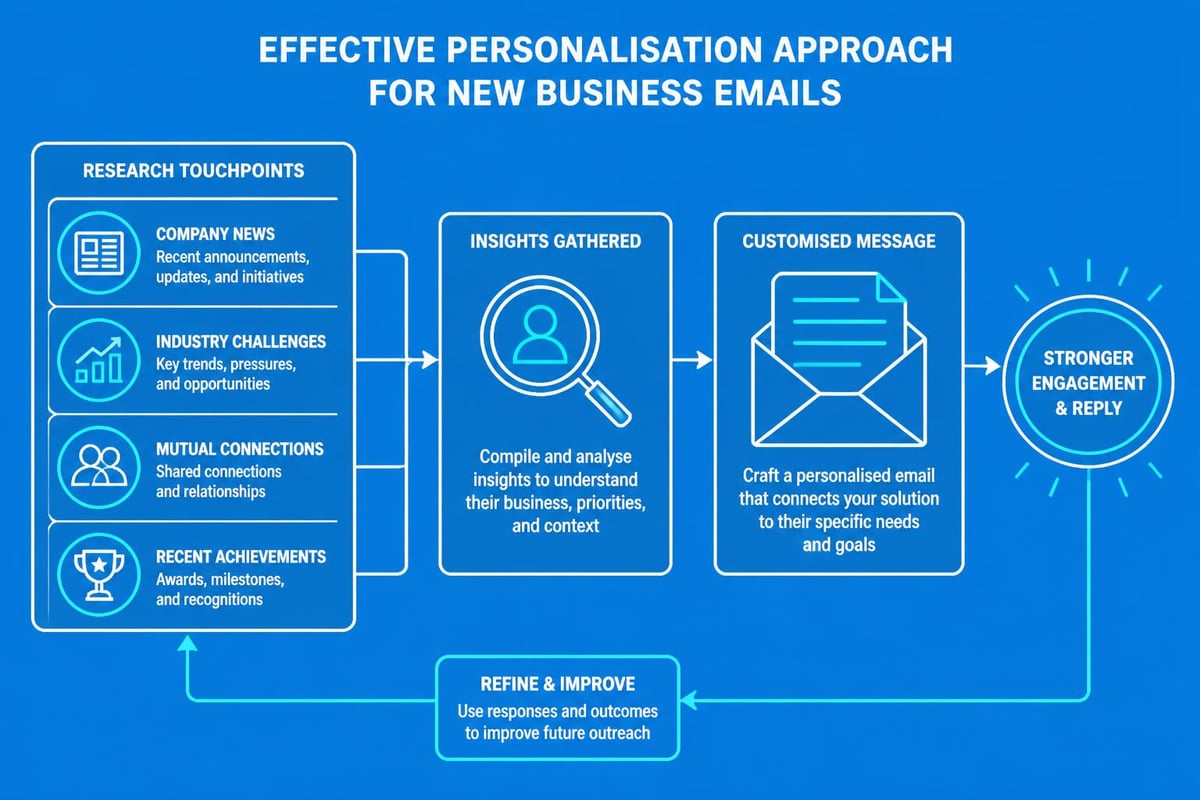
Simply inserting someone's first name doesn't constitute meaningful personalisation in 2026. Today's recipients expect emails that demonstrate genuine understanding of their business context, challenges, and goals. This requires research before you write.
Effective personalisation involves multiple layers: company-specific references, industry insights, role-based challenges, and timing considerations. Mentioning a recent company announcement shows you're paying attention. Referencing a specific challenge common to their role demonstrates empathy and understanding.
Consider these personalisation elements:
- Recent company news or achievements
- Industry-specific terminology and challenges
- Role-based pain points
- Geographic considerations
- Company size and growth stage
- Technology stack or existing solutions
Tools like LinkedIn, company websites, and industry publications provide rich information for crafting personalised messages. The time invested in research significantly improves response rates, making it worthwhile for high-value prospects.
Timing and Frequency Considerations
When you send your new business email matters almost as much as what you write. Research from 2026 indicates that Tuesday through Thursday between 10 AM and 2 PM typically yields the highest open and response rates for B2B communications.
However, these generalizations vary by industry and recipient role. Executive-level contacts often check email early morning or late evening, whilst mid-level managers engage more during traditional business hours. Testing different send times helps you optimize for your specific audience.
Follow-Up Strategy
| Touchpoint | Timing | Content Focus |
|---|---|---|
| Initial email | Day 1 | Value proposition introduction |
| First follow-up | Day 4 | Additional value, different angle |
| Second follow-up | Day 10 | Case study or social proof |
| Third follow-up | Day 20 | Final attempt, break-up email |
Following professional email etiquette as outlined by Purdue University's Online Writing Lab ensures your persistence doesn't cross into pestering. Each follow-up should add new value rather than simply repeating your previous message.
Incorporating Social Proof and Credibility Markers
Your new business email needs to establish trust quickly, especially when the recipient has never heard of your company. Social proof serves as borrowed credibility that validates your claims and reduces perceived risk.
Effective social proof elements include:
- Specific results achieved for similar companies
- Recognizable brand names you've worked with
- Industry awards or certifications
- Media mentions or publications
- Quantifiable metrics from case studies
Rather than generic statements like "Our clients love us," provide concrete evidence: "We helped three SaaS companies in the healthcare sector reduce churn by an average of 34% in Q1 2026." Specificity breeds credibility.
Position these elements naturally within your message rather than creating a separate "credentials" paragraph. Weave them into your value proposition or use them to support specific claims you're making.
Structuring Your Call to Action
Every new business email needs a clear, singular call to action. Offering multiple options creates decision paralysis, whilst having no clear next step leaves the recipient unsure how to proceed even if they're interested.
Your CTA should be low-commitment and specific. Rather than asking for a 60-minute demo or requesting a large time investment, suggest a brief 15-minute exploratory call or offer to send a relevant resource. The goal is to advance the conversation, not close a sale in the first email.
Frame your CTA around their benefit rather than your need. Instead of "Let me know if you'd like to schedule a call," try "Would a 15-minute conversation about reducing your customer acquisition costs by 25% be valuable?" This maintains focus on what they'll gain.
Consider using tools recommended by TechRadar's email outreach guide to track engagement and optimize your approach based on real data about what calls to action generate the best response rates.
Formatting for Scannability
Most recipients skim emails rather than reading every word. Your new business email formatting should accommodate this behaviour by making key information easy to identify at a glance. Dense paragraphs get ignored; well-structured messages get read.
Use short paragraphs (2-3 sentences maximum), bullet points for lists, and bold text to emphasize critical points. White space improves readability significantly, especially on mobile devices where most emails are first viewed.
Visual Hierarchy Best Practices
Create visual hierarchy through strategic formatting choices:
- Bold key benefits that deserve emphasis
- Use bullet points for features, steps, or options
- Keep paragraphs short and focused on single ideas
- Include line breaks between distinct sections
- Left-align text for easiest reading
- Avoid large blocks of italicized text
The Lifehack guide to email etiquette reinforces how proper formatting demonstrates respect for the recipient's time and attention, increasing the likelihood they'll engage with your message.
Mobile Optimization Requirements
With over 60% of emails opened on mobile devices in 2026, your new business email must render perfectly on smaller screens. This affects everything from subject line length to paragraph structure and CTA button design.
Mobile-friendly emails prioritize brevity. What seems concise on desktop can feel overwhelming on a phone screen. Aim for emails that can be fully read and understood within 30 seconds on mobile, with the option to explore further if interested.
Test your emails on multiple devices before sending them to important prospects. What looks perfect on your laptop might have broken formatting on an iPhone or Android device. Many email marketing platforms include preview tools that show how your message appears across different devices and email clients.
Professional Tone Without Corporate Stiffness
Finding the right tone for a new business email requires balancing professionalism with approachability. Overly formal language creates distance, whilst too casual undermines credibility. The goal is to sound like a competent professional who's also a real person.
Write as you would speak to a respected colleague you're meeting for the first time. Avoid corporate jargon that obscures meaning, but maintain grammatical correctness and proper spelling. Contractions are generally acceptable and help create a conversational tone without sacrificing professionalism.
Tone indicators include:
- Using active voice instead of passive constructions
- Addressing the reader directly with "you" rather than "clients" or "businesses"
- Choosing specific verbs over vague ones
- Avoiding unnecessary hedging with phrases like "just wanted to" or "sorry to bother you"
- Showing enthusiasm without excessive punctuation or emojis
The guidance from TechTarget on professional email etiquette emphasizes that professionalism comes from clarity, respect, and attention to detail rather than stuffiness.
Handling Objections Proactively
An effective new business email anticipates likely objections and addresses them before they become barriers. Common objections include lack of time, budget constraints, satisfaction with current solutions, or uncertainty about ROI.
Rather than ignoring these concerns, acknowledge them directly and provide context that reframes the conversation. If budget is typically an issue, emphasize the cost of inaction. If time is scarce, highlight how your solution creates efficiencies that return more time than it requires.
Common Objection Handling Strategies
| Objection | Proactive Response |
|---|---|
| "We don't have budget" | Focus on ROI and cost of current approach |
| "We're happy with our current solution" | Introduce complementary benefits, not replacement |
| "We don't have time" | Emphasize time saved through your solution |
| "We need to think about it" | Offer specific, time-bound decision framework |
This approach demonstrates understanding whilst gently guiding the conversation past typical roadblocks. It shows you've worked with similar companies and understand the decision-making process they're navigating.
Building Template Libraries That Work
Whilst every new business email should be personalized, working from proven templates dramatically improves efficiency without sacrificing quality. The key is creating frameworks that guide structure whilst allowing for extensive customization based on recipient research.
Effective templates include placeholders for:
- Personalized opening based on specific research
- Industry-specific pain points and language
- Company-specific achievements or news references
- Role-based value propositions
- Customizable social proof examples
Organize templates by industry, company size, or buyer persona to streamline your selection process. As you learn which approaches work best for different audience segments, refine your templates to incorporate these insights.
For businesses looking to scale their outreach efforts, understanding good email practices for business provides the foundation for building effective template libraries that maintain personalization at scale.
Compliance and Legal Considerations
In 2026, privacy regulations and anti-spam laws continue to evolve, making compliance essential for any new business email campaign. Violating regulations like GDPR, CAN-SPAM, or industry-specific requirements can result in significant fines and damage to your reputation.
Ensure every business email includes:
- Your company's physical address
- A clear, functional unsubscribe mechanism
- Honest subject lines that accurately reflect content
- Your business name and contact information
- Compliance with industry-specific regulations
Never purchase email lists or send unsolicited bulk messages to recipients who haven't opted in or with whom you have no legitimate business interest. Focus on building quality connections with prospects who match your ideal customer profile and would genuinely benefit from your offering.
Resources from Tufts University on professional email etiquette emphasize that ethical email practices aren't just about compliance – they're about respecting recipients and building sustainable business relationships.
Measuring Success and Iterating
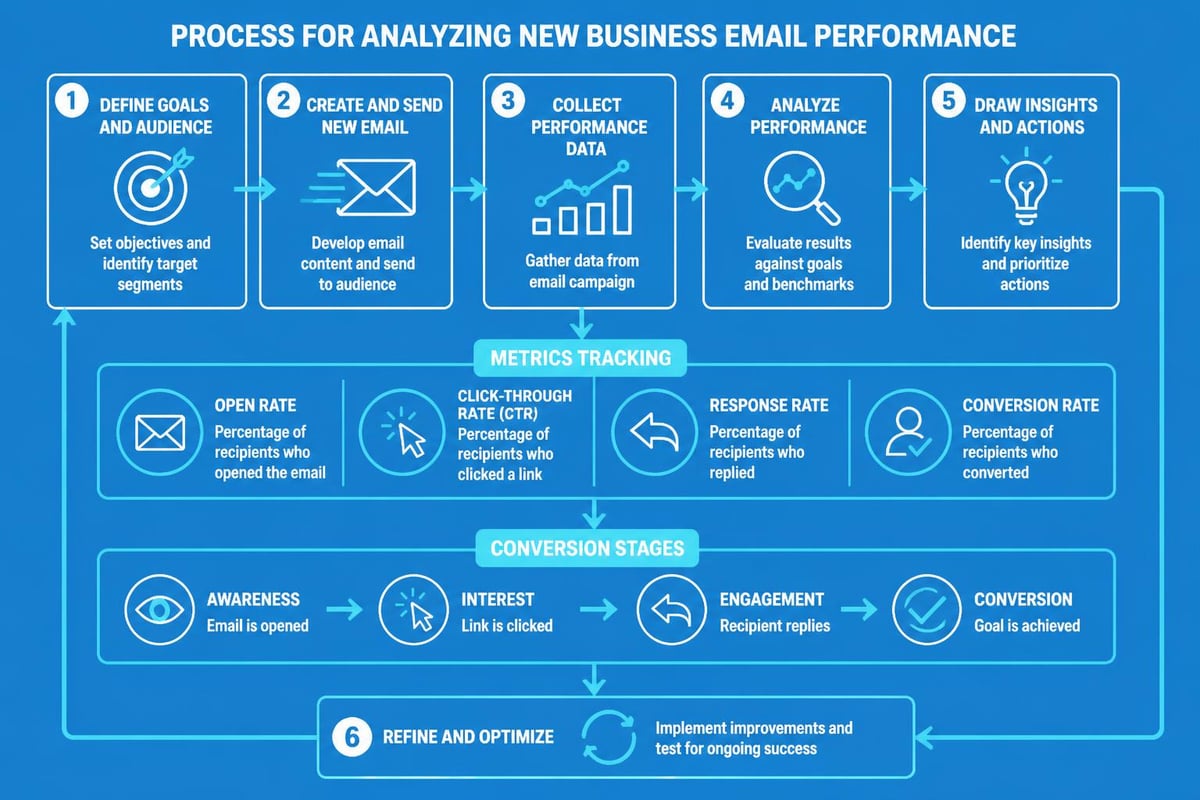
Your new business email strategy should be data-driven, with continuous improvement based on measurable results. Track key metrics including open rates, response rates, meeting bookings, and eventual conversions to understand what's working and what needs refinement.
Critical metrics to monitor:
- Open rate (aim for 20-30% in B2B contexts)
- Response rate (5-10% is strong for cold outreach)
- Click-through rate on included links
- Meeting booking conversion
- Time from initial email to first response
A/B test different elements systematically – subject lines, opening paragraphs, value propositions, CTAs, and send times. Change one variable at a time to clearly attribute performance differences. Small improvements compound significantly when applied across hundreds or thousands of emails.
Consider leveraging platforms like Astonish Email that provide detailed analytics and testing capabilities specifically designed for small business email marketing needs.
Automation Without Losing Authenticity
Email automation tools enable small businesses to scale their outreach without proportionally increasing headcount. However, automation must be implemented thoughtfully to maintain the personal touch that makes business emails effective.
The goal is to automate the mechanics whilst preserving the personalization. Use automation for scheduling, follow-up sequences, and basic segmentation, but invest human time in researching recipients and customizing key message elements.
Modern automation platforms allow for extensive personalization beyond simple merge tags. You can trigger different message sequences based on recipient behaviour, customize content based on company attributes, and scale personal outreach without sacrificing quality.
When setting up automation for your new business email campaigns, establish clear rules about when human review is required. High-value prospects or complex value propositions typically warrant fully custom messaging, whilst smaller opportunities might use more templated approaches.
Building Long-Term Relationships
The best new business email isn't designed to extract immediate value – it's the beginning of a relationship that could yield benefits for years. This long-term perspective changes how you approach initial outreach, follow-up, and ongoing engagement.
Even when a prospect isn't ready to buy immediately, staying connected through valuable content, industry insights, or periodic check-ins keeps you top-of-mind for when their situation changes. Nurture campaigns that provide genuine value without constantly selling build credibility and trust over time.
Consider these relationship-building approaches:
- Share relevant industry research or insights with no ask attached
- Congratulate them on company achievements
- Introduce them to valuable connections in your network
- Invite them to relevant events or webinars
- Provide helpful feedback on their marketing or products
This approach requires patience but creates sustainable business development that doesn't rely solely on timing luck. When needs arise, you'll be the trusted adviser they think of first.
Mastering the art of writing an effective new business email transforms how small businesses acquire customers and build partnerships. By focusing on personalisation, clear value propositions, and respectful persistence, you create meaningful connections that drive sustainable growth. Astonish Email provides the tools and capabilities small businesses need to implement these strategies at scale, from automated follow-up sequences to detailed analytics that inform continuous improvement.