One Time Email Use: Complete Guide for Businesses 2026
May 28, 2026
Privacy concerns and inbox overload have driven countless businesses and individuals to embrace one time email use as a practical solution. These temporary addresses serve a single purpose before disappearing, leaving no trace in your primary inbox. For small businesses managing customer data and marketing campaigns, understanding when and how to leverage this technology can streamline operations whilst maintaining robust security protocols.
Understanding One Time Email Use
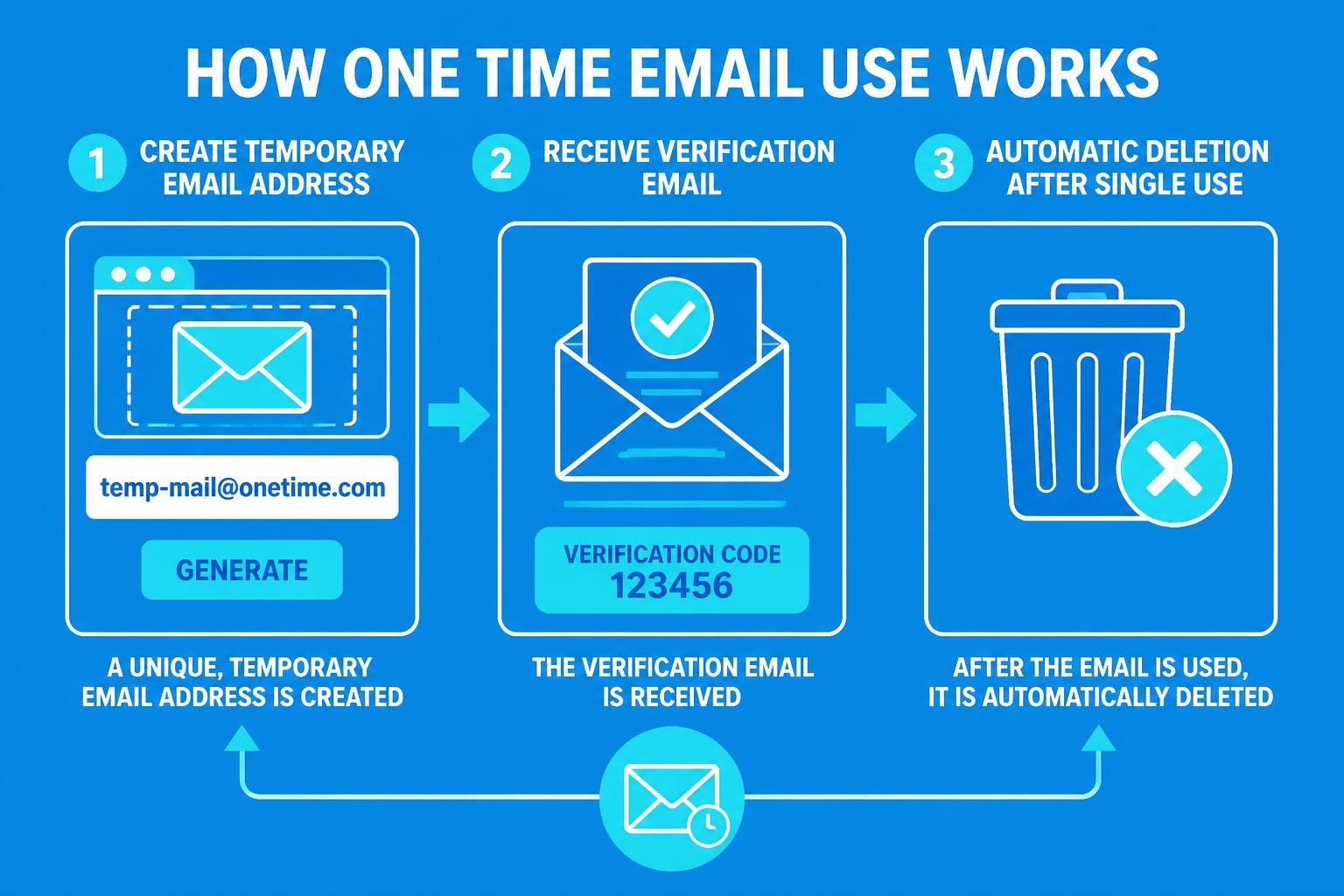
One time email use refers to temporary email addresses created for a single transaction, verification, or interaction before becoming inactive. Unlike traditional email accounts that persist indefinitely, these addresses self-destruct after a predetermined period or specific action.
The mechanism behind one time email use is straightforward. Users generate a random email address through a temporary email service, use it for their intended purpose, and allow it to expire. This approach eliminates long-term data storage requirements and reduces exposure to potential security breaches.
Core Components of Temporary Email Systems
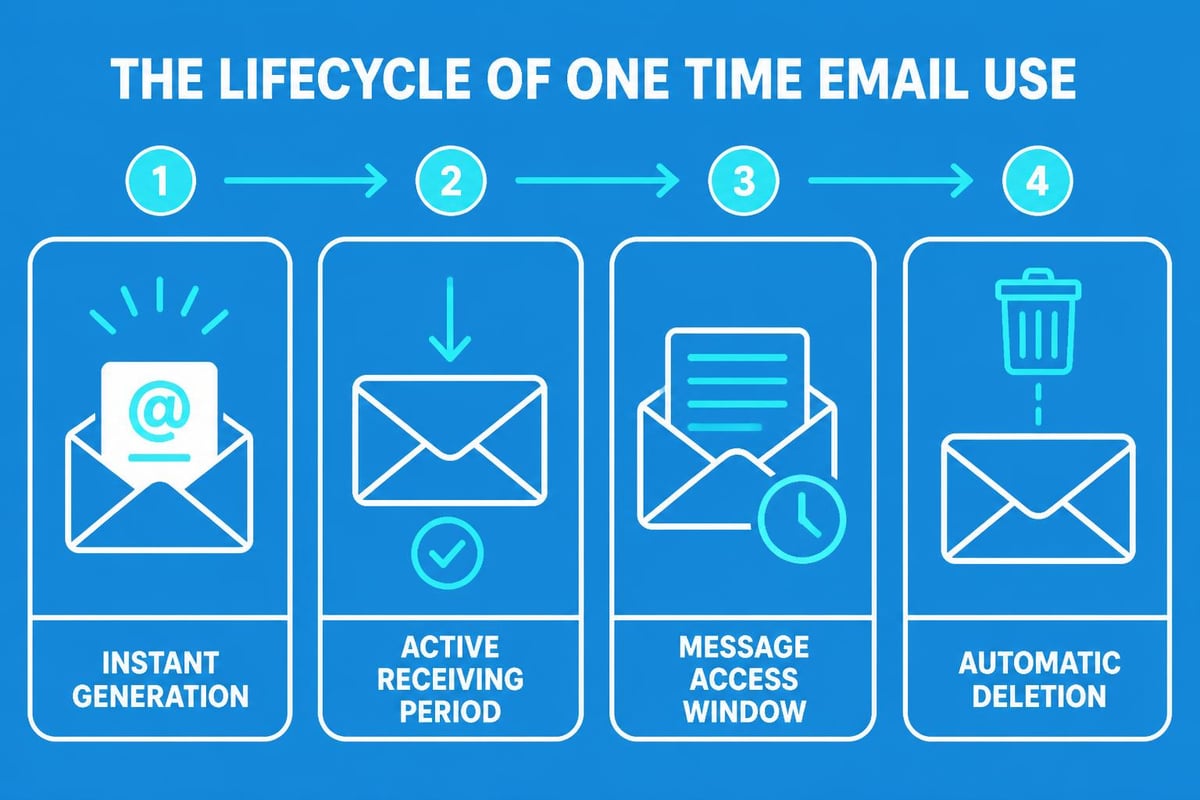
Automatic Generation: Systems create unique addresses instantly without registration requirements. Users receive addresses in seconds, ready for immediate deployment.
Time-Based Expiration: Most services offer configurable lifespan options:
- 10-minute disposable addresses
- Hourly expiration settings
- 24-hour temporary accounts
- Custom duration preferences
Inbox Accessibility: Despite their temporary nature, these addresses maintain full functionality during their active period, receiving messages just like permanent accounts.
Strategic Applications for Small Businesses
Small businesses encounter numerous scenarios where one time email use provides tangible benefits without compromising operational efficiency. Understanding these applications helps marketing teams and business owners make informed decisions about email strategy.
Software Testing and Development
Development teams require realistic email scenarios for testing registration flows, password resets, and notification systems. One time email use enables thorough testing without cluttering corporate inboxes or creating dozens of permanent test accounts.
| Testing Scenario | Traditional Approach | One Time Email Approach |
|---|---|---|
| User Registration | Manual inbox management | Automated temporary addresses |
| Password Recovery | Dedicated test accounts | Fresh address per test cycle |
| Email Template QA | Shared team inbox | Individual disposable addresses |
| Integration Testing | Permanent dummy accounts | Clean slate for each test |
Developers can validate functionality across multiple user scenarios simultaneously, with testing environments using dummy email accounts providing the flexibility needed for comprehensive quality assurance.
Event Registrations and Webinars
Marketing campaigns frequently require email collection for event access. Participants wary of spam may hesitate to provide their primary addresses, reducing conversion rates and attendance numbers.
Offering attendees the option to use temporary addresses removes this friction whilst still collecting necessary registration data. Businesses benefit from accurate headcount projections without forcing participants into long-term mailing lists they never requested.
Privacy Protection and Spam Prevention
The average professional receives 121 emails daily, with unsolicited messages comprising a significant portion. One time email use serves as a defensive barrier against inbox pollution and unwanted marketing communications.
Consumer Privacy Considerations
Modern consumers demonstrate increasing awareness of data privacy rights. When shopping online or accessing gated content, many individuals prefer not to surrender their permanent email addresses to unfamiliar vendors.
Privacy advantages include:
- Protection against third-party data sharing
- Prevention of email address harvesting
- Reduction in targeted advertising exposure
- Control over personal information distribution
Small businesses must balance data collection needs with customer privacy expectations. Understanding that some prospects will use temporary addresses helps set realistic expectations for email marketing campaigns and list building strategies.
Spam Mitigation Strategies
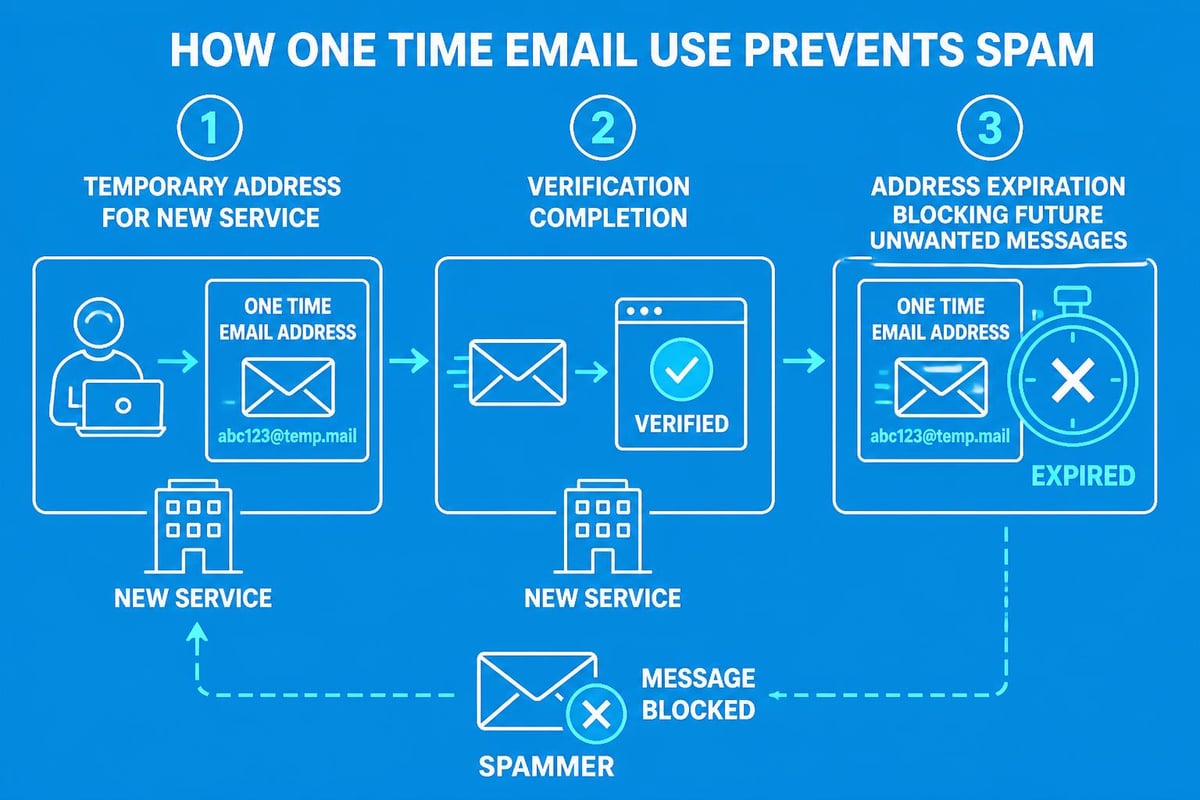
Spam filters improve constantly, yet unwanted messages persist. One time email use provides an additional layer of protection when engaging with potentially questionable services or unfamiliar platforms.
For businesses managing multiple vendor relationships, temporary addresses allow secure communication during trial periods or one-off transactions. Once the interaction concludes, the address expires, eliminating future spam from that source.
Operational Considerations for Email Marketers
Email marketing professionals must understand how one time email use impacts campaign metrics, deliverability, and list quality. These factors directly influence return on investment and strategic planning.
List Quality and Engagement Rates
Subscribers using temporary addresses create complications for long-term nurture campaigns. These contacts may appear in initial campaign reports but disappear from subsequent touchpoints, skewing engagement metrics and conversion tracking.
Impact on key metrics:
- Open Rates: Temporary addresses inflate initial subscriber counts without contributing to ongoing engagement
- Click-Through Rates: Short-lived addresses cannot participate in multi-touch campaigns
- Conversion Attribution: Customer journey tracking breaks when contact points vanish
- List Hygiene: Bounce rates increase as temporary addresses expire
Businesses using platforms like Astonish Email should implement verification processes that identify and segment temporary address users, ensuring campaign analytics reflect genuine subscriber behaviour.
Deliverability Challenges
Email service providers monitor bounce rates and engagement patterns when calculating sender reputation. High volumes of temporary addresses can trigger deliverability issues if those contacts generate hard bounces after expiration.
| Challenge | Risk Level | Mitigation Strategy |
|---|---|---|
| Hard Bounces | High | Double opt-in verification |
| Engagement Drops | Medium | Segmented sending strategies |
| Spam Complaints | Low | Clear unsubscribe options |
| Domain Reputation | Medium | Regular list cleaning |
Smart marketers balance accessibility with list quality, implementing antispam policies that protect sender reputation whilst maintaining growth objectives.
Legal and Compliance Perspectives
Regulations governing email marketing and data protection intersect with one time email use in ways that businesses must navigate carefully. Compliance requirements vary by jurisdiction and industry.
GDPR and Data Retention
The General Data Protection Regulation requires explicit consent for data processing and imposes strict retention limitations. One time email use aligns naturally with these principles by minimising data persistence.
Businesses collecting email addresses must clearly communicate processing purposes regardless of whether contacts use temporary or permanent addresses. The legality of temporary email services remains well-established, but businesses bear responsibility for compliant data handling practices.
Terms of Service Enforcement
Some platforms prohibit temporary email addresses in their terms of service, particularly for financial services, government portals, or age-restricted content. These restrictions aim to ensure accountability and prevent fraudulent account creation.
Small businesses must decide whether to implement similar restrictions based on their risk tolerance and business model. Services requiring payment information or identity verification typically benefit from permanent address requirements, whilst content downloads or newsletter subscriptions may accommodate temporary addresses.
Selecting Temporary Email Services
Not all temporary email providers offer identical features or reliability standards. Businesses evaluating options should consider functionality, privacy policies, and user experience factors.
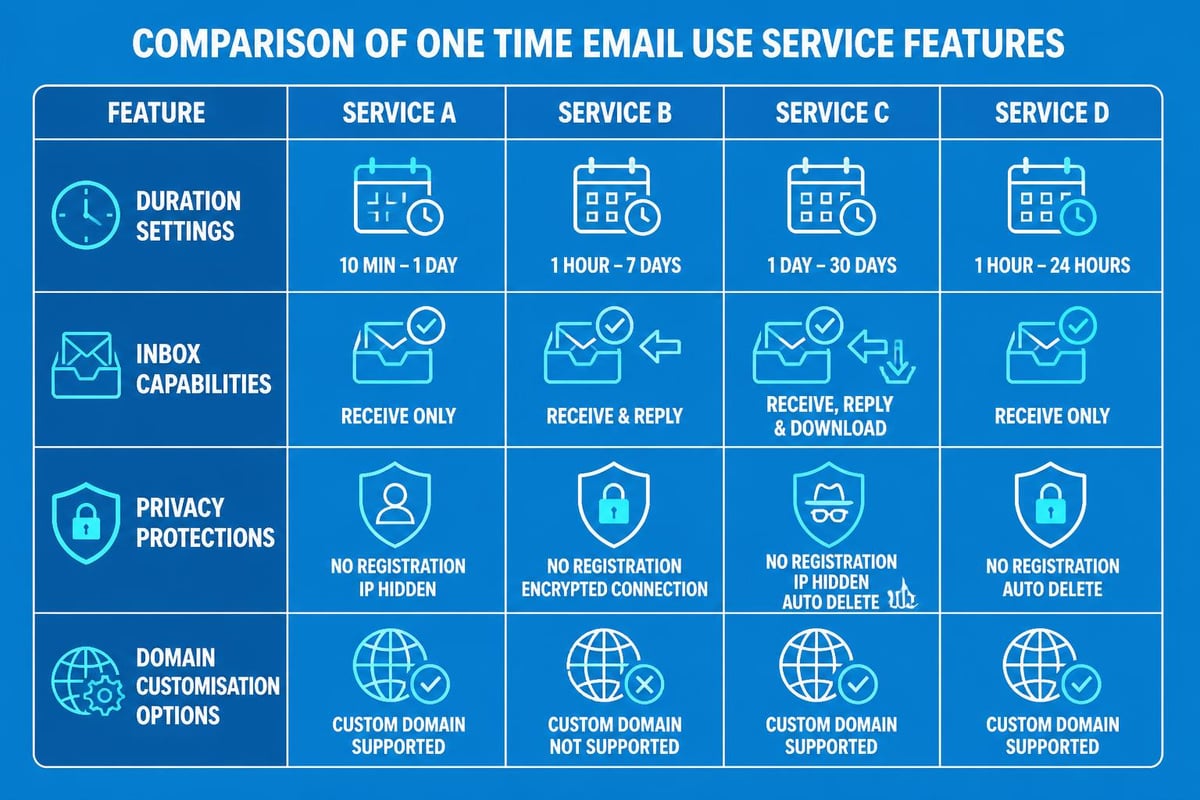
Service Comparison Criteria
Duration Flexibility: Different use cases require varying expiration timeframes. Top temporary email services in 2025 offer customisable lifespans from minutes to days.
Inbox Features: Advanced services provide search functionality, attachment handling, and forwarding capabilities that mirror permanent email clients.
Privacy Guarantees: Reputable providers implement zero-logging policies and secure connections, ensuring messages remain confidential during the address's active period.
Custom Domain Options: Some platforms allow users to select from multiple domain names, improving deliverability and appearance for professional contexts.
Integration with Business Workflows
Forward-thinking businesses integrate one time email use capabilities into existing workflows, enhancing security and efficiency without disrupting established processes.
API Access for Automated Testing
Development teams benefit from programmatic temporary email generation through API endpoints. These integrations enable automated test suites that simulate real-world user interactions without manual intervention.
Common implementation patterns include:
- Continuous integration pipeline testing
- Automated user acceptance scenarios
- Load testing with realistic email traffic
- Security penetration testing
Teams seeking to create email accounts easily for testing purposes find API-driven temporary addresses invaluable for maintaining development velocity whilst ensuring quality standards.
Customer Support Applications
Support teams occasionally need to verify customer claims about email receipt or troubleshoot delivery issues. One time email use allows representatives to test sending mechanisms without creating permanent test accounts that require ongoing maintenance.
This approach particularly benefits small businesses without dedicated IT departments, as non-technical staff can generate test addresses quickly when investigating reported problems.
Balancing Convenience and Security
The tension between accessibility and security defines many technology adoption decisions. One time email use exemplifies this balance, offering convenience that occasionally conflicts with security requirements.
Authentication and Verification
Multi-factor authentication systems rely on email delivery for security codes and verification links. Temporary addresses function perfectly for single verification events but create problems for ongoing account security.
Security considerations:
- Password reset mechanisms fail when addresses expire
- Account recovery options become unavailable
- Security alerts cannot reach inactive addresses
- Two-factor authentication breaks post-expiration
Businesses should clearly communicate the implications of using temporary addresses for account creation, potentially restricting their use for services requiring long-term account maintenance.
Trust Signals and Legitimacy
Email addresses serve as identity markers in digital commerce. Permanent addresses signal commitment and authenticity, whilst temporary addresses may raise suspicion in certain contexts.
For small businesses evaluating best practices for business email addresses, maintaining professional permanent addresses for client communications remains essential, reserving temporary addresses for specific internal or testing purposes.
Comparative Analysis: Temporary vs Permanent Addresses
Understanding when to recommend or restrict one time email use requires examining the fundamental differences between temporary and permanent email strategies.
Use Case Suitability
| Scenario | Temporary Address | Permanent Address | Recommended Choice |
|---|---|---|---|
| E-commerce checkout | Acceptable | Preferred | Permanent for order tracking |
| Content download | Ideal | Acceptable | Either, user preference |
| Account creation | Risk | Standard | Permanent for security |
| Newsletter signup | Acceptable | Preferred | Depends on engagement goals |
| Software trial | Ideal | Acceptable | Temporary if short-term |
| Customer support | Not recommended | Required | Permanent for continuity |
This comparison of temporary versus permanent email addresses highlights the nuanced decision-making process businesses face when designing user experiences.
Long-Term Relationship Building
Email marketing thrives on relationship development over time. One time email use fundamentally opposes this principle by preventing ongoing communication once addresses expire.
Businesses investing in customer lifetime value should implement strategies that encourage permanent address usage whilst respecting privacy concerns. Transparency about email frequency, content value, and easy unsubscribe options builds trust that reduces temporary address adoption.
Emerging Trends and Future Developments
The landscape of email privacy and temporary addressing continues evolving as technology advances and consumer expectations shift. Small businesses must monitor these trends to remain competitive and compliant.
Browser-Integrated Privacy Tools
Major browser vendors increasingly offer built-in email aliasing and temporary address generation. These native tools eliminate the need for third-party services, potentially increasing adoption rates among privacy-conscious users.
The top use cases for disposable email addresses in 2026 reflect this mainstreaming trend, with temporary addresses becoming standard practice rather than niche behaviour.
Email Service Provider Adaptations
Forward-thinking email platforms develop features that accommodate temporary address users whilst maintaining list quality. Advanced segmentation, engagement scoring, and automated verification processes help marketers identify and manage these contacts effectively.
Platforms serving small businesses, including those focusing on professional email solutions, integrate these capabilities to provide clients with comprehensive contact management tools.
Implementation Best Practices
Businesses deciding to incorporate one time email use into their operations should follow established best practices to maximise benefits whilst minimising risks.
Policy Development
Clear guidelines should address:
- Acceptable use cases for temporary addresses
- Prohibited applications requiring permanent contacts
- Data retention periods for expired addresses
- User communication about address type implications
Documentation ensures consistency across customer touchpoints and reduces confusion among staff members handling various scenarios.
Technical Infrastructure
Implementing detection mechanisms helps businesses identify temporary addresses during collection. Various techniques include:
- Domain blacklisting for known temporary providers
- Pattern recognition for disposable address formats
- Real-time verification services
- Engagement-based validation over time
These approaches must balance security with user experience, avoiding overly aggressive filtering that frustrates legitimate users whilst effectively managing risk.
Communication Strategies
Transparency builds trust when addressing email collection practices. Businesses should clearly explain:
- Why email addresses are required
- How collected information will be used
- Expected communication frequency
- Options for privacy-conscious users
This openness often reduces temporary address usage by alleviating the privacy concerns that motivate such behaviour initially.
Measuring Impact on Marketing Performance
Data-driven businesses track how one time email use affects campaign performance and adjust strategies accordingly. Comprehensive measurement frameworks illuminate patterns that inform future decisions.
Key Performance Indicators
Metrics to monitor include:
- Percentage of new subscribers using temporary addresses
- Bounce rate correlation with address type
- Engagement differences between permanent and temporary contacts
- Revenue attribution by subscriber segment
- List growth rate net of temporary address churn
Regular analysis of these indicators helps small businesses understand whether temporary addresses represent significant challenges or minor inconveniences within their specific market contexts.
A/B Testing Strategies
Controlled experiments reveal optimal approaches for different business objectives. Testing variations might compare:
- Mandatory permanent address requirements vs optional fields
- Email verification processes vs immediate access
- Incentives for permanent address provision
- Different messaging around privacy and data use
Results guide policy development and user experience design, ensuring decisions rest on evidence rather than assumptions.
One time email use represents both an opportunity and a challenge for small businesses navigating modern email marketing landscapes. Understanding when temporary addresses serve legitimate purposes versus when they undermine business objectives allows marketers to develop nuanced strategies that respect user privacy whilst building sustainable customer relationships. Astonish Email provides the tools and insights small businesses need to manage complex email ecosystems effectively, balancing accessibility with engagement quality to drive meaningful results.