Track Your Email: Complete Guide for Small Businesses
June 2, 2026
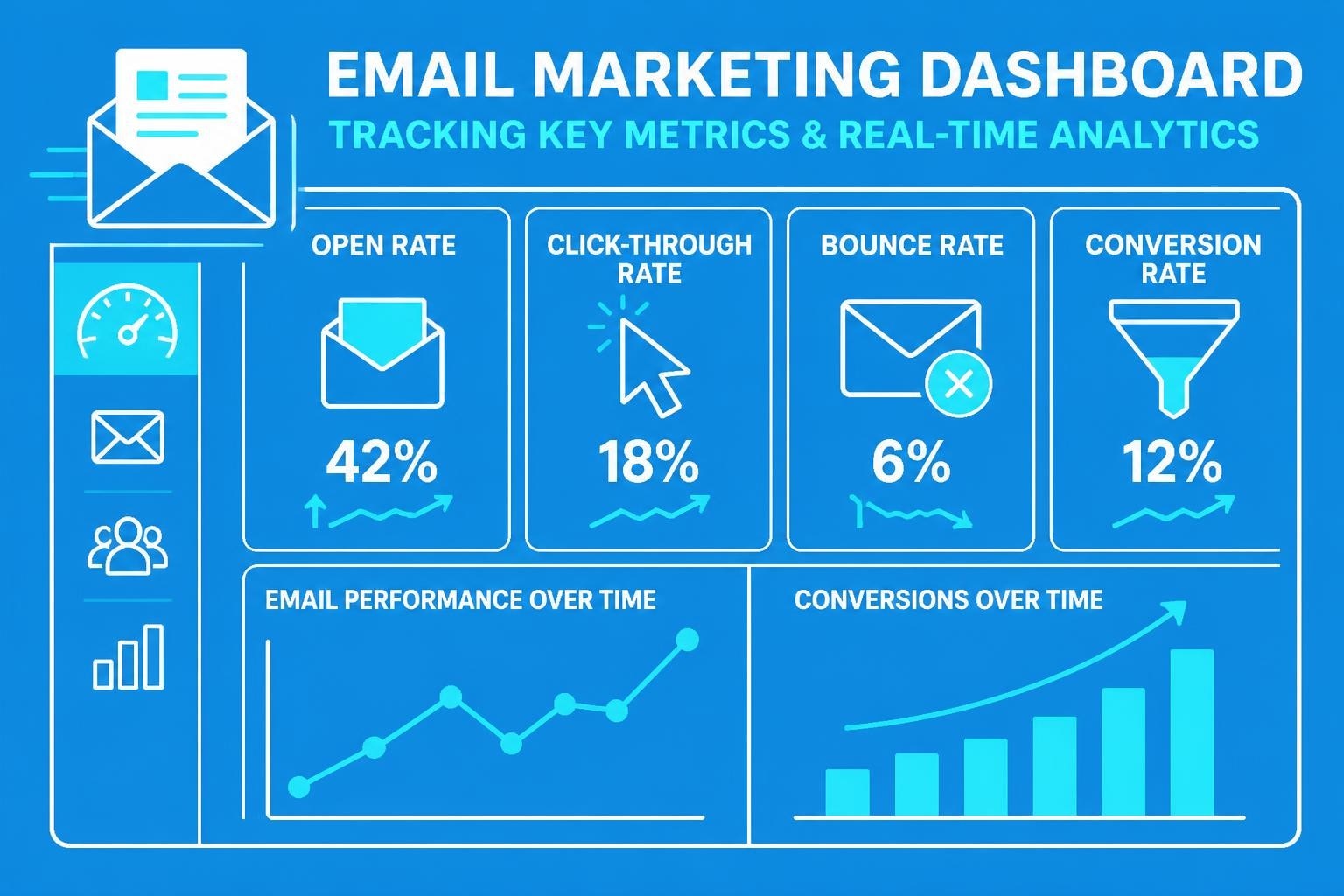
Understanding how recipients engage with your marketing messages is fundamental to building successful campaigns. When you track your email activity, you gain valuable insights into what resonates with your audience, which subject lines perform best, and where potential customers lose interest. For small businesses competing in 2026's crowded digital landscape, this intelligence transforms guesswork into strategic decision-making. The ability to monitor every interaction allows you to refine your approach, personalise future communications, and ultimately drive better results from your marketing investment.
Why Email Tracking Matters for Small Businesses
Email tracking provides the foundation for data-driven marketing decisions. Without visibility into campaign performance, you're essentially sending messages into a void, hoping they land successfully. Small businesses particularly benefit from tracking because resources are limited and every marketing pound must justify itself.
The Core Benefits of Tracking
When you track your email campaigns, you unlock several competitive advantages:
- Measure campaign effectiveness in real time rather than waiting weeks for results
- Identify engaged prospects who consistently open and click your messages
- Optimise send times based on when your audience is most responsive
- Segment audiences according to behaviour patterns and interests
- Calculate ROI accurately to justify marketing spend
Understanding how tracking mechanisms work helps businesses make informed decisions about their email marketing strategy. The technology has evolved significantly, offering granular insights that were impossible just a few years ago.
Small businesses must balance the desire for insights with recipient privacy concerns. Research shows that websites and services often bypass consent mechanisms to track users, raising important ethical questions about transparency and permission.
Essential Metrics to Monitor
Not all tracking data carries equal weight. Small businesses should focus on metrics that directly impact revenue and customer relationships rather than vanity numbers.
Primary Performance Indicators
| Metric | What It Measures | Target Benchmark |
|---|---|---|
| Open Rate | Percentage who opened the email | 18-25% |
| Click-Through Rate | Percentage who clicked links | 2.5-4% |
| Conversion Rate | Percentage who completed desired action | 1-3% |
| Bounce Rate | Percentage of undeliverable emails | Under 2% |
| Unsubscribe Rate | Percentage who opted out | Under 0.5% |
Open rates tell you whether your subject lines are compelling. If people aren't opening messages, they'll never see your content regardless of quality. This metric serves as your first checkpoint.
Click-through rates reveal engagement with your actual content. A high open rate combined with low clicks suggests your message doesn't align with recipient expectations or your calls-to-action need strengthening.
Advanced Tracking Capabilities
Beyond basic metrics, sophisticated tracking reveals deeper insights:
- Geographic location data showing where your most engaged subscribers live
- Device type analysis indicating whether recipients read on mobile or desktop
- Time-to-open metrics demonstrating how quickly people engage with messages
- Link-level tracking identifying which specific links generate most interest
- Forward rates measuring how often recipients share your content
Businesses that implement robust tracking systems gain significant advantages over competitors who neglect this crucial aspect of email marketing.
How Email Tracking Technology Works
To track your email effectively, understanding the underlying technology helps you implement it correctly and respect recipient privacy.
Tracking Pixels and Open Detection
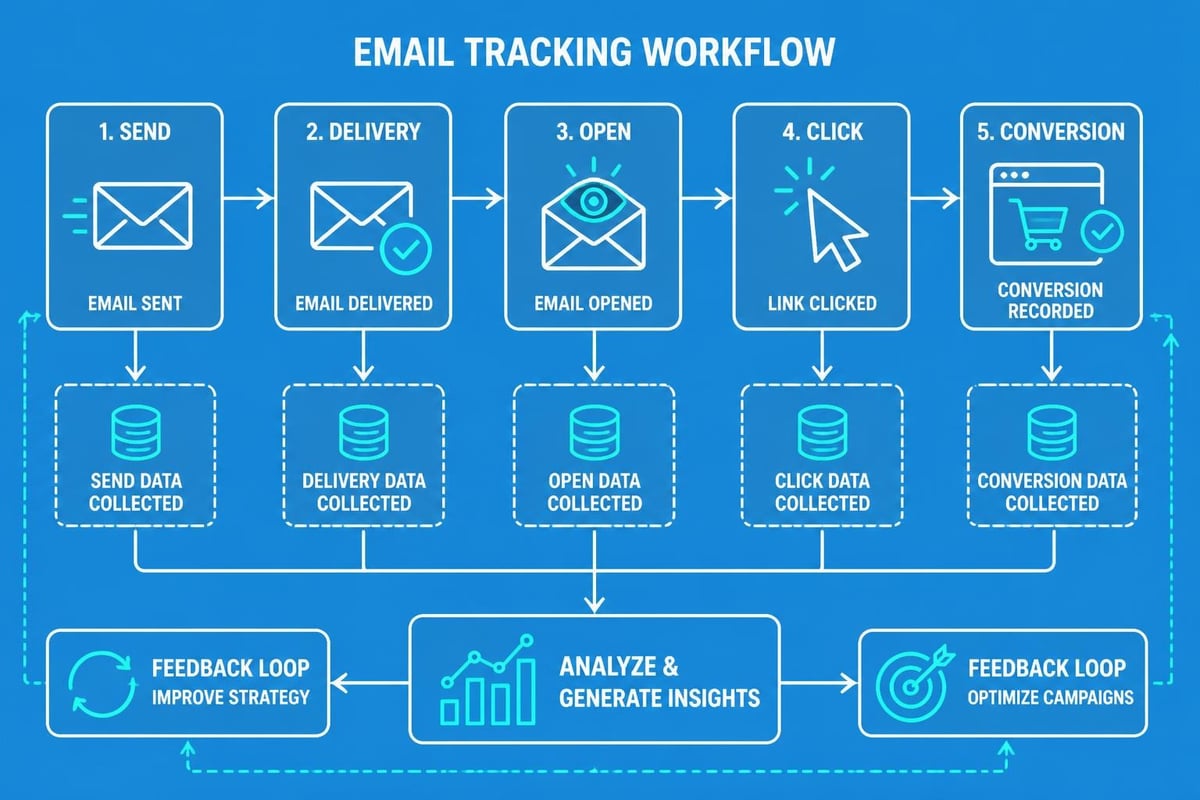
Most email tracking relies on tiny, invisible images called tracking pixels. When a recipient opens your email, their email client requests this image from your server, triggering an "open" event. This simple mechanism provides remarkably detailed information.
The process involves several steps:
- Your email service embeds a unique pixel in each message
- The pixel contains a unique identifier tied to the specific recipient
- When opened, the recipient's email client loads the pixel
- Your server logs the request, recording the open event
- Data includes timestamp, IP address, and device information
Link tracking works differently. Each URL in your email is replaced with a unique tracking URL that redirects through your server before sending the recipient to the intended destination. This intermediate step logs the click event before seamlessly forwarding the user.
Privacy Considerations and Compliance
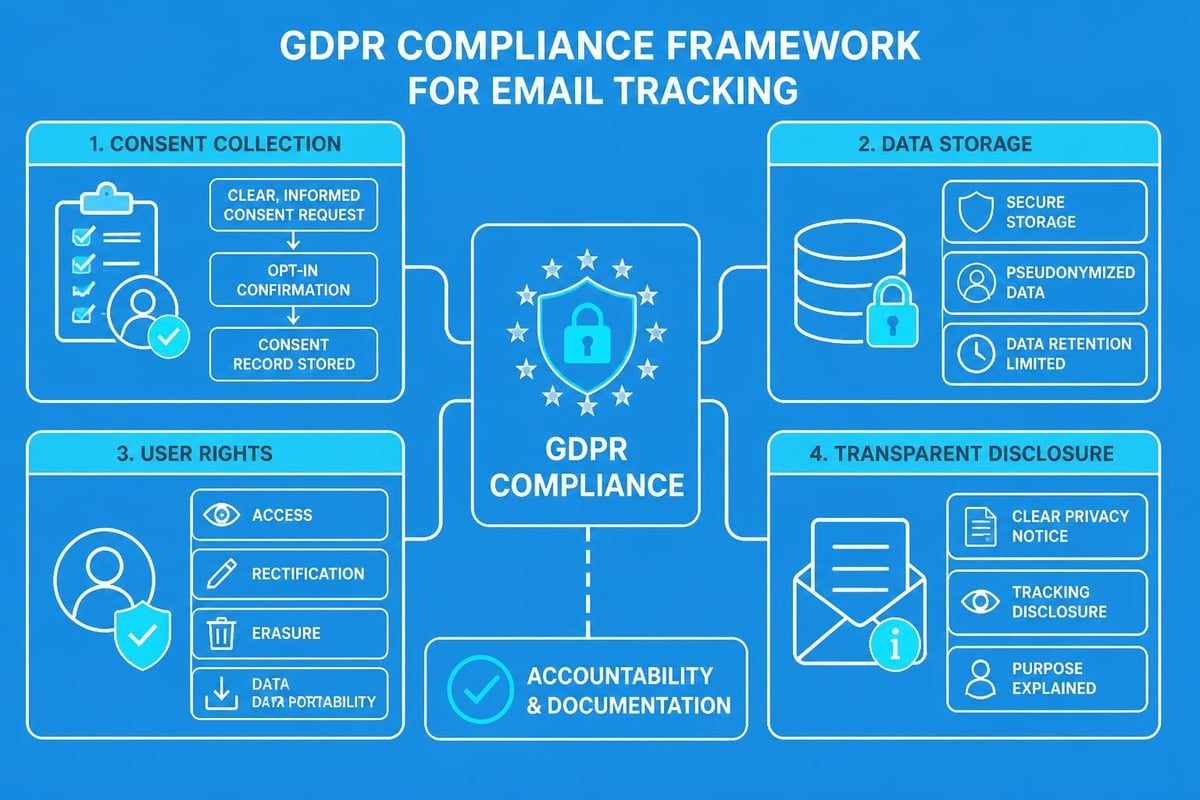
Modern email tracking must navigate complex privacy regulations. The General Data Protection Regulation (GDPR) in the UK and EU requires explicit consent for tracking activities. User preferences regarding information disclosure vary significantly, making transparent communication essential.
Your antispam policy should clearly explain what data you collect and how you use it. Recipients increasingly value transparency, and privacy concerns continue shaping email marketing best practices.
Recent changes like iOS App Tracking Transparency have significantly impacted email tracking accuracy. Apple's Mail Privacy Protection pre-loads images, making open tracking less reliable for iOS users. Smart businesses adapt by focusing on click-through and conversion metrics that remain accurate.
Implementing Effective Tracking Strategies
Successfully tracking email campaigns requires more than just enabling features. Strategic implementation ensures data quality and actionable insights.
Setting Up Your Tracking Infrastructure
Most modern email marketing platforms, including solutions for small business email systems, offer built-in tracking capabilities. Configuration typically involves:
- Enable tracking features in your platform settings
- Configure custom domains for professional tracking links
- Set up conversion goals aligned with business objectives
- Create UTM parameters for integration with analytics platforms
- Test tracking accuracy before launching campaigns
Custom domain configuration is particularly important. Instead of generic tracking URLs, you can use your own domain, which improves deliverability and recipient trust.
Segmentation Based on Behaviour
Once you track your email engagement, use that data to segment your audience intelligently. Behavioural segmentation creates highly targeted groups:
- Highly engaged subscribers who open and click regularly
- Occasional readers who engage sporadically
- Non-openers who haven't engaged in 60+ days
- Click-focused users who skip reading but click specific topics
- Converters who have completed purchases or sign-ups
Each segment deserves different messaging strategies. Highly engaged subscribers might receive more frequent communications and exclusive offers, whilst re-engagement campaigns target non-openers with compelling subject lines designed to recapture attention.
Optimising Campaigns with Tracking Data
Collecting data without action provides no value. The true power emerges when you analyse patterns and adjust strategies accordingly.
A/B Testing Fundamentals
Track your email campaigns to conduct meaningful A/B tests. Test individual variables to identify what drives performance:
| Test Variable | Potential Variations | Impact Level |
|---|---|---|
| Subject Lines | Length, emoji, personalisation | High |
| Send Times | Morning, afternoon, evening, day of week | Medium |
| Call-to-Action | Button text, placement, colour | High |
| Content Length | Short vs detailed messages | Medium |
| Sender Name | Personal vs company name | Medium |
Run tests on meaningful sample sizes. Testing with just 50 recipients won't provide statistically significant results. Aim for at least 1,000 recipients per variation when possible.
Statistical significance matters. A 2% difference in open rates might result from random chance rather than genuine improvement. Most email platforms calculate confidence levels automatically, but understanding the principle prevents premature conclusions.
Personalisation Through Tracking Insights
Data from tracked emails reveals individual preferences that enable sophisticated personalisation. Beyond inserting first names, use behavioural data to customise:
- Content topics based on previous click patterns
- Product recommendations aligned with browsing history
- Send frequency adjusted to individual engagement levels
- Message format optimised for preferred device types
Small businesses implementing professional email strategies see significant improvements when personalisation extends beyond surface-level tactics. Someone who consistently clicks content about specific products should receive more information about those items.
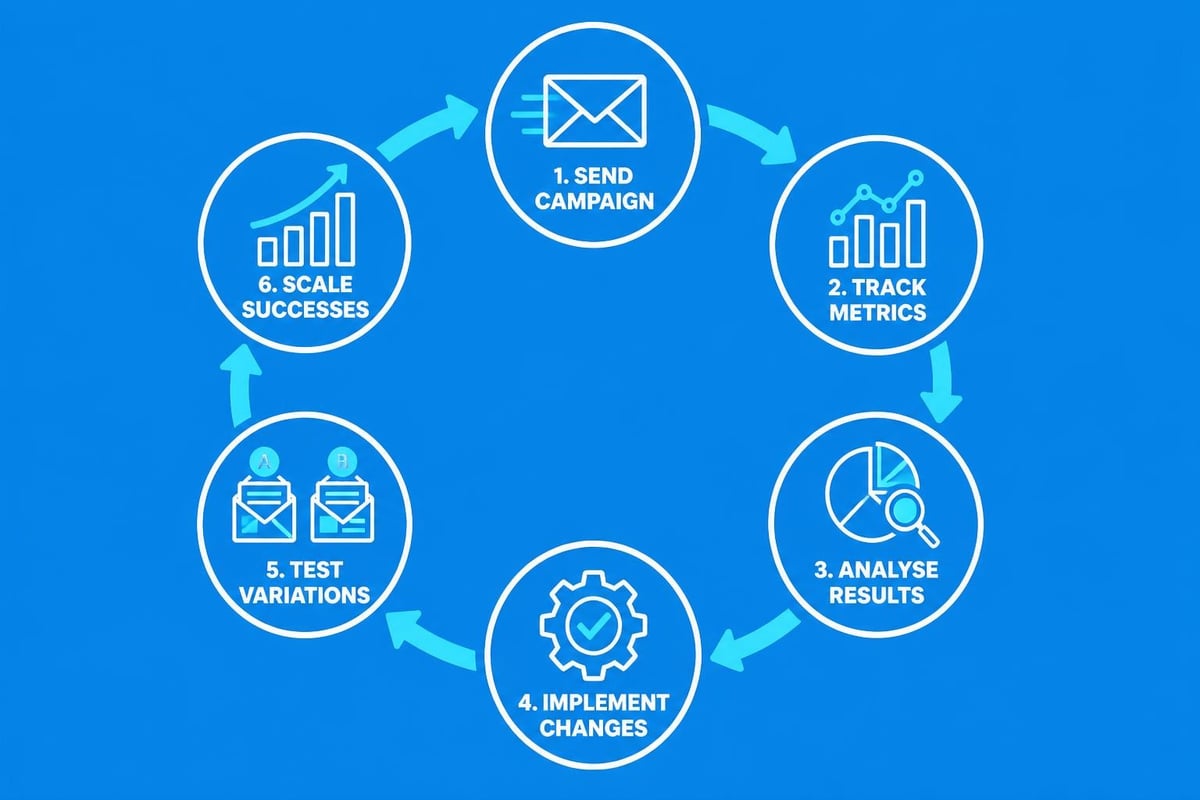
Advanced marketers also track email engagement to trigger automated sequences. When a recipient clicks a specific product link but doesn't purchase, an automated follow-up sequence can provide additional information, testimonials, or limited-time offers.
Choosing the Right Tracking Tools
The market offers countless email tracking solutions, from basic built-in features to sophisticated enterprise platforms. Small businesses must balance functionality with cost and complexity.
Essential Features to Prioritise
When selecting tools to track your email campaigns, focus on capabilities that align with business goals:
- Real-time reporting for immediate performance visibility
- Integration capabilities with existing CRM and analytics tools
- Automated segmentation based on engagement patterns
- Mobile responsiveness ensuring accurate cross-device tracking
- Compliance features supporting GDPR and privacy regulations
Many small businesses benefit from creating streamlined email systems that integrate tracking naturally into existing workflows rather than adding complex standalone tools.
Platform Considerations for Small Businesses
Different platforms suit different business models. Consider these factors:
- Subscriber volume determines pricing tiers and necessary features
- Technical expertise influences whether you need user-friendly interfaces or advanced customisation
- Integration requirements depend on your existing technology stack
- Budget constraints limit available options and feature sets
- Growth plans should inform scalability needs
Platforms designed specifically for small business email marketing often provide the right balance between sophistication and usability. Enterprise tools may offer impressive features but overwhelm small teams with unnecessary complexity.
Leveraging Tracking for Customer Relationships
Email tracking serves purposes beyond campaign optimisation. When used thoughtfully, it strengthens customer relationships and improves service delivery.
Identifying Sales Opportunities
Sales teams gain powerful advantages when they track your email communications with prospects. Knowing when someone opens a proposal or clicks pricing information signals buying interest. This intelligence allows perfectly timed follow-up calls.
Smart businesses create alerts for high-value prospect engagement:
- Immediate notifications when key contacts open important messages
- Escalation triggers when prospects visit pricing pages multiple times
- Re-engagement prompts when previously interested contacts return
- Lead scoring adjustments based on email engagement patterns
These capabilities transform email from a broadcast channel into a conversation starter. Effective email strategies increasingly incorporate this sales intelligence component.
Improving Customer Service
Support teams benefit from tracking as well. When customers open help documentation emails but don't resolve their issues, proactive outreach prevents frustration. Track your email confirmations, delivery notifications, and support responses to ensure customers receive and understand important information.
This approach demonstrates attentiveness without being intrusive. Customers appreciate businesses that notice when they struggle and offer assistance before problems escalate.
Avoiding Common Tracking Mistakes
Even experienced marketers make errors that compromise tracking accuracy or damage recipient relationships. Awareness of these pitfalls helps you avoid them.
Over-Reliance on Single Metrics
Open rates alone don't tell the complete story. A campaign with exceptional opens but zero clicks indicates problems with content or calls-to-action. Conversely, lower open rates with strong click-through and conversion rates might actually outperform flashy numbers that don't drive business results.
Always analyse multiple metrics together:
- Opens + clicks reveal content alignment with expectations
- Clicks + conversions measure message persuasiveness
- Unsubscribes + spam complaints indicate audience fit
- Bounces + deliverability show list health
Context matters enormously. A 15% open rate might be disappointing for a highly engaged list but exceptional for cold outreach.
Ignoring Mobile Optimisation
When you track your email data, device type information reveals critical insights. In 2026, mobile opens typically exceed 60% for most audiences. Emails that don't display properly on smartphones sabotage campaign performance regardless of tracking sophistication.
Test every campaign on multiple devices before sending. Track device-specific metrics separately to identify optimisation opportunities. Small adjustments like larger buttons, shorter paragraphs, and simplified layouts dramatically improve mobile engagement.
Neglecting List Hygiene
Tracking highlights disengaged subscribers who haven't opened messages in months. Many businesses ignore this data, continuing to email unresponsive contacts. This approach damages sender reputation, increases costs, and skews metrics.
Implement regular list cleaning:
- Identify non-openers over 90-120 days
- Send re-engagement campaigns offering value or asking preferences
- Remove persistent non-responders to maintain list quality
- Monitor bounce rates and remove invalid addresses immediately
- Respect unsubscribe requests promptly and completely
A smaller, engaged list outperforms a large, unresponsive one. Quality always trumps quantity in email marketing.
Future Trends in Email Tracking
Email tracking technology continues evolving rapidly. Understanding emerging trends helps businesses prepare for coming changes.
Privacy-First Tracking Approaches
Growing privacy consciousness drives development of less invasive tracking methods. Machine learning approaches to identifying tracking improve while simultaneously, new privacy-preserving techniques emerge that respect recipient preferences.
Expect increased regulation requiring explicit consent and clearer disclosures. Businesses that embrace transparency now position themselves advantageously as standards tighten. Your data retention policy should already reflect best practices that may become legal requirements.
AI-Powered Insights
Artificial intelligence increasingly analyses tracking data to generate actionable recommendations. Rather than manually reviewing reports, AI identifies patterns humans might miss:
- Optimal send times calculated individually for each subscriber
- Content preferences detected through subtle engagement signals
- Churn prediction identifying at-risk subscribers before they unsubscribe
- Subject line generation based on what historically performs well
These capabilities democratise sophisticated marketing tactics previously available only to enterprises with dedicated data science teams.
Cross-Channel Attribution
Email tracking increasingly integrates with broader customer journey mapping. Understanding how email fits within multi-channel campaigns provides context for individual message performance.
Someone might first encounter your brand through social media, receive emails for weeks, then finally convert after a retargeting advertisement. Proper attribution ensures email gets credit for its role in the conversion even when it's not the final touchpoint.
Tracking email campaigns transforms marketing from guesswork into science, providing the insights small businesses need to compete effectively in 2026's digital marketplace. By focusing on meaningful metrics, respecting recipient privacy, and continuously optimising based on data, you'll build stronger customer relationships whilst maximising return on investment. Astonish Email provides small businesses with powerful tracking capabilities alongside user-friendly tools designed specifically for teams without dedicated marketing departments, making sophisticated email marketing accessible and affordable.