Create Your Email: A Complete Guide for Small Businesses
May 15, 2026
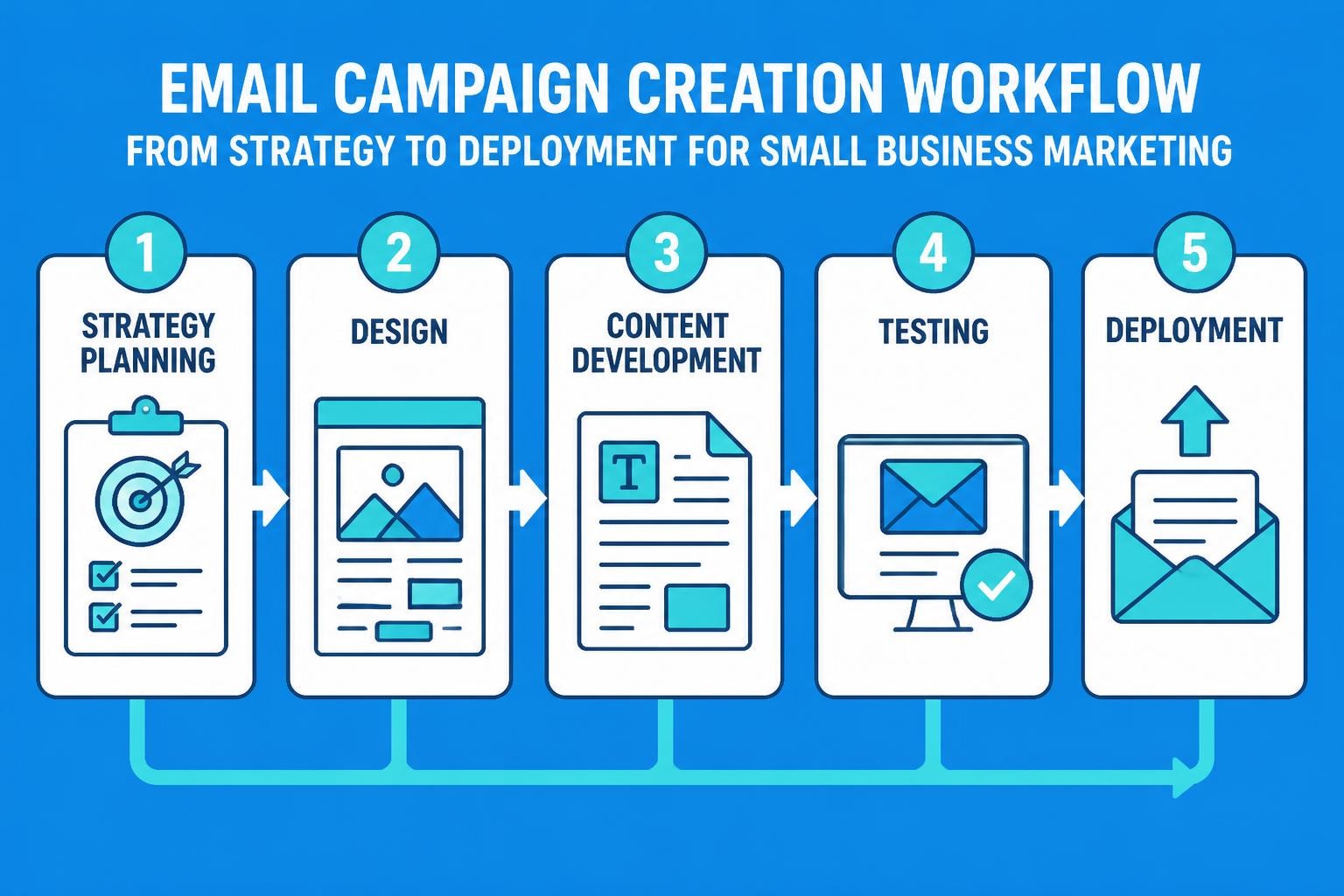
When you create your email campaigns for your small business, you're establishing a direct communication channel with your customers that no social media algorithm can interrupt. Email marketing remains one of the most cost-effective strategies available, delivering an average return of £36 for every pound spent. For small businesses operating with limited budgets, understanding how to effectively create your email campaigns can transform customer relationships and drive sustainable growth. This comprehensive guide walks you through the essential elements of email campaign creation, from strategic planning to execution and optimization.
Understanding the Foundation of Effective Email Campaigns
Before you create your email content, you need to establish clear objectives and understand your audience. Small businesses often rush into email creation without defining what success looks like, leading to campaigns that lack focus and fail to generate meaningful results.
Defining Your Campaign Goals
Every email campaign should serve a specific purpose within your broader marketing strategy. Common objectives include:
- Driving sales through promotional offers or product launches
- Nurturing leads by providing valuable educational content
- Building relationships with regular newsletters and updates
- Recovering abandoned carts to recapture lost revenue
- Gathering feedback through surveys and customer insights
When you create your email account and begin planning campaigns, write down measurable goals such as "increase click-through rate by 15%" or "generate 50 qualified leads." These metrics guide your creative decisions and help you evaluate performance accurately.
Researching Your Target Audience
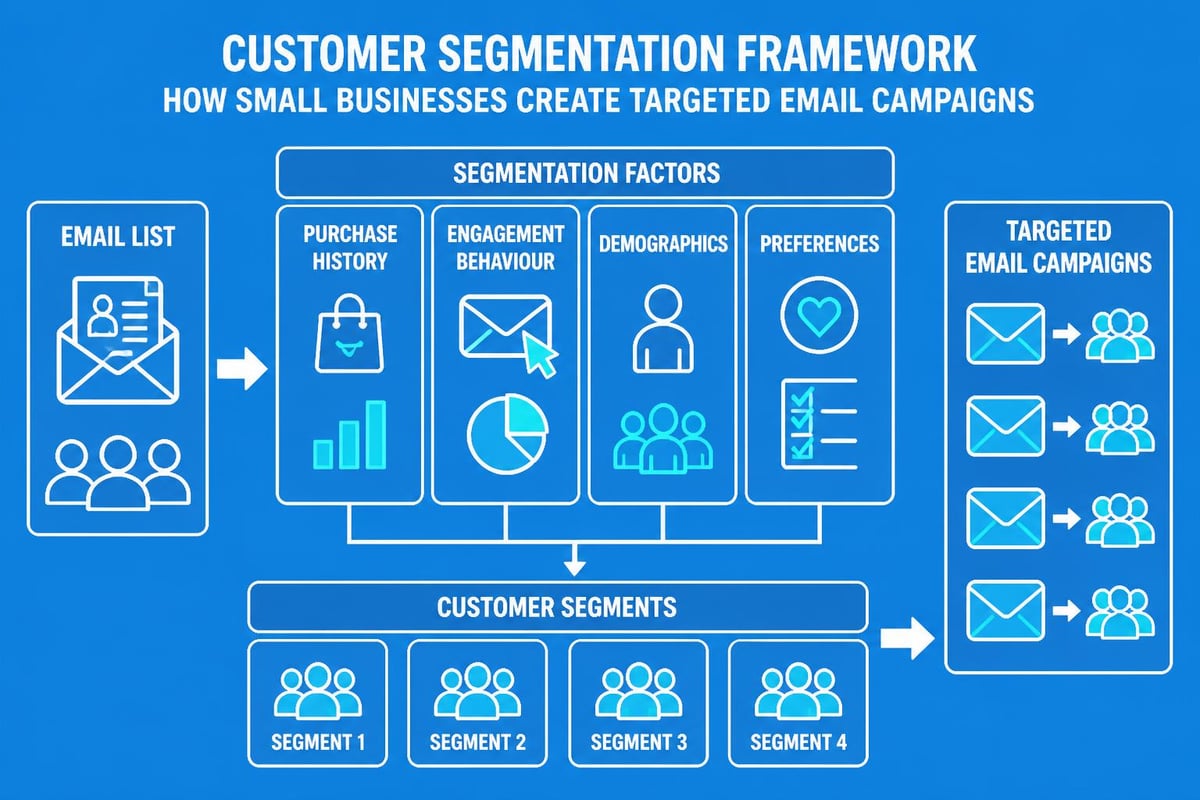
Understanding who receives your emails determines everything from tone to timing. Create detailed customer personas that include demographics, pain points, purchasing behaviours, and communication preferences. Small businesses have a distinct advantage here-you often know your customers personally and can leverage these relationships for deeper insights.
Segment your email list based on relevant criteria such as purchase history, engagement levels, or geographic location. Email for small business platforms make segmentation straightforward, allowing you to deliver personalised content that resonates with specific audience groups.
Crafting Compelling Email Content
The quality of your content determines whether recipients engage with your message or consign it to the deleted items folder. When you create your email campaigns, every element from subject line to call-to-action requires careful consideration.
Writing Subject Lines That Demand Attention
Your subject line is the gatekeeper to your email content. Research shows that 47% of email recipients open messages based solely on the subject line, whilst 69% report emails as spam based on this single element.
Effective subject line strategies include:
- Creating urgency with time-sensitive language
- Asking questions that spark curiosity
- Personalising with recipient names or relevant details
- Keeping length between 40-50 characters for mobile visibility
- Testing different approaches through A/B experiments
Avoid spam trigger words like "free," "guaranteed," or excessive punctuation. When you create your email subject lines, test them against spam filters before sending to your entire list.
Structuring Your Email Body Content
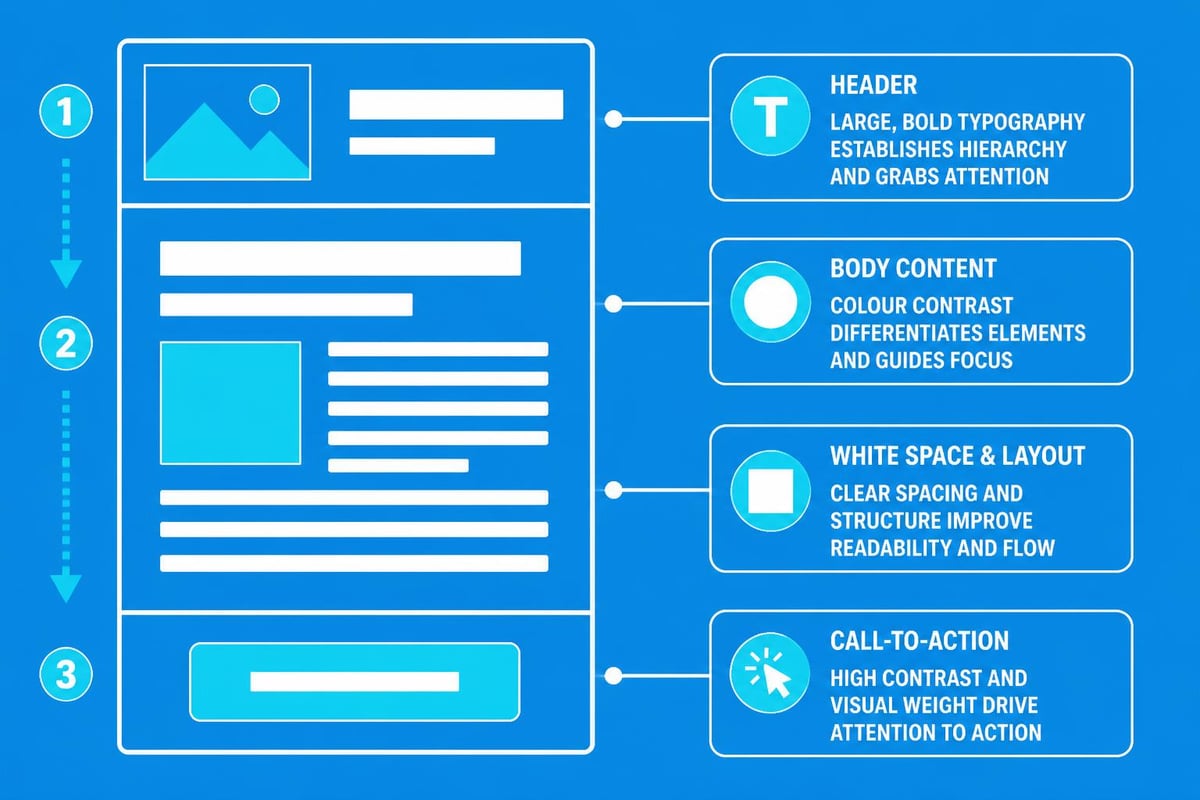
Professional email structure follows a logical hierarchy that guides readers toward your desired action. Designing professional email campaigns requires balancing visual appeal with clear messaging.
| Email Section | Purpose | Best Practices |
|---|---|---|
| Preheader Text | Extend subject line appeal | Complement, don't repeat subject line |
| Header | Establish brand recognition | Include logo and consistent branding |
| Body Copy | Deliver core message | Short paragraphs, scannable format |
| Call-to-Action | Drive desired response | Single, clear, visually prominent button |
| Footer | Provide legal compliance | Unsubscribe link, address, preferences |
Keep your copy concise and focused on benefits rather than features. When you create your email messaging, speak directly to how your offer solves customer problems or improves their lives. Break up text with subheadings, bullet points, and white space to improve readability.
Implementing Personalisation Beyond First Names
Whilst addressing recipients by name represents basic personalisation, sophisticated email marketing goes considerably further. Use customer data to tailor product recommendations, content topics, and sending times based on individual behaviour patterns.
Consider these personalisation opportunities:
- Location-based content for UK business email campaigns referencing local events or weather
- Purchase history recommendations suggesting complementary products
- Engagement-based frequency reducing sends to less active subscribers
- Dynamic content blocks showing different images or offers based on preferences
Designing Emails for Maximum Impact
Visual design significantly influences how recipients perceive and interact with your emails. When you create your email templates, you're establishing a visual identity that should align with your broader brand whilst optimising for functionality.
Mobile-First Design Principles
Over 60% of emails are now opened on mobile devices, making responsive design non-negotiable. Your emails must render perfectly across devices, from desktop monitors to smartphone screens.
Mobile optimization essentials:
- Single-column layouts that stack vertically
- Minimum 14px font size for body text
- Touch-friendly buttons (minimum 44x44 pixels)
- Compressed images that load quickly
- Simplified navigation avoiding hover states
Test your emails on multiple devices and email clients before sending. Many email marketing platforms include preview tools that show how campaigns render across different environments.
Balancing Images and Text
Email design requires careful image-to-text ratios. Too many images trigger spam filters and create accessibility issues, whilst text-only emails often fail to capture attention.
Aim for a 60:40 text-to-image ratio. When you create your email designs, ensure your message remains comprehensible even if images don't load. Use alt text for all images, providing context for recipients with images disabled or using screen readers.
The best practices for email design emphasize creating visual hierarchy through typography, colour, and spacing rather than relying exclusively on imagery.
Technical Elements That Ensure Deliverability
Even brilliantly crafted emails fail if they never reach subscriber inboxes. Technical setup and ongoing maintenance determine whether your campaigns land in primary inboxes or get filtered as spam.
Authentication and Sender Reputation
When you create a business email account, proper authentication establishes legitimacy with email providers. Implement these technical safeguards:
SPF (Sender Policy Framework): Specifies which servers can send email from your domain
DKIM (DomainKeys Identified Mail): Adds encrypted signature verifying message authenticity
DMARC (Domain-based Message Authentication): Provides instructions for handling authentication failures
Maintaining positive sender reputation requires consistent practices. Avoid sudden volume spikes, remove bounced addresses promptly, and honour unsubscribe requests immediately. Your reputation score affects deliverability across all campaigns.
List Hygiene and Compliance
Regular list maintenance keeps your email programme healthy. Remove inactive subscribers who haven't engaged in 6-12 months, validate email addresses before adding them to your list, and segment engaged subscribers from dormant ones.
Compliance with regulations protects your business and builds trust:
- Include physical mailing address in every email
- Provide clear, functional unsubscribe mechanism
- Honour opt-out requests within 10 business days
- Obtain explicit consent before adding contacts
- Maintain records of subscription sources
Testing and Optimizing Email Performance
Continuous improvement separates exceptional email marketing from mediocre campaigns. When you create your email testing protocols, you develop data-driven insights that compound over time.
A/B Testing Methodology
Split testing compares two versions of an email element to determine which performs better. Test one variable at a time for clear results:
- Subject lines: Test different lengths, tones, or personalization approaches
- Send times: Compare weekday versus weekend, morning versus evening
- Call-to-action: Experiment with button colours, copy, or placement
- Content length: Test short versus comprehensive formats
- Images: Compare different visuals or image-to-text ratios
Send each version to statistically significant sample sizes before declaring a winner. Small businesses should test with at least 10% of their list to ensure reliable results.
Key Metrics to Monitor
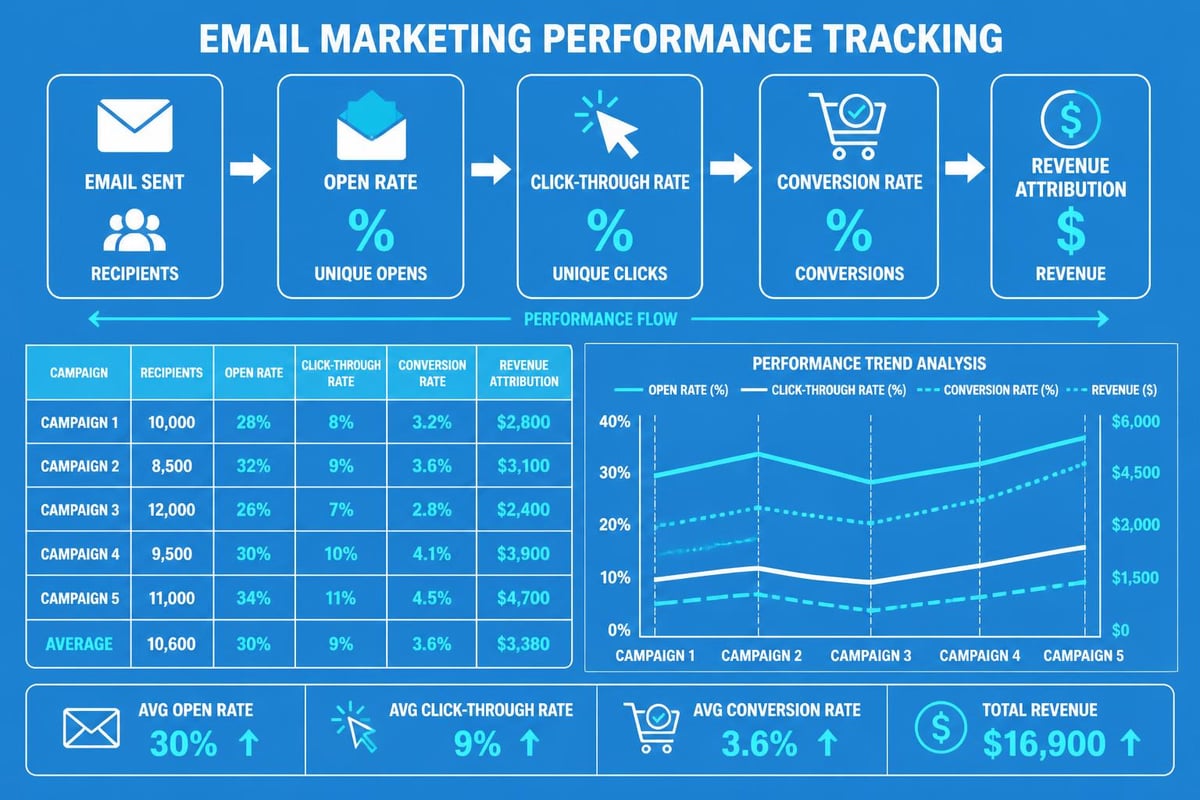
Track these performance indicators to evaluate campaign effectiveness:
| Metric | What It Measures | Industry Benchmark |
|---|---|---|
| Open Rate | Subject line and sender effectiveness | 20-25% |
| Click-Through Rate | Content relevance and CTA strength | 2.5-3.5% |
| Conversion Rate | Ultimate campaign success | 1-5% |
| Unsubscribe Rate | List quality and content fit | <0.5% |
| Bounce Rate | List health | <2% |
When you create your email reporting dashboards, focus on metrics that align with your specific campaign objectives rather than vanity numbers.
Avoiding Common Email Marketing Pitfalls
Small businesses frequently encounter predictable obstacles when launching email programmes. Learning from others' mistakes accelerates your path to success.
Rookie Mistakes to Sidestep
Common rookie mistakes email marketers make include purchasing email lists, neglecting mobile optimization, and sending without testing. When you create your email campaigns, avoid these errors:
Purchased lists generate poor engagement and damage sender reputation. Build your list organically through website opt-ins, events, and customer interactions. Quality subscribers who genuinely want your content deliver far better results than massive lists of uninterested contacts.
Inconsistent sending schedules confuse subscribers and reduce engagement. Establish a regular cadence-whether weekly, bi-weekly, or monthly-and maintain it consistently. Subscribers develop expectations around your communication patterns.
Neglecting the preview text wastes valuable real estate. This snippet appears beside your subject line in many email clients, providing additional context that influences open rates.
Maintaining Engagement Over Time
Long-term email success requires adapting to subscriber needs and market changes. Regularly refresh your content strategy, update email templates to reflect current design trends, and solicit feedback from your audience about their preferences.
Re-engagement campaigns target inactive subscribers before removing them from your list. When you create your email re-engagement sequences, offer compelling reasons to stay subscribed whilst making it easy for uninterested recipients to leave gracefully.
Advanced Strategies for Small Business Success
Once you've mastered email fundamentals, these advanced techniques can further enhance campaign performance and efficiency.
Automation and Workflow Development
Email automation delivers timely, relevant messages without manual intervention. Create automated sequences for:
- Welcome series introducing new subscribers to your brand
- Abandoned cart reminders recovering lost sales
- Post-purchase follow-ups building customer loyalty
- Birthday or anniversary celebrations adding personal touches
- Re-engagement campaigns reviving dormant subscribers
When you create your email automation workflows, map the customer journey and identify touchpoints where automated communication adds value. Start simple with basic triggers, then expand complexity as you gain experience.
Integration With Broader Marketing Efforts
Email performs best as part of an integrated marketing strategy. Coordinate your email campaigns with social media, content marketing, and advertising efforts for consistent messaging across channels.
Use email to drive traffic to valuable blog content, promote social media contests, or nurture leads generated through paid advertising. Effective email outreach connects with recipients across multiple touchpoints, reinforcing messages and building recognition.
Leveraging User-Generated Content
Customer testimonials, reviews, and photos provide authentic content that resonates with prospects. When you create your email campaigns featuring real customer experiences, you build credibility and social proof.
Request permission before using customer content, provide proper attribution, and consider offering incentives for contributions. User-generated content reduces your creative burden whilst strengthening community connections.
Building Your Email Marketing Infrastructure
Successful email marketing requires appropriate tools and processes. Small businesses must balance functionality against budget constraints when selecting platforms and building their systems.
Selecting the Right Email Platform
Your email marketing platform should align with your business size, technical capabilities, and growth trajectory. Essential features include:
- Responsive template builders requiring no coding
- List segmentation and management tools
- Automation workflow capabilities
- Comprehensive analytics and reporting
- Integration with existing business systems
- Reliable deliverability and customer support
When evaluating options, consider scalability. Your chosen platform should accommodate growth without requiring disruptive migrations. Making a professional email presence requires tools that enhance rather than limit your capabilities.
Building Sustainable Processes
Document your email creation workflow to ensure consistency and efficiency. Establish templates for different campaign types, create content calendars planning sends in advance, and develop checklists verifying all elements before deployment.
Assign clear responsibilities if multiple team members contribute to email marketing. Define approval processes, establish brand guidelines, and maintain asset libraries with approved images, copy snippets, and design elements.
Creating effective email campaigns requires strategic planning, attention to detail, and ongoing optimization. By focusing on audience needs, maintaining technical best practices, and continuously testing your approach, you'll develop email marketing that drives measurable results for your small business. Astonish Email provides the tools and support small businesses need to create professional email campaigns that engage customers and generate growth. Start building your email marketing success today with a platform designed specifically for businesses like yours.