The Best Business Email: A Complete Guide for 2026
May 30, 2026
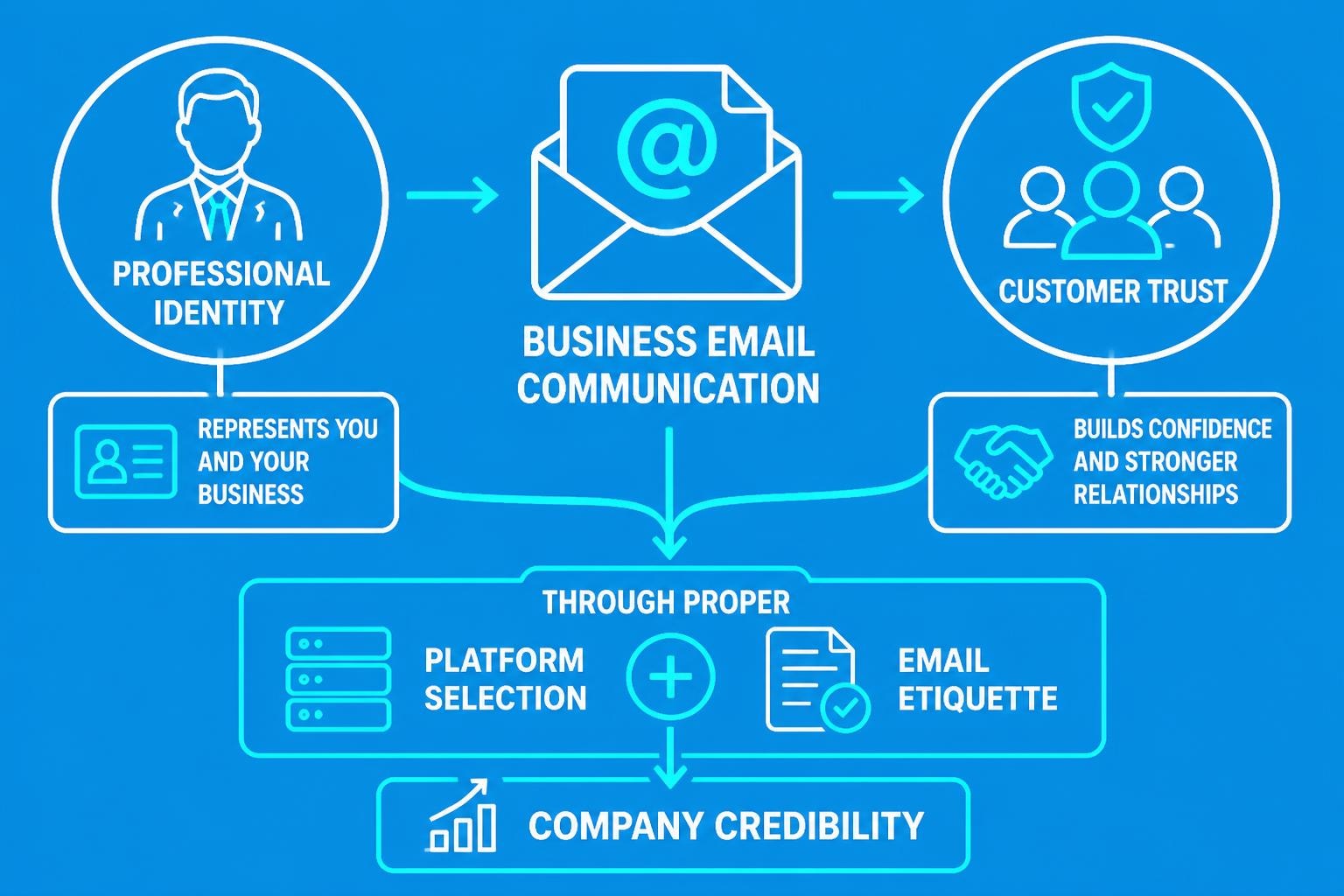
Finding the best business email solution represents one of the most critical decisions for small businesses in 2026. Your email address serves as your digital business card, influencing how clients perceive your professionalism and trustworthiness. Beyond the technical platform you choose, understanding what constitutes excellent business email communication ensures every message you send strengthens relationships rather than damaging them. This comprehensive guide explores both the strategic selection of email platforms and the essential practices that transform ordinary correspondence into powerful business tools.
What Defines the Best Business Email Platform
The best business email platform combines reliability, professional appearance, and robust features that support growth. Small businesses often face a dilemma between free consumer email services and dedicated business solutions, but the distinction matters significantly for credibility and functionality.
Professional Domain Integration
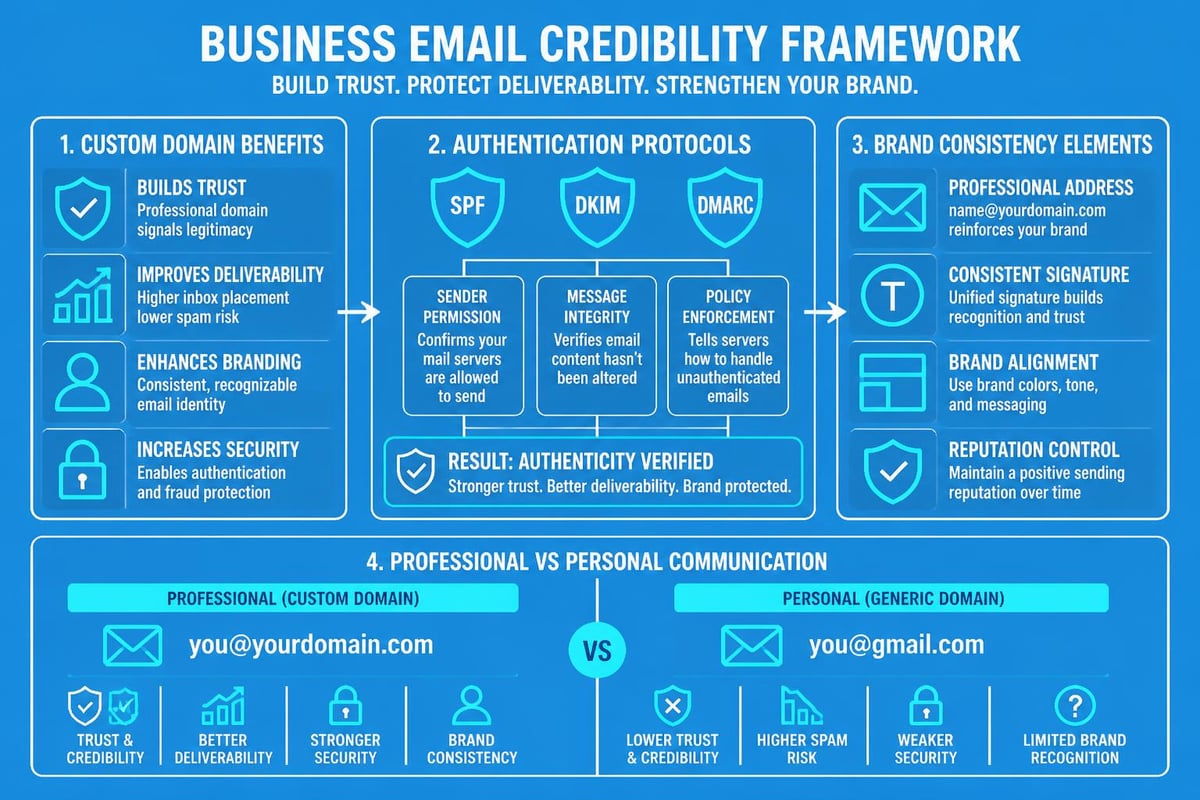
A custom domain email address immediately signals legitimacy. When you send messages from [email protected] rather than a generic provider, recipients recognize you as an established entity. According to best practices for business email, domain-based addresses increase open rates by up to 35% compared to free alternatives.
Custom domains offer additional advantages:
- Brand consistency across all customer touchpoints
- Enhanced security with dedicated authentication protocols
- Greater control over user management and permissions
- Scalability as your team expands
The investment in a professional domain typically costs between £3-£15 monthly per user, a minimal expense compared to the credibility gained. Many small business email solutions include domain setup assistance, making the transition straightforward even for non-technical founders.
Deliverability and Security Features
The best business email services prioritize message deliverability through sophisticated infrastructure. When your messages consistently reach inboxes rather than spam folders, your communication effectiveness multiplies. Modern platforms employ SPF, DKIM, and DMARC authentication to verify sender legitimacy.
Security features essential for business email include:
| Feature | Purpose | Business Impact |
|---|---|---|
| Two-factor authentication | Prevents unauthorized access | Protects sensitive client data |
| Encryption (TLS/SSL) | Secures message transmission | Maintains confidentiality |
| Spam filtering | Blocks malicious content | Saves time and reduces risk |
| Data backup | Preserves message history | Ensures business continuity |
| Mobile device management | Controls access across devices | Secures remote work |
Professional platforms also maintain comprehensive antispam policies that protect both senders and recipients from malicious activity, ensuring your domain reputation remains intact.
Crafting the Best Business Email Messages
Technical infrastructure represents only half the equation. The best business email communication follows established etiquette guidelines that respect recipients' time whilst conveying professionalism. Research on email communication patterns reveals that professionals receive an average of 121 emails daily, making clarity and conciseness paramount.
Subject Lines That Command Attention
Your subject line determines whether recipients open your message or relegate it to the archive. Effective subject lines balance specificity with brevity, typically ranging between 6-10 words.
Characteristics of high-performing subject lines:
- Clear indication of email purpose
- Action-oriented language when appropriate
- Personalization where relevant
- Avoidance of spam trigger words
- Specific dates, deadlines, or references
For instance, "Q2 Marketing Proposal - Review Requested by 15 June" outperforms vague alternatives like "Proposal" or "Please Review." The former communicates exactly what's required and establishes urgency through a specific deadline.
Structure and Formatting Excellence
The best business email follows a predictable structure that facilitates quick comprehension. According to professional email etiquette guidelines from Purdue University, well-structured messages receive responses 40% faster than poorly organized alternatives.
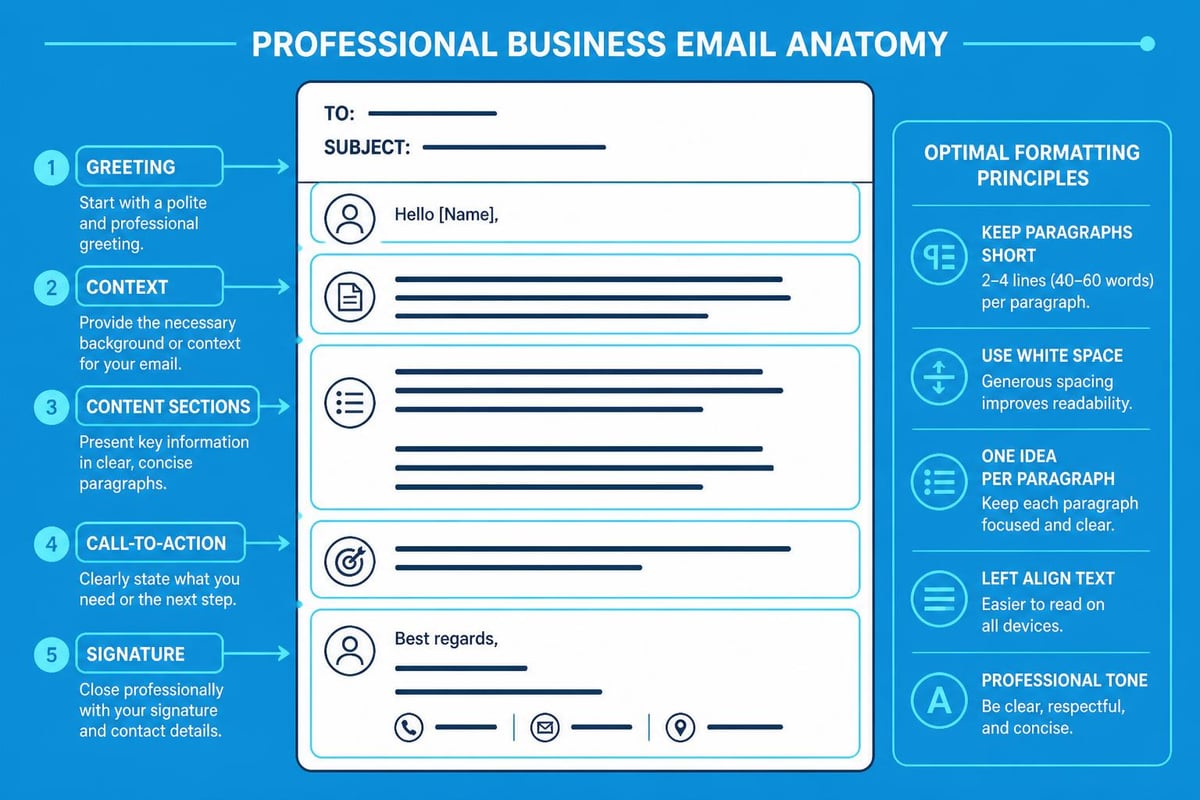
Optimal email structure:
- Professional greeting - Use recipient's name and appropriate salutation
- Context establishment - One sentence explaining the email's purpose
- Main content - Detailed information organized logically
- Clear call-to-action - Specific next steps or requests
- Courteous closing - Professional sign-off with contact details
Keep paragraphs short, ideally three sentences maximum. Use bullet points for lists and bold text to highlight critical information. White space improves readability, particularly when recipients scan messages on mobile devices.
Tone and Language Considerations
The best business email strikes a balance between professionalism and approachability. Overly formal language creates distance, whilst excessive casualness undermines credibility. Your industry, audience, and relationship with the recipient should inform your tone selection.
Zendesk's business email etiquette research emphasizes that matching your tone to customer expectations increases satisfaction scores by 28%. Financial and legal sectors typically require greater formality, whilst creative industries often embrace conversational styles.
Choosing Between Email Platform Options
The marketplace offers numerous solutions, each targeting different business needs and budgets. Understanding the distinctions helps you identify the best business email platform for your specific requirements.
Enterprise-Grade Solutions
Large-scale providers like Microsoft 365 and Google Workspace dominate the business email landscape, offering comprehensive suites that extend beyond email functionality. These platforms integrate calendars, document collaboration, video conferencing, and cloud storage into unified ecosystems.
Microsoft 365 advantages:
- Deep integration with Office applications
- Advanced security and compliance tools
- Robust administration controls
- Extensive third-party app ecosystem
Google Workspace strengths:
- Intuitive interface with minimal learning curve
- Superior collaboration features
- Powerful search functionality
- Competitive pricing for small teams
Both platforms provide reliable infrastructure, but selecting between Gmail and Microsoft Outlook often depends on existing software preferences and specific workflow requirements.
Specialized Business Email Platforms
Alternative providers cater to specific niches or emphasize particular features. Some focus on simplicity and affordability for solopreneurs, whilst others prioritize advanced marketing capabilities for growth-focused businesses.
| Platform Type | Best For | Key Differentiator |
|---|---|---|
| Marketing-focused | E-commerce, agencies | Integrated campaign tools |
| Privacy-centric | Legal, healthcare | Enhanced encryption |
| Simplified interfaces | Service businesses | Easy setup, minimal features |
| Industry-specific | Niche sectors | Compliance-ready configurations |
When evaluating options, consider your growth trajectory. The best business email solution scales with your needs, avoiding costly migrations as your team expands. Many businesses benefit from comprehensive email marketing platforms that combine professional addresses with campaign management capabilities.
Email Management Best Practices
Even with the best business email platform and perfectly crafted messages, poor management habits undermine effectiveness. Developing systematic approaches to inbox organization and response protocols maximizes communication efficiency.
Inbox Organization Strategies
Unmanaged inboxes quickly become overwhelming, reducing productivity and increasing stress. Implementing folder structures, labels, and filters creates order from chaos. The best business email users typically maintain near-zero inbox counts through consistent processing.
Effective organization techniques:
- Priority filtering - Automatically sort messages by sender importance
- Project folders - Group related correspondence for easy reference
- Archive liberally - Remove processed emails from view whilst maintaining accessibility
- Unsubscribe ruthlessly - Eliminate unnecessary subscriptions consuming attention
- Schedule processing times - Batch email checking rather than constant monitoring
Research on organizational email effectiveness demonstrates that structured management approaches reduce email-related stress by 42% whilst improving response times by 31%.
Response Time Expectations
The best business email communication includes appropriate response timing. Whilst immediate replies seem impressive, they're often unnecessary and can train senders to expect unrealistic availability. Professional email practices from RingCentral suggest establishing clear response protocols based on message urgency.
Recommended response timeframes:
- Urgent client requests - Within 2 hours during business hours
- General business inquiries - Within 24 hours
- Non-urgent internal messages - Within 48 hours
- Informational messages - Acknowledgment within 48 hours
Setting auto-responders during holidays or intense project periods manages expectations whilst maintaining professionalism. Include alternative contact methods for genuinely urgent matters, ensuring critical issues receive attention even when you're unavailable.
Advanced Email Communication Techniques
Once you've mastered fundamental practices, advanced techniques elevate your business email from competent to exceptional. These strategies require greater effort but yield substantial returns through improved response rates and stronger relationships.
Personalization Beyond Names
The best business email incorporates meaningful personalization that demonstrates genuine attention to recipients. Simply inserting someone's name represents the bare minimum. Reference previous conversations, acknowledge their achievements, or connect your message to their specific interests.
Effective personalization techniques include:
- Mentioning recent company news or milestones
- Referencing shared connections or experiences
- Acknowledging previous discussions or commitments
- Tailoring examples to recipient's industry
- Adjusting complexity to recipient's expertise level
According to email outreach effectiveness research, personalized messages generate 26% higher open rates and 41% better response rates than generic alternatives.
Strategic Follow-Up Sequences
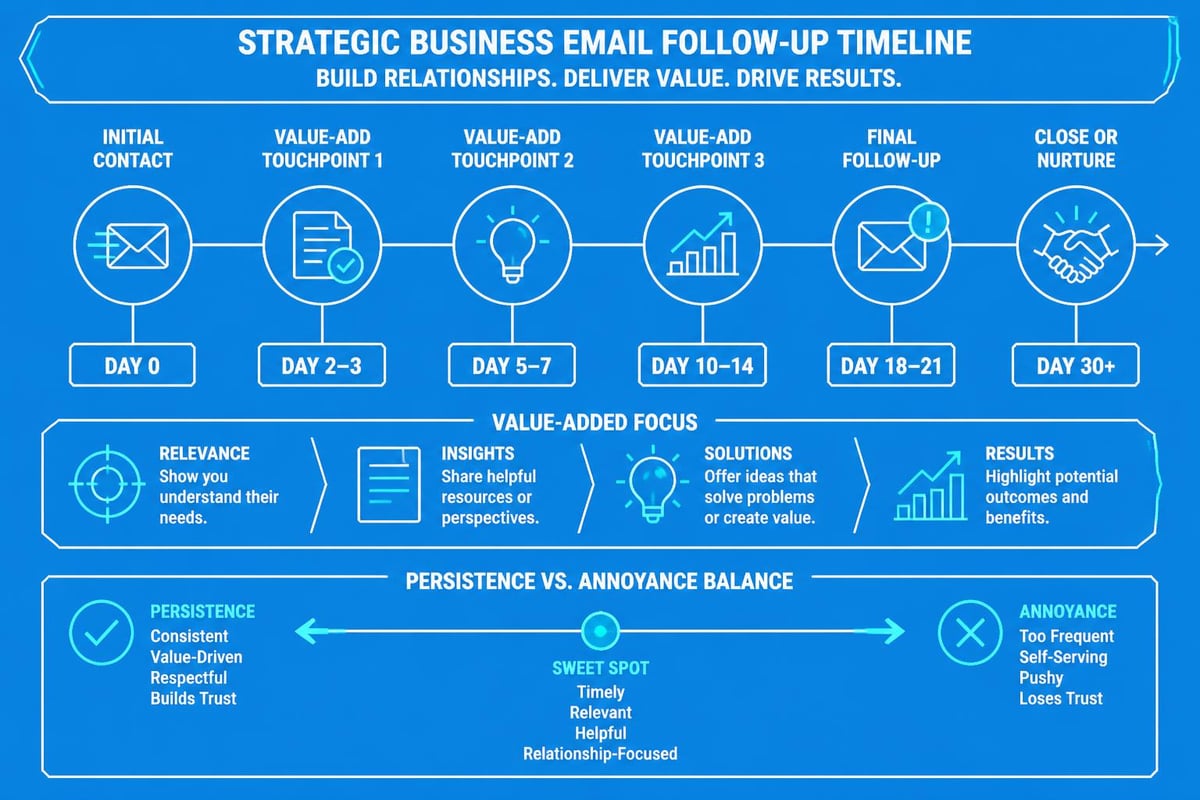
Single messages rarely achieve complex objectives. The best business email campaigns incorporate planned follow-up sequences that nurture relationships without becoming intrusive. Timing, value delivery, and persistence balance determines success.
Follow-up best practices:
- Initial message - Establish contact and state value proposition
- First follow-up (3-5 days) - Add new information or perspective
- Second follow-up (7 days) - Provide case study or social proof
- Final follow-up (14 days) - Acknowledge no response, offer alternative
Each follow-up should introduce fresh value rather than simply restating previous messages. Reference earlier correspondence briefly, then pivot to new insights, resources, or approaches that might resonate differently.
Mobile Optimization Awareness
More than 60% of business emails are first opened on mobile devices in 2026, making mobile optimization essential for the best business email communication. Messages that appear cluttered or illegible on smartphones get deleted regardless of content quality.
Mobile-friendly email principles:
- Front-load critical information in opening sentences
- Keep subject lines under 40 characters
- Use single-column layouts
- Increase font sizes to minimum 14pt
- Make buttons and links easily tappable
- Test messages across devices before sending important communications
Modern email clients automatically adjust formatting for mobile viewing, but conscious design choices ensure your messages remain effective regardless of display size.
Measuring Email Effectiveness
The best business email strategies incorporate performance measurement and continuous improvement. Unlike casual communication, business correspondence should demonstrate measurable impact on organizational objectives.
Key Performance Indicators
Different email types require different success metrics. Marketing campaigns emphasize open rates and click-throughs, whilst individual correspondence focuses on response rates and outcome achievement.
| Email Type | Primary Metrics | Secondary Metrics |
|---|---|---|
| Marketing campaigns | Open rate, click rate | Conversion rate, unsubscribe rate |
| Sales outreach | Response rate, meeting bookings | Opportunity value, close rate |
| Customer service | First response time, resolution time | Satisfaction scores, escalation rate |
| Internal communication | Read receipts, action completion | Reply rate, misunderstanding incidents |
Regular analysis of these metrics reveals patterns that inform strategy adjustments. If specific subject line formats consistently outperform alternatives, replicate that approach. When certain message lengths correlate with better responses, optimize accordingly.
A/B Testing Opportunities
Systematic testing removes guesswork from email optimization. The best business email practitioners regularly experiment with variables including subject lines, sending times, message length, formatting approaches, and call-to-action placement.
Testable elements:
- Subject line length and style
- Greeting formality levels
- Email length and structure
- Signature block components
- Mobile versus desktop formatting
- Sending time and day
Studies on organizational email systems demonstrate that companies implementing regular A/B testing improve overall email effectiveness by 34% within six months. Start with high-volume email types where results achieve statistical significance quickly.
Compliance and Legal Considerations
The best business email practices include awareness of regulatory requirements governing commercial electronic communication. Violations risk substantial penalties whilst damaging brand reputation, making compliance essential rather than optional.
Data Protection Requirements
GDPR in the UK and Europe mandates specific practices for collecting, storing, and utilizing email addresses. Business email platforms must demonstrate appropriate security measures, and users must understand consent requirements before adding contacts to databases.
GDPR compliance essentials:
- Obtain explicit consent before sending marketing emails
- Provide clear unsubscribe mechanisms in every message
- Maintain records of consent acquisition
- Implement appropriate data security measures
- Honor data deletion requests promptly
Choosing platforms with built-in compliance features simplifies adherence. Professional email services typically include consent management tools, automated unsubscribe processing, and secure data storage that meets regulatory standards.
Anti-Spam Regulations
Beyond data protection, anti-spam legislation governs commercial email practices. The Privacy and Electronic Communications Regulations (PECR) in the UK require businesses to follow strict guidelines regarding unsolicited communications.
Key requirements include accurate sender identification, functional opt-out mechanisms, and truthful subject lines. Understanding these obligations protects your business whilst ensuring messages reach intended recipients. Platforms with robust data retention policies help maintain compliance documentation should regulators request evidence of proper practices.
Industry-Specific Email Considerations
Different sectors face unique email communication challenges requiring specialized approaches. The best business email strategies acknowledge these distinctions, tailoring practices to industry norms and expectations.
Professional Services
Consultants, accountants, solicitors, and similar professionals must balance accessibility with authority. Email communication often involves complex information requiring careful explanation whilst maintaining client confidence.
Professional services email priorities:
- Clarity in technical explanations
- Appropriate confidentiality measures
- Documentation of advice and decisions
- Professional yet approachable tone
- Prompt responses to client concerns
Many professional service firms benefit from creating dedicated business email addresses for different service lines, helping clients reach appropriate team members efficiently.
Retail and E-commerce
Product-focused businesses emphasize transactional efficiency and promotional effectiveness. The best business email for retail combines order confirmation clarity with subtle marketing that encourages repeat purchases.
Transaction emails should include comprehensive order details, delivery tracking, and straightforward return procedures. Promotional messages require compelling visuals, clear value propositions, and prominent calls-to-action that drive website visits.
Service-Based Businesses
Companies selling expertise, time, or experiences face different communication challenges than product sellers. Email serves as the primary relationship-building tool, establishing trust and demonstrating competence before prospects commit to services.
Service business emails should showcase expertise through valuable insights whilst addressing common concerns that prevent purchase decisions. Case studies, testimonials, and educational content transform generic sales pitches into trust-building resources that recipients appreciate rather than delete.
Mastering the best business email practices combines strategic platform selection with disciplined communication habits that respect recipients whilst achieving business objectives. The technical foundation matters, but consistent application of professional etiquette, personalization, and measurement ultimately determines success. Whether you're setting up your first business email or refining existing practices, focusing on recipient value rather than sender convenience transforms email from necessary obligation into powerful relationship tool. Astonish Email provides small businesses with the platform capabilities and guidance needed to implement these strategies effectively, combining professional email addresses with marketing tools that grow alongside your business.