UK Email Address: Essential Guide for Small Businesses
May 12, 2026
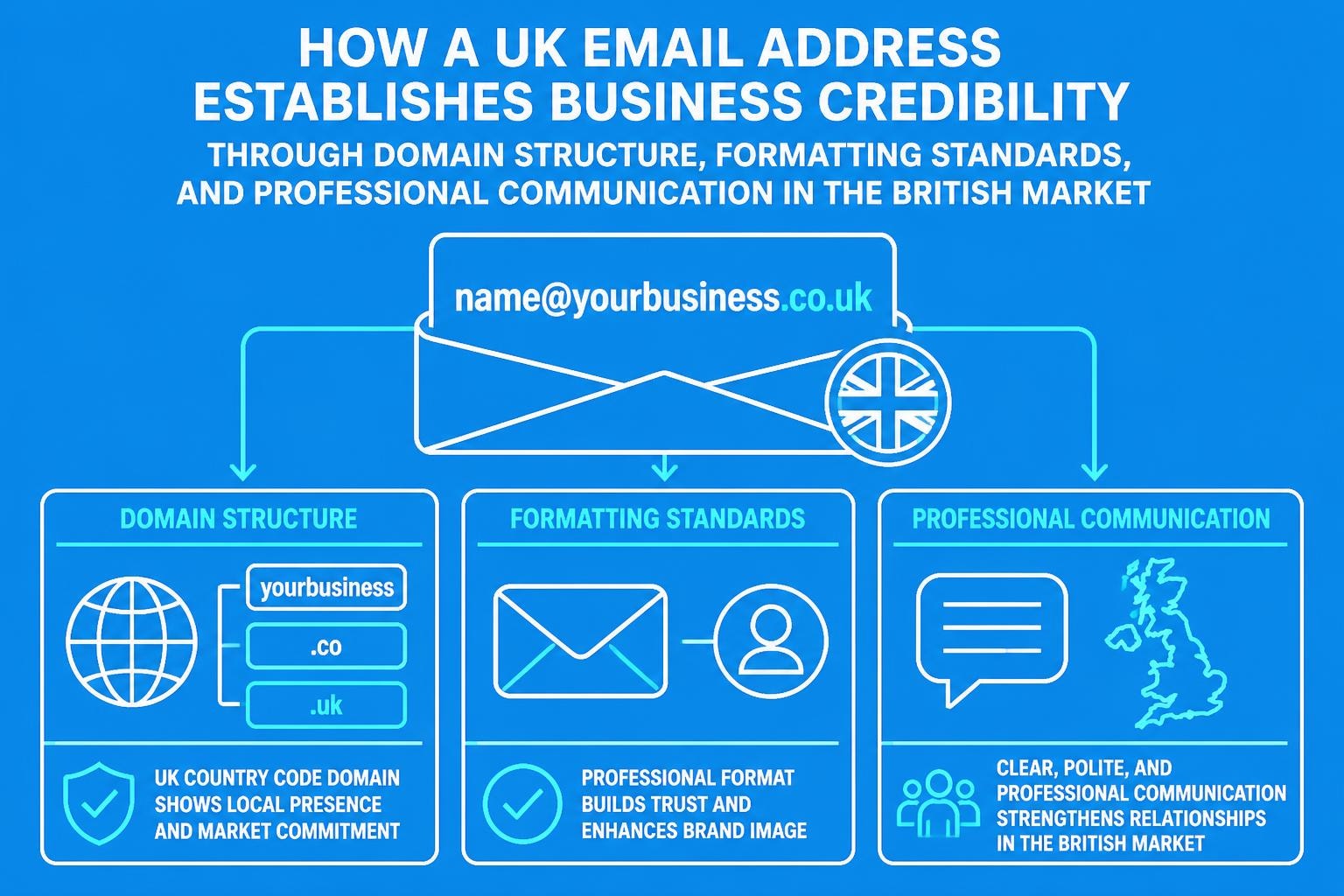
Establishing a professional online presence begins with the fundamentals, and for businesses operating in the United Kingdom, a properly configured UK email address serves as a cornerstone of credibility and trust. Whether you're launching a startup in Manchester, running an established shop in Edinburgh, or managing a remote team across England, your email address communicates vital information about your business identity before a single word is read. Small businesses must navigate formatting standards, legal requirements, and strategic considerations to ensure their email addresses support both operational efficiency and compliance with UK regulations.
Understanding UK Email Address Formats and Standards
A UK email address follows internationally recognised formatting conventions whilst incorporating elements specific to British business practices. The standard structure comprises a local part (before the @ symbol) and a domain part (after the @ symbol), with the domain typically including '.co.uk' or '.uk' extensions that immediately signal a British business presence.
The local part should ideally reflect the individual, department, or function it represents. Common approaches include [email protected], [email protected], or department-specific addresses like [email protected]. The University of Edinburgh provides guidelines on formatting contact details that highlight the importance of consistency and clarity in professional communications.
Domain Extension Choices
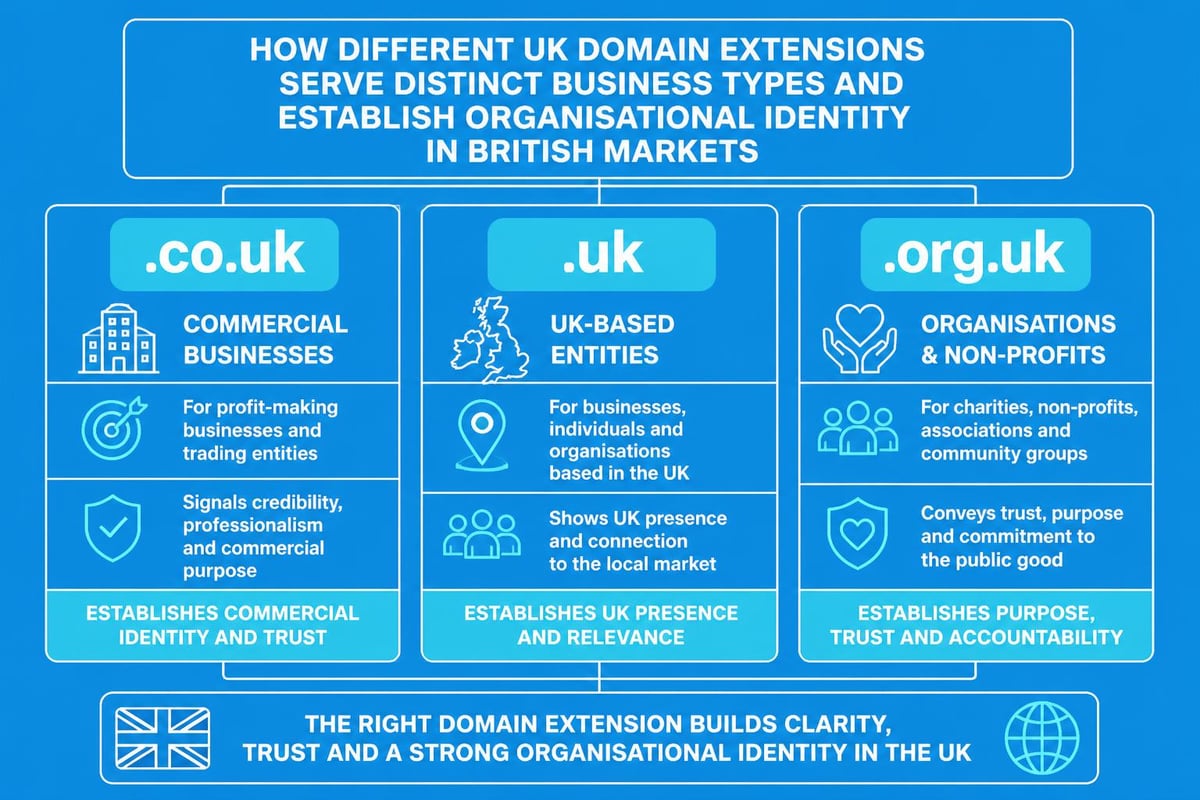
British businesses have several domain extension options, each carrying different implications:
- .co.uk - The most recognised UK business domain, conveying commercial operation
- .uk - A shorter, modern alternative gaining popularity since 2014
- .org.uk - Reserved for non-profit organisations
- .ac.uk - Limited to academic institutions
- .gov.uk - Exclusively for government entities
The choice between .co.uk and .uk primarily depends on brand recognition and availability. Established businesses often retain .co.uk for familiarity, whilst newer ventures might choose .uk for its brevity and modern appeal.
Legal and Regulatory Considerations for UK Business Email
Operating a UK email address involves compliance with several regulatory frameworks that protect consumer privacy and ensure corporate transparency. Understanding these requirements prevents costly violations and builds customer trust.
UK GDPR regulations treat email addresses as personal data, requiring businesses to implement proper data protection measures. When collecting customer email addresses for marketing purposes, organisations must obtain explicit consent, provide clear privacy notices, and maintain secure storage systems. This classification means your email marketing practices must align with strict data handling standards.
Compliance Requirements Table
| Regulation | Key Requirement | Business Impact |
|---|---|---|
| UK GDPR | Lawful basis for processing email data | Must obtain consent before marketing |
| PECR | Opt-in for electronic marketing | Cannot email without permission |
| Economic Crime Act 2023 | Registered email address requirement | Companies must maintain accessible contact |
| Data Protection Act 2018 | Security safeguards for personal data | Implement encryption and access controls |
The Economic Crime and Corporate Transparency Act 2023 introduces requirements for companies to maintain a registered email address, emphasising the importance of accessible electronic communication for corporate transparency. Small businesses must ensure their registered email addresses remain active and monitored.
Creating Professional UK Email Addresses for Business Functions
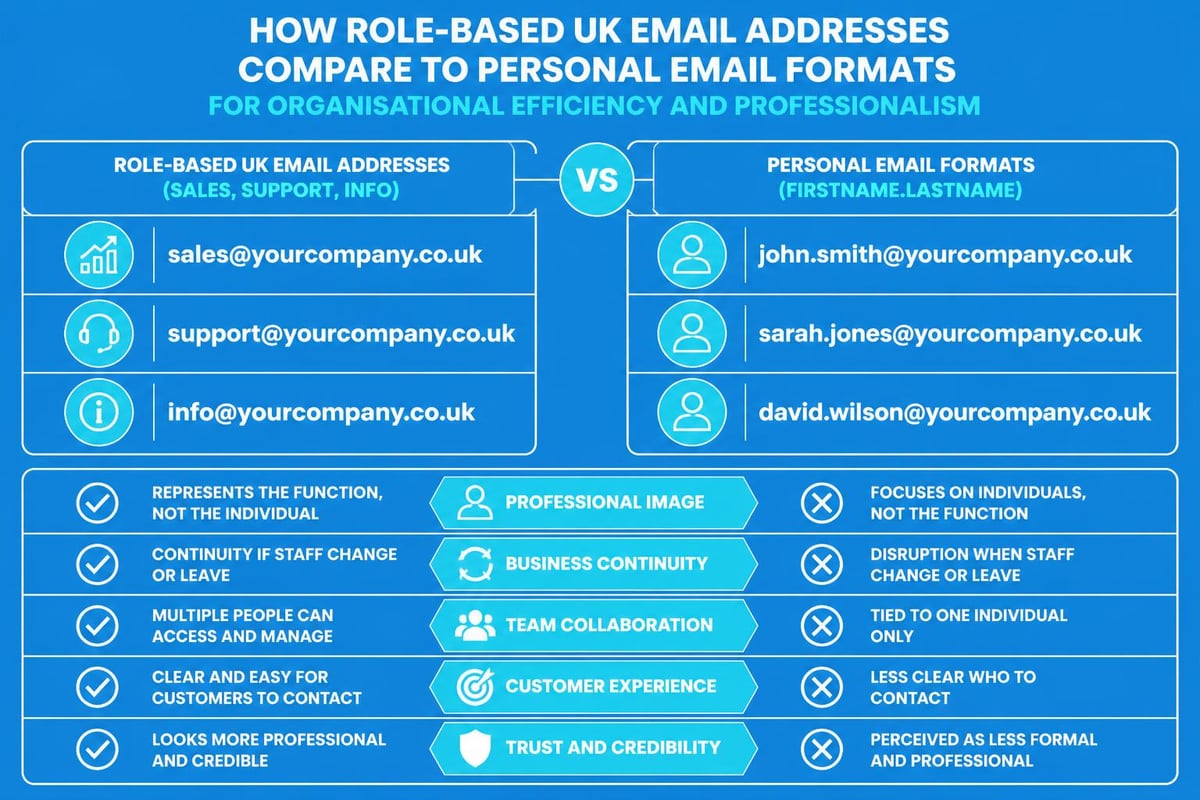
Small businesses benefit significantly from establishing multiple functional email addresses that streamline communication and present a professional image. Rather than relying solely on a personal email address, creating role-based addresses improves team collaboration and customer experience.
A strategic approach to creating a business email account involves mapping your operational needs to specific addresses. Start with essential functions and expand as your business grows.
Essential Business Email Addresses
- Primary Contact Address - [email protected] or [email protected]
- Sales Enquiries - [email protected]
- Customer Support - [email protected] or [email protected]
- Accounts and Invoicing - [email protected]
- General Administration - [email protected]
Role-based addresses ensure business continuity when staff members change positions or leave the organisation. Messages sent to [email protected] can be accessed by the entire sales team, preventing lost communications during transitions.
Personal vs Role-Based Addresses
| Aspect | Personal (john.smith@) | Role-Based (sales@) |
|---|---|---|
| Continuity | Disrupted when employee leaves | Maintained across team changes |
| Team Access | Single individual | Shared inbox capability |
| Professional Image | Personal connection | Functional clarity |
| Best Use | Direct client relationships | Departmental communications |
When considering whether work email addresses constitute personal data, businesses must recognise that addresses containing employee names fall under GDPR protection, whilst generic role-based addresses present fewer compliance complexities.
Email Marketing Compliance for UK Businesses
Operating email marketing campaigns from a UK email address requires strict adherence to the Privacy and Electronic Communications Regulations (PECR) alongside UK GDPR. These regulations protect consumers from unsolicited communications whilst permitting legitimate business marketing.
GOV.UK provides comprehensive guidance on direct marketing laws that every business must understand before launching campaigns. The fundamental principle centres on consent: you cannot send marketing emails to individuals without their explicit permission.
Obtaining Valid Consent
Valid consent requires specific conditions:
- Clear affirmative action - Pre-ticked boxes are not permitted
- Specific purpose - Consent for one marketing channel doesn't cover others
- Easy withdrawal - Unsubscribe mechanisms must function smoothly
- Documented proof - Maintain records of when and how consent was obtained
The soft opt-in exemption applies when you've obtained contact details during a sale and market similar products, but recipients must still receive clear opt-out options in every communication.
Best Practices for UK Email Marketing
Small businesses using platforms like Astonish Email for email marketing campaigns should implement these practices:
- Include full business contact details in every email footer
- Provide prominent unsubscribe links that process immediately
- Segment lists based on consent source and preferences
- Regularly clean lists to remove inactive or bounced addresses
- Monitor complaint rates and respect feedback promptly
Research presented in academic studies on email address privacy demonstrates that transparent data practices improve customer trust and long-term engagement rates, making compliance both a legal requirement and competitive advantage.
Choosing a UK Email Provider and Domain Registration
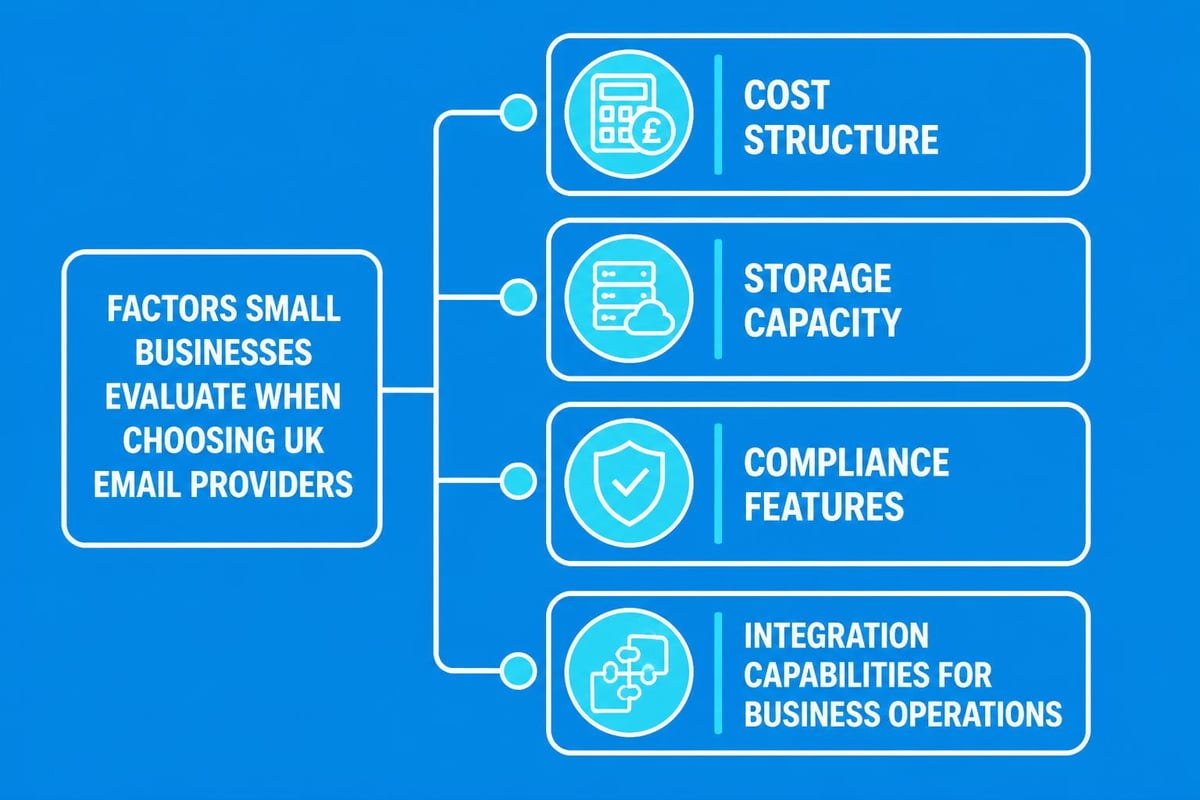
Selecting the right provider for your UK email address involves balancing cost, functionality, reliability, and support. Small businesses have numerous options ranging from free services to premium business solutions.
Provider Comparison
| Provider Type | Cost Range | Best For | Limitations |
|---|---|---|---|
| Free (Gmail, Outlook) | £0 | Sole traders, very small startups | Generic domains, limited professionalism |
| Budget Business | £3-£8/user/month | Growing small businesses | Basic features, moderate storage |
| Premium Business | £10-£20/user/month | Established SMEs | Higher cost, may exceed small business needs |
| Specialist Email Marketing | £15-£50/month | Marketing-focused businesses | Designed for campaigns not daily email |
When setting up a business email, prioritise providers offering UK-based data centres for optimal compliance and performance. Domain registration through reputable UK registrars ensures smooth renewal processes and proper DNS configuration.
Domain Registration Considerations
Securing your preferred domain name requires prompt action, as desirable .co.uk addresses become scarce. Consider registering multiple variations:
- Primary business domain (yourcompany.co.uk)
- Shorter .uk alternative (yourcompany.uk)
- Common misspellings to prevent competitor squatting
- Related brand names for future expansion
Most UK domain registrars offer email hosting alongside domain registration, creating a convenient single-vendor solution. However, separating domain registration from email hosting provides flexibility for future platform changes without disrupting your web presence.
Technical Configuration and Security for UK Email
Properly configuring your UK email address involves technical settings that improve deliverability, security, and professional reputation. Small businesses without dedicated IT staff should understand these fundamentals to ensure reliable communication.
DNS records form the foundation of email functionality. Essential records include:
- MX records - Direct incoming mail to the correct mail server
- SPF records - Specify which servers can send email from your domain
- DKIM records - Add digital signatures verifying message authenticity
- DMARC records - Instruct receiving servers how to handle authentication failures
These authentication protocols prevent spoofing and phishing attempts using your domain, protecting both your business and recipients. Email providers typically supply the necessary record values, though implementation requires access to your domain's DNS settings.
Security Measures for Business Email
- Enable two-factor authentication on all business email accounts
- Implement strong password policies requiring complexity and regular updates
- Configure automatic backup systems to prevent data loss
- Use encrypted connections (SSL/TLS) for sending and receiving mail
- Train staff on phishing recognition to prevent security breaches
For businesses handling sensitive customer data, additional measures might include email encryption for specific communications and data loss prevention (DLP) tools that monitor outgoing messages for confidential information.
Creative Approaches to UK Email Address Strategy
Beyond standard conventions, small businesses can strategically design email addresses that enhance brand recognition and operational efficiency. Creative email addresses balance memorability with professionalism, particularly for customer-facing communications.
Consider industry-specific approaches that reflect your business personality. A boutique bakery might use [email protected] whilst a technology consultancy opts for [email protected]. The key lies in maintaining clarity whilst conveying brand character.
Innovative Email Strategies
Department-specific addresses can extend beyond traditional functions:
- [email protected] for recruitment enquiries
- [email protected] for media relations
- [email protected] for collaboration opportunities
- [email protected] for customer suggestions
Event or campaign-specific addresses create targeted communication channels:
- [email protected] for new product introductions
- [email protected] for seasonal promotions
- [email protected] for educational events
These temporary addresses can be archived after campaigns conclude, maintaining clean inbox management whilst preserving communication records for future reference.
Managing Multiple UK Email Addresses Efficiently
As small businesses expand their email infrastructure, managing multiple addresses becomes essential for maintaining responsiveness without overwhelming staff. Strategic organisation prevents missed messages and ensures appropriate routing to qualified team members.
Email forwarding enables consolidation where multiple addresses route to a single inbox. The managing director might receive messages sent to [email protected], [email protected], and [email protected] in one location. This approach suits small teams where individuals wear multiple hats.
Shared inboxes provide superior collaboration for customer-facing addresses. When multiple team members access [email protected], they can assign conversations, track response status, and prevent duplicate replies. Modern email platforms offer shared inbox functionality that transforms role-based addresses into collaborative workspaces.
Email Management Best Practices
| Practice | Benefit | Implementation |
|---|---|---|
| Email filters and rules | Automatic message sorting | Configure based on sender, subject, keywords |
| Templates for common responses | Faster reply times | Create library of standardised replies |
| Response time targets | Consistent service levels | Monitor and report on reply speeds |
| Archive vs delete protocols | Compliance and retrieval | Establish retention policies matching legal requirements |
Small businesses should develop clear protocols for who monitors which addresses and expected response timeframes. A simple responsibility matrix prevents customer enquiries from languishing in unmonitored inboxes.
Integrating UK Email with Business Systems
Modern business operations require email integration with customer relationship management (CRM) systems, project management tools, and marketing platforms. A well-configured UK email address serves as the communication hub connecting these systems.
When selecting email marketing solutions for small businesses, prioritisation should focus on integration capabilities. Platforms that sync with your existing tools create seamless workflows where customer interactions captured via email automatically update CRM records, trigger task assignments, or inform sales pipelines.
Calendar integration transforms your UK email address into a scheduling powerhouse. Booking confirmations, meeting invitations, and appointment reminders flow automatically, reducing administrative overhead whilst improving customer experience.
E-commerce integration enables transactional emails from your professional domain. Order confirmations, shipping notifications, and receipt delivery from [email protected] rather than a generic platform address reinforces brand identity throughout the customer journey.
Integration Checklist
Before implementing integrations, verify:
- API access availability from your email provider
- Security protocols for data transmission between systems
- Compliance with data protection regulations during synchronisation
- Backup procedures for integrated data
- Staff training requirements for new workflows
Email Address Naming Conventions and Standards
Establishing consistent naming conventions for UK email addresses creates professional coherence as your business grows. A documented standard guides email creation for new employees, departments, or functions whilst maintaining recognisable patterns.
Personal email formats typically follow these structures:
- [email protected] (most common and professional)
- [email protected] (for common surnames)
- [email protected] (small teams with unique first names)
- [email protected] (resolving duplicates)
Avoid numbered suffixes ([email protected]) which appear unprofessional and suggest organisational disarray. Instead, use middle initials or full middle names for disambiguation.
Consistency across platforms ensures brand recognition. If you select firstname.lastname for email addresses, apply the same format to collaboration tools, project management systems, and internal directories. This uniformity reduces confusion and strengthens professional identity.
Monitoring Email Reputation and Deliverability
Your UK email address carries a reputation score influencing whether messages reach recipient inboxes or divert to spam folders. Small businesses must actively monitor and maintain email reputation through proper practices and regular assessment.
Sender reputation depends on multiple factors:
- Bounce rates from invalid or inactive recipient addresses
- Spam complaint frequency from recipients
- Email volume consistency and sending patterns
- Authentication protocol implementation (SPF, DKIM, DMARC)
- Domain age and historical sending behaviour
Tools like Google Postmaster Tools and Microsoft SNDS provide insights into how major email providers view your domain's reputation. Regular monitoring enables early detection of deliverability issues before they impact business communications.
Improving Email Deliverability
- Maintain clean email lists by removing bounced addresses promptly
- Warm up new domains gradually rather than launching with high volumes
- Monitor engagement metrics to identify and remove disengaged subscribers
- Use double opt-in processes to ensure list quality
- Segment campaigns to send relevant content matching subscriber interests
For businesses leveraging good email practices for business communications, reputation management becomes a continuous priority rather than a one-time configuration task.
Scaling Email Infrastructure for Business Growth
As small businesses expand, email infrastructure must scale accordingly. What suffices for a five-person startup proves inadequate for a twenty-person organisation with multiple departments and customer segments.
Capacity planning involves projecting email volume growth across incoming customer enquiries, outgoing marketing campaigns, and internal communications. Cloud-based email solutions offer flexible scaling where additional mailboxes or storage can be provisioned on demand without infrastructure investments.
Organisational structure should reflect in email architecture. As businesses establish formal departments, corresponding email addresses ([email protected], [email protected], [email protected]) facilitate clear communication channels and professional presentation.
Growth Stage Email Strategies
| Business Stage | Email Needs | Recommended Approach |
|---|---|---|
| Startup (1-5 people) | Basic professional addresses | Hosted email with custom domain |
| Growing (6-20 people) | Department addresses, shared inboxes | Business email platform with collaboration |
| Established (20+ people) | Advanced routing, compliance tools | Enterprise features, dedicated support |
Creating the best business email address structure for your current stage whilst anticipating future needs prevents disruptive migrations as your organisation evolves.
Email Address Privacy and Data Protection
Protecting the privacy of UK email addresses in your database requires ongoing attention to security protocols, access controls, and compliance measures. Small businesses face the same regulatory scrutiny as larger organisations regarding data protection.
Access restriction ensures only authorised personnel can view customer email databases. Role-based permissions limit access to those requiring information for specific job functions, reducing breach risks from insider threats or compromised accounts.
Encryption at rest and in transit protects email addresses stored in databases and transmitted between systems. Modern email platforms provide encryption automatically, though businesses must verify its implementation across all touchpoints where customer data resides.
Retention policies aligned with business needs and legal requirements prevent indefinite storage of unnecessary data. Establishing clear guidelines for how long to retain customer email addresses, when to delete inactive records, and procedures for responding to data subject access requests demonstrates responsible data stewardship.
When implementing privacy measures, document your processes thoroughly. The Information Commissioner's Office (ICO) expects businesses to demonstrate accountability through written policies, staff training records, and regular compliance audits.
Establishing and maintaining a professional UK email address infrastructure supports business credibility, regulatory compliance, and operational efficiency across all customer touchpoints. From selecting appropriate domain extensions to implementing robust security measures and scalable systems, small businesses must balance immediate needs with long-term growth strategies. Astonish Email provides small businesses with the tools and expertise needed to manage professional email communications effectively, combining user-friendly platforms with comprehensive features that support both daily operations and strategic marketing initiatives.